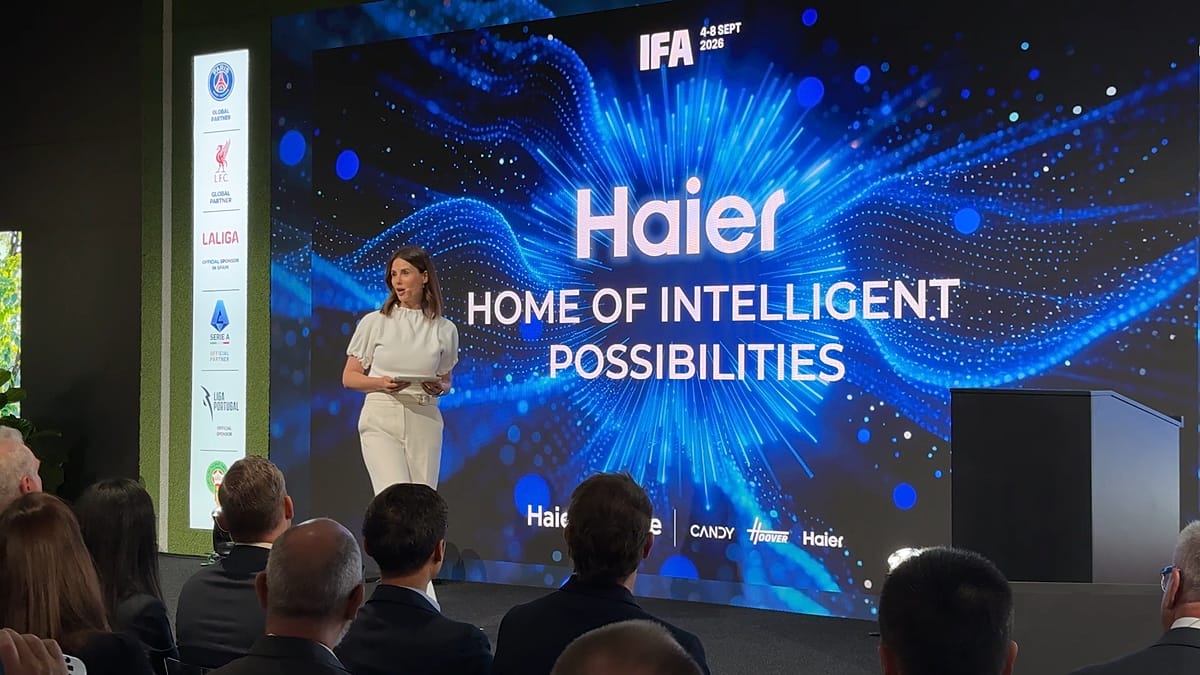
At this year's IFA in Berlin, Haier turned its exhibition space into a vision of the near future, where the home does more than respond to commands—it anticipates them. The Chinese appliance giant, which has a significant European footprint with brands such as Candy and Hoover, presented its “Home of Intelligent Possibilities” concept, a suite of AI-driven devices, robotics, and connected services designed to make everyday living smoother and more intuitive.
A proactive approach to home technology
Unlike conventional smart home setups that rely on user prompts, Haier's new ecosystem aims to learn from habits and preferences. For instance, a refrigerator might suggest recipes based on its contents and your dietary patterns, while a washing machine could automatically select a cycle suited to the fabric and soil level of the load. This shift from reactive to proactive technology was a recurring theme across the company's presentations.
“We are moving beyond the era of individual smart devices,” said a Haier spokesperson during a press briefing at the Messe Berlin. “Our goal is to create a holistic environment where technology works quietly in the background, freeing people to focus on what matters.” The company's strategy aligns with a broader trend at IFA 2026, where smart devices converge for seamless everyday living, as seen across numerous exhibitors.
Robotics and AI in the home
Among the most eye-catching exhibits were domestic robots that go beyond vacuuming. Haier demonstrated a robotic arm that can tidy up toys, fetch drinks, and even assist with simple cooking tasks. These robots use advanced computer vision and natural language processing to navigate complex home environments and interact with family members. The company also showcased AI-powered climate control systems that adjust heating and cooling based on occupancy patterns and weather forecasts, promising energy savings for European households.
Haier's push into intelligent living is not just about convenience; it also addresses sustainability. By optimizing energy use and reducing waste—for example, through smarter food storage that extends freshness—the company hopes to appeal to environmentally conscious consumers across the continent. This focus resonates with the broader discussions at IFA about the intelligent home revolution and its potential to reduce carbon footprints.
European market strategy
Europe remains a key market for Haier, which has invested heavily in local production and research facilities. The company's acquisition of Candy in 2019 gave it a strong foothold in Italy, and it has since expanded its presence in Germany, France, and the Nordics. At IFA, executives emphasized their commitment to tailoring solutions for European lifestyles, from compact appliances for city apartments to larger systems for rural homes.
“European consumers are diverse, but they share a common desire for quality, efficiency, and design,” noted a product manager. “Our intelligent home platform is designed to be flexible, adapting to different cultural and practical needs.” This localization strategy is crucial as competition intensifies with European rivals like Bosch and Miele, as well as tech giants entering the smart home space.
The showcase also included partnerships with European software developers and energy providers, aiming to integrate Haier's devices with local smart grid initiatives. Such collaborations could pave the way for more dynamic energy pricing and demand-response programs, benefiting both consumers and the environment.
While the concept of a fully connected home has been around for years, Haier's emphasis on anticipation and autonomy marks a notable evolution. As the technology matures, the question will be whether consumers are ready to trust AI with more aspects of their daily routines. For now, the enthusiastic crowds at Haier's booth suggest that curiosity is high.
For those who missed the live demonstrations, Haier's vision is part of a larger narrative at IFA 2026, where the boundaries between digital and physical living continue to blur. The company's “Home of Intelligent Possibilities” is not just a product line; it's a statement about the future of domestic life in Europe and beyond.