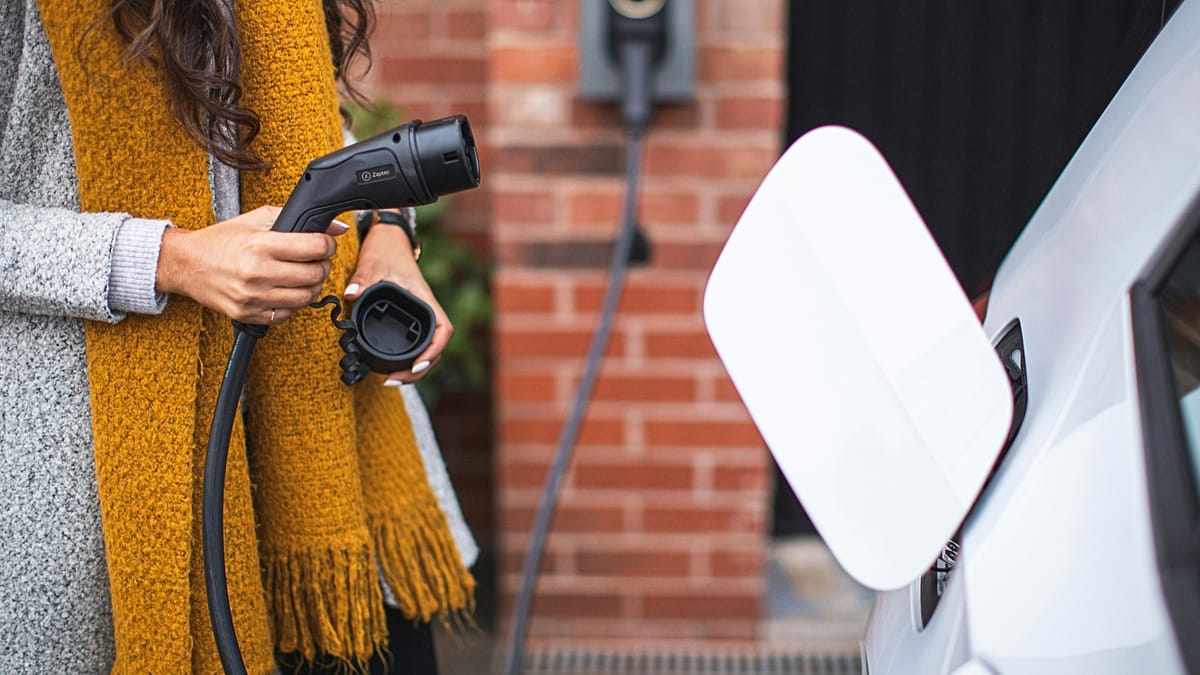
A new analysis from the Danish green think tank CONCITO reveals that European households could slash their annual energy bills by more than €2,200 by switching to heat pumps and electric vehicles (EVs). The savings, calculated using pre-crisis Eurostat data, are described as conservative, as they do not account for the recent surge in fossil fuel prices triggered by the US-Israel conflict in the Middle East.
Researchers examined five EU member states—Germany, Spain, France, Poland, and Italy—and found that while local energy prices and household demand create variation, the financial benefits are substantial everywhere. In Germany, households stand to save at least €1,950 per year, roughly equivalent to a year of free home heating. Spanish households could save €2,000 annually, the equivalent of 22 months of free electricity. French households emerge as the biggest winners, with potential annual savings of €3,070. For Poland and Italy, the figures are €1,870 and €1,780, respectively.
Geopolitical Crisis Accelerates Green Shift
The ongoing conflict in the Middle East, which has effectively closed the Strait of Hormuz—a chokepoint for around one-fifth of global oil supplies—has sent fossil fuel prices soaring. This has, in turn, spurred a renewables boom across Europe. According to Octopus Energy, heat pump sales in the United Kingdom rose more than 50% in the first three weeks of March compared to the previous month. In France, Germany, and Poland, residential heat pump sales spiked by 25% in the first quarter of 2026 compared to the same period in 2025. In Germany, heat pumps have outsold traditional gas boilers, despite the country recently backpedaling on its green heating law.
Interest in electric vehicles is also surging. Amsterdam-based marketplace Olx reports that customer enquiries for EVs have jumped across its platforms in France, Romania, Portugal, and Poland, with growth accelerating consistently week-over-week. In the UK, Autotrader notes that new EVs are now, on average, cheaper to buy than petrol models for the first time, while Octopus Electric Vehicles says many EVs now cost the same or less to lease than their petrol equivalents.
“The fossil fuel price spikes we are seeing today are not an accident, they are the predictable consequence of Europe’s continued dependence on oil and gas – around 90 per cent of which is imported,” says Jens Mattias Clausen of CONCITO. “This analysis shows that the tools to protect European families already exist. What is needed now is the political will to remove the barriers that are standing in the way.”
Barriers Remain, but Solutions Are Within Reach
Upfront costs remain the primary obstacle for many households. The CONCITO report identifies that targeted subsidies of €4,500 would bring the payback period for a heat pump down to five years for the average EU household. Several countries, including the UK, already offer additional grants for low-income families to cover installation costs. The price of EVs is also dropping rapidly, reaching parity with petrol vehicles in many markets.
The findings align with broader European efforts to reduce fossil fuel dependence. The Santa Marta Summit recently saw European leaders push for a fossil fuel phaseout as a legal duty, while the IMF has urged the EU to sharpen energy relief for vulnerable households. Meanwhile, renewables combined with battery storage are now cost-competitive with fossil fuels, further strengthening the case for electrification.
As Europe navigates the twin challenges of energy security and climate action, the CONCITO analysis underscores that electrification is not just an environmental imperative but a practical economic strategy for households across the continent.