As southern Europe braces for temperatures exceeding 39°C in Seville and 37°C in Bilbao this week, and the UK anticipates its hottest May day on record with forecasts of 35°C in southern England, the question of how to keep homes cool without exacerbating climate change has become urgent. A major report from the UK's Climate Change Committee (CCC) released on 20 May warned that air conditioning (AC) will soon be “unavoidable” in care homes, hospitals, and schools to protect citizens from extreme heat.
Yet Europe's cooling needs come at a steep environmental cost. The International Energy Agency (IEA) estimates that space cooling—primarily AC units and fans—consumed roughly seven percent of global electricity in 2022, generating around one billion tonnes of CO₂. In France, where AC ownership remains relatively low, evening electricity demand during the early summer heatwaves of 2025 spiked 25 percent above the off-season average due to cooling loads. The refrigerants used in conventional AC, such as hydrofluorocarbons (HFCs), trap thousands of times more heat than CO₂, further driving global warming.
Heat pumps as a dual-purpose solution
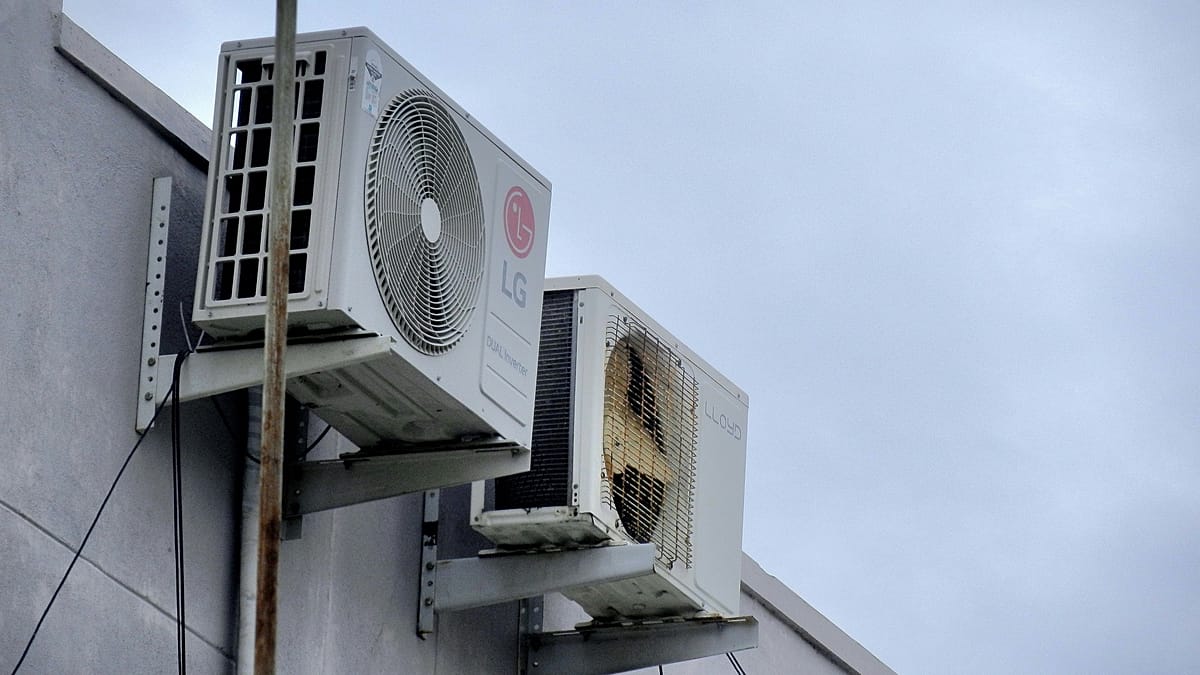
Heat pumps, long associated with heating, are increasingly being considered for cooling. Air-to-air heat pumps, unlike their air-to-water or ground-source counterparts, can reverse their operation to extract heat from indoor air and expel it outside—functioning much like a standard AC unit. These systems are gaining traction across Europe: according to the European Heat Pump Association, residential heat pump sales rose by 25 percent in the first quarter of 2026 in France, Germany, and Poland, while UK sales surged more than 50 percent in early March compared to the previous month, driven partly by energy price volatility linked to geopolitical tensions.
Air-to-air heat pumps are typically cheaper than other heat pump models. In the UK, installation costs range from £1,900 (€2,200) for a single room to around £3,700 (€4,287) for a three-bedroom semi-detached house. However, government grants for these systems are often lower than for air-to-water or ground-source pumps. A key limitation is that most air-to-air units do not provide hot water, requiring a separate low-carbon solution such as solar water heating, which adds expense.
For smaller homes and flats, or where planning restrictions apply, air-to-air heat pumps offer a compact alternative. But replacing an existing efficient AC unit with an air-to-air heat pump yields minimal emissions savings; the greatest environmental benefit comes from replacing combustion-based heating systems with heat pumps in the first place.
Environmental trade-offs and passive cooling
Both AC units and air-to-air heat pumps contribute to the urban heat island effect by discharging heat outdoors, which can increase the demand for further cooling. The IEA projects that the global number of AC units could nearly triple from two billion today to 5.5 billion by 2050, intensifying this feedback loop.
The most sustainable approach, experts argue, is to prevent heat from entering buildings in the first place. The UK's Energy Saving Trust recommends passive cooling methods such as window shades, improved ventilation, and opening windows only when outside air is cooler—typically at night. Switching off unused lights and electrical equipment, cooking during cooler hours, and using blackout blinds can significantly reduce the need for mechanical cooling.
In Spain, a growing network of climate shelters—public buildings that offer cooling and water during heatwaves—provides refuge for vulnerable populations. Similar initiatives are emerging across European cities, from libraries in the UK to municipal centres in Germany. For those who can travel safely, visiting such spaces can be a practical alternative to installing cooling systems.
As Europe grapples with the “new normal” of intense heat, the choice between heat pumps and AC units hinges on local climate, building type, and existing infrastructure. While air-to-air heat pumps offer a dual heating-and-cooling solution with lower lifecycle emissions than fossil-fuel-powered AC, passive measures remain the most environmentally sound first step. For households considering upgrades, the long-term savings—both financial and ecological—are increasingly compelling. A recent study found that heat pumps and EVs could save EU households €2,200 annually, underscoring the economic case alongside the environmental one.