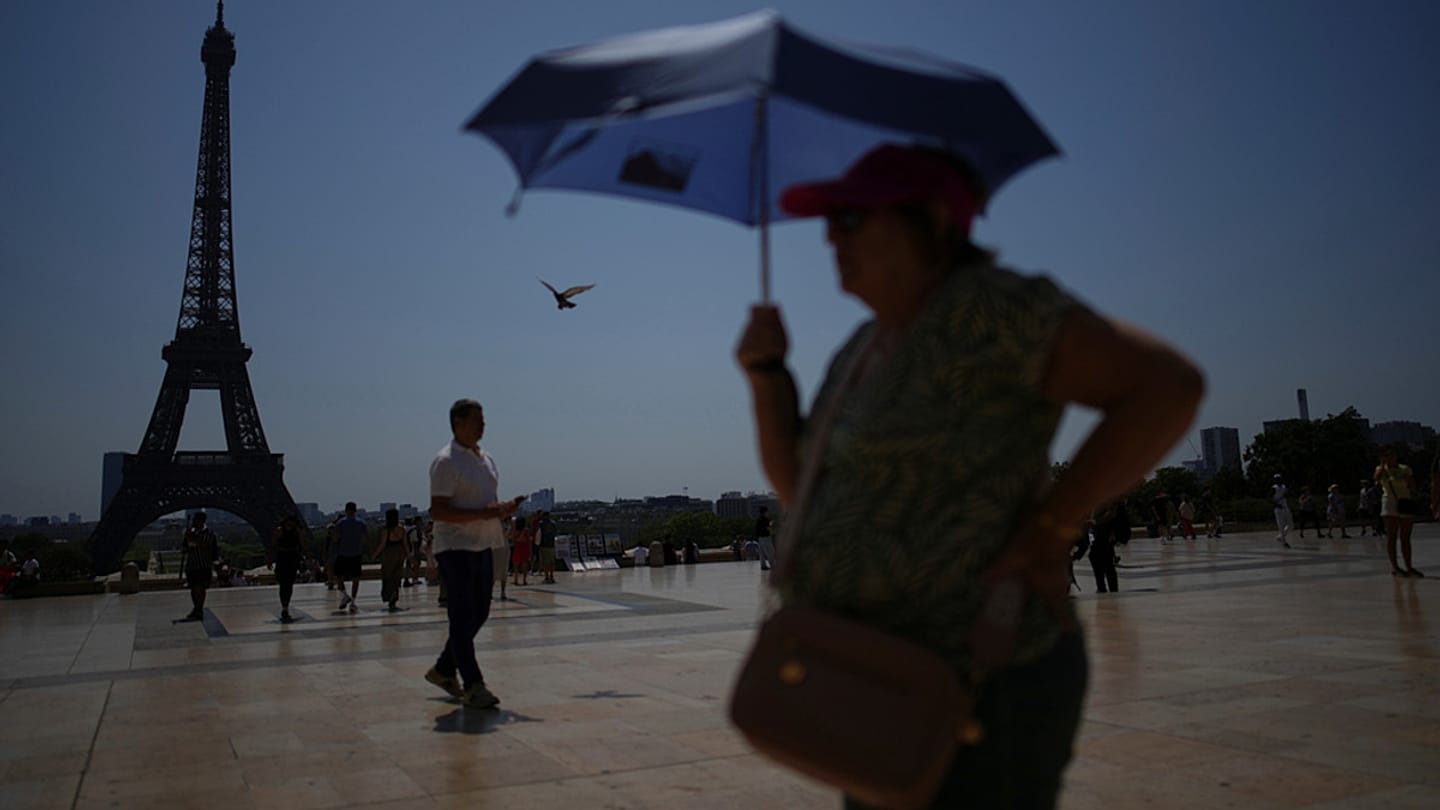
As summer temperatures across Europe continue to climb, new research from French public health authorities underscores a grim reality: heatwaves now claim approximately 5,400 lives annually in France alone. The findings, published by Santé Publique France, highlight a stark inequality in how the heat affects different communities.
The studies, released ahead of the peak summer season, warn that the health burden falls heaviest on the most deprived areas. In cities like Paris, Lyon, and Marseille, low-income neighborhoods often lack green spaces and adequate building insulation, turning apartments into heat traps during extreme weather events.
Unequal Exposure to Extreme Heat
Researchers found that residents in the poorest quartile of French municipalities face significantly higher exposure to dangerous temperatures. These areas frequently have older housing stock, less tree cover, and fewer public cooling centers. The result is a mortality rate from heat that is up to 40% higher than in wealthier districts.
“Heatwaves are not a natural disaster that strikes everyone equally,” said Dr. Claire Lemaire, an epidemiologist at Santé Publique France. “They amplify existing social and economic vulnerabilities. The people who die are often those who cannot afford air conditioning, live in cramped apartments, or have pre-existing health conditions.”
The studies also point to the role of poorly adapted housing. Many buildings in France, particularly in working-class suburbs of cities like Bordeaux and Lille, were constructed before modern thermal regulations. Without proper insulation or ventilation, indoor temperatures can exceed outdoor ones, creating lethal conditions for the elderly and chronically ill.
A Growing Public Health Challenge
France has experienced a series of intense heatwaves in recent years, including the record-breaking temperatures of 2022 and 2023. The third-hottest day ever recorded in the country occurred during a July 2023 heatwave that saw thermometers hit 42.4°C in parts of the Rhône Valley. Such events are becoming more frequent and severe due to climate change.
The French government has implemented heatwave warning systems and opened cooling centers in major cities, but the studies suggest these measures are insufficient in the most vulnerable neighborhoods. In the Parisian banlieues of Seine-Saint-Denis, for example, access to public pools and air-conditioned spaces remains limited.
“We need a comprehensive strategy that goes beyond emergency responses,” argued Dr. Lemaire. “This means retrofitting housing, planting more trees in urban areas, and ensuring that every community has a place to escape the heat.”
The findings come as other European nations grapple with similar challenges. Italy, Spain, and Greece have all reported rising heat-related mortality, prompting calls for EU-wide building standards and urban planning reforms. The European Environment Agency has warned that without adaptation, heat-related deaths could triple by 2050.
For now, the 5,400 annual deaths in France serve as a sobering statistic. They represent not just a public health crisis, but a social justice issue that demands targeted action for the most vulnerable.