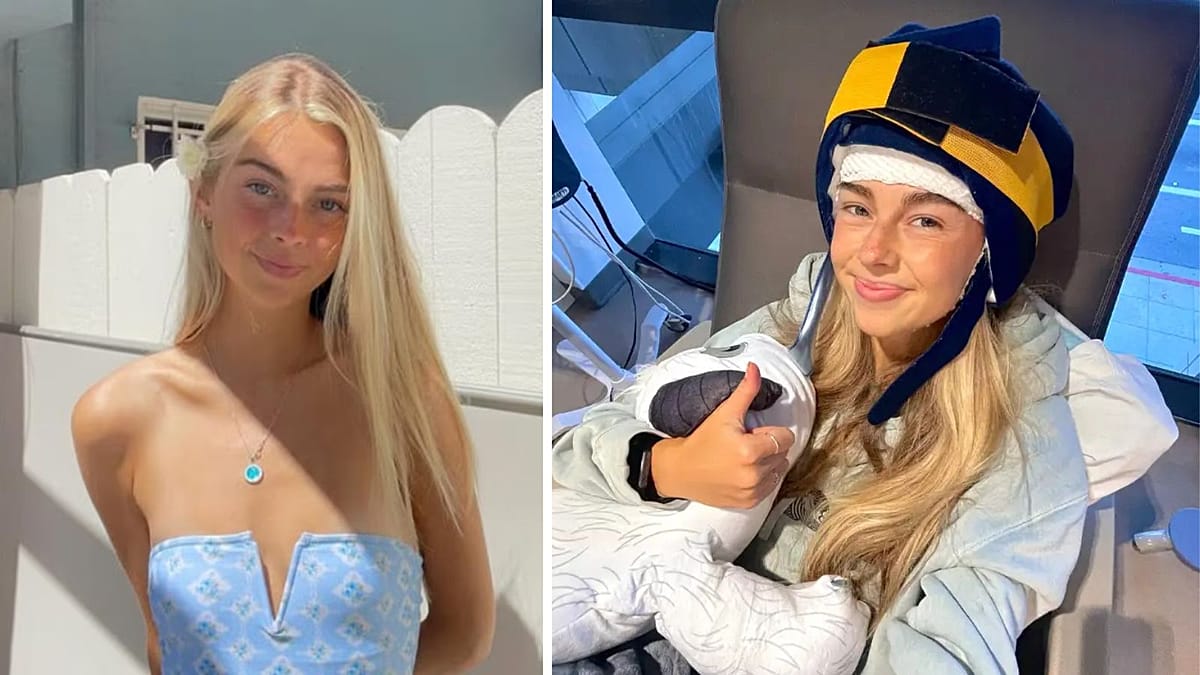
Sydney Towle, the American social media personality who used her platforms to document her life with a rare and aggressive form of cancer, has died at the age of 26. Her family confirmed the news on her social media accounts, one day after her death.
Towle was diagnosed with stage 4 cholangiocarcinoma at just 23—a cancer of the bile ducts that is exceptionally uncommon in someone so young. Over the following three years, she turned her diagnosis into a public journey, sharing daily updates on TikTok and Instagram that attracted millions of views and built a devoted community of followers.
In a video posted on her TikTok, her brother Austin, alongside their mother, said: "Syd went peacefully last night after an almost three-year-long battle with cholangiocarcinoma." The family's statement added: "We are so proud of how hard Sydney fought and for sharing her journey with so many people. She wanted to raise awareness for rare cancers and was passionate about promoting self-advocacy. We will continue her legacy and honour her in every way we can."
A public battle with an unforgiving disease
Towle's openness about her illness resonated far beyond the usual influencer sphere. She did not shy away from the harsh realities of treatment, often filming from hospital beds and discussing the physical and emotional toll of her condition. In May, she shared that the cancer had spread to her peritoneum, the membrane lining the abdominal cavity, a development that signalled a significant progression of the disease.
On 19 May, Towle recounted a conversation with her oncologist, who had advised her to begin end-of-life care. She refused, choosing instead to seek a second opinion from a new specialist. Days later, she fulfilled a long-held dream by walking in a swimsuit for The Chemo Club x Post Swim show at Miami Swim Week, an event celebrating post-cancer bodies. The moment was a defiant statement of life and resilience.
Her story has drawn thousands of tributes from followers and fellow influencers, many of whom cited her strength as an inspiration. The outpouring underscores the deep connection she forged with an audience that saw in her a candid and courageous young woman facing an unimaginable challenge.
While Towle's story is American, it touches on themes that resonate across Europe, where rare cancers account for a significant share of cancer diagnoses and deaths. In the European Union, rare cancers are defined as those with an incidence of fewer than six per 100,000 people per year, yet they collectively represent about 22% of all new cancer cases. Cholangiocarcinoma, though rare, is on the rise in several European countries, and research into its causes and treatments is an active field.
European health systems have been grappling with how to improve outcomes for rare cancers, which often suffer from delayed diagnosis and limited treatment options. Initiatives like the European Reference Networks (ERNs) aim to pool expertise across borders, but challenges remain. Towle's advocacy for self-advocacy—encouraging patients to ask questions, seek second opinions, and push for answers—echoes a broader movement in patient care that is gaining traction in Europe as well.
Her decision to refuse end-of-life care and pursue further treatment is a deeply personal one, but it highlights the difficult choices that patients with advanced cancer face. In Europe, where healthcare systems vary widely from the NHS in the UK to the social insurance models in Germany and the Nordic countries, access to experimental treatments and clinical trials can be uneven. The story of a young woman fighting a rare cancer serves as a reminder of the importance of research funding and equitable access to care.
As the tributes continue to pour in, Towle's legacy is likely to endure not only in the memories of her followers but also in the conversations she sparked about rare cancers and the power of patient voice. Her family has vowed to continue her mission, and her impact on the online community—and beyond—will not be forgotten.