For decades, the high seas — the vast expanse of ocean beyond any single nation's control — have existed in a legal vacuum. Covering nearly half the planet's surface, these waters have been governed by a fragmented patchwork of sectoral bodies focused on extraction, not protection. That changed on 17 January 2026, when the High Seas Treaty formally entered into force.
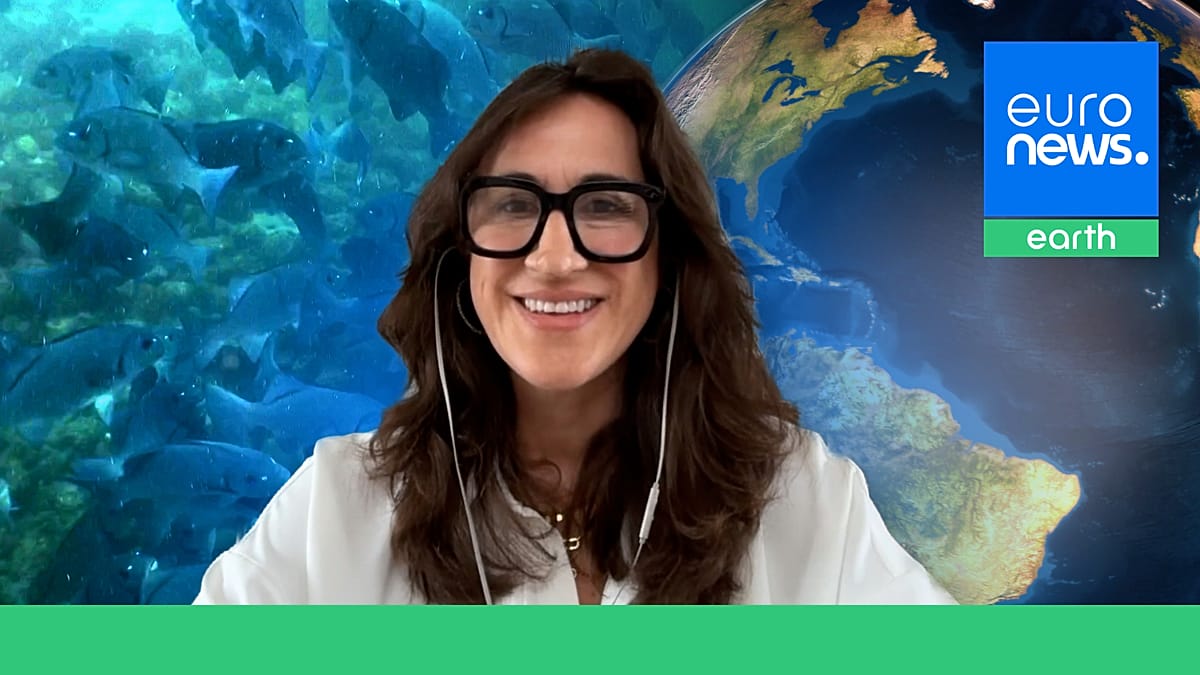
Nathalie Rey, Senior Strategy Advisor at the High Seas Alliance, describes the significance: “The high seas cover two thirds of the global ocean. That's almost half the planet. Until this year, there was no legal framework dedicated to protecting these international waters and sharing their resources fairly among nations.”
What the Treaty Changes
The treaty — formally the Agreement on the Conservation and Sustainable Use of Marine Biological Diversity of Areas Beyond National Jurisdiction (BBNJ) — establishes, for the first time, clear legal processes for creating marine protected areas on the high seas. It also introduces mandatory environmental impact assessments before harmful activities can begin. These tools aim to address threats such as overfishing, bottom trawling, plastic and chemical pollution, deep-sea mining, and climate change.
Rey highlights a second, less-discussed dimension: ocean justice. Under the treaty, developing countries will have fairer access to benefits from marine genetic resources found in deep-sea organisms like sponges, which can lead to pharmaceutical breakthroughs. “At the moment, it's only been those countries or companies that have had the resources to be able to exploit that [who] see the benefits,” she says. “And this is part of a global common.”
The treaty also commits to building the capacity of developing nations to participate in marine scientific research and implement the agreement themselves.
European Leadership and the Mediterranean
France played a prominent role in building political momentum, pushing for the treaty to be a key deliverable at the UN Ocean Conference it hosted in 2025. “There was a real political push from France, but also many [other] countries,” Rey notes.
The treaty is particularly important for the Mediterranean, which covers less than one per cent of the global ocean but hosts around 18 per cent of known marine species. Despite being one of the world's most important biodiversity hotspots, governance of its deeply interconnected ecosystems is fragmented across different sectors and jurisdictions. WWF says the region is therefore one of the clearest real-world applications for how effective the treaty's implementation can become.
Through tools such as marine protected areas, environmental impact assessments, and capacity-building mechanisms, the agreement enables countries to move from commitments to concrete action. WWF calls on countries that have not yet ratified the treaty to do so.
From Paper to Action
Rey concedes the risk of the treaty becoming what she calls “paper parks” — protected in name only. “That's always a concern,” she says. But she points to features designed to prevent that outcome. Unlike many international agreements, this treaty allows countries to vote on marine protection proposals rather than requiring full consensus — meaning a single country cannot block progress.
On enforcement, Rey acknowledges the complications: “It's going to be a challenge to police, but we are seeing such advances in technology and monitoring — including satellite monitoring — that actually it's not always necessary to be out on the ocean itself to be able to see what's happening.” Satellite tools can already track fishing activity in remote waters without a physical presence at sea.
Negotiations took more than two decades, involving over 190 countries. The final text was agreed in 2023, and the treaty reached the 60 ratifications required to enter into force within two years — fast by the standards of international law. “Some can take a decade to enter into force,” Rey notes. “It just shows how much political support is behind this treaty.” As of the time of the interview, 89 countries had ratified it.
The high seas begin where national waters end — beyond 200 nautical miles, roughly 370 kilometres, from shore. “To put that into perspective, that's about the distance between London and Paris,” says Rey. That vast expanse is part of what she calls the global commons. “It belongs to all of us. So we all have this responsibility to look after it.”
Around 2,000 new species are discovered there each year, and the high seas play a critical role in regulating the climate cycle and the water cycle, as well as supporting global food security. The treaty now offers a practical tool to deliver on existing commitments, bridging long-standing gaps in ocean governance by promoting cooperation across frameworks such as the Barcelona Convention, regional fisheries bodies, and maritime organisations.