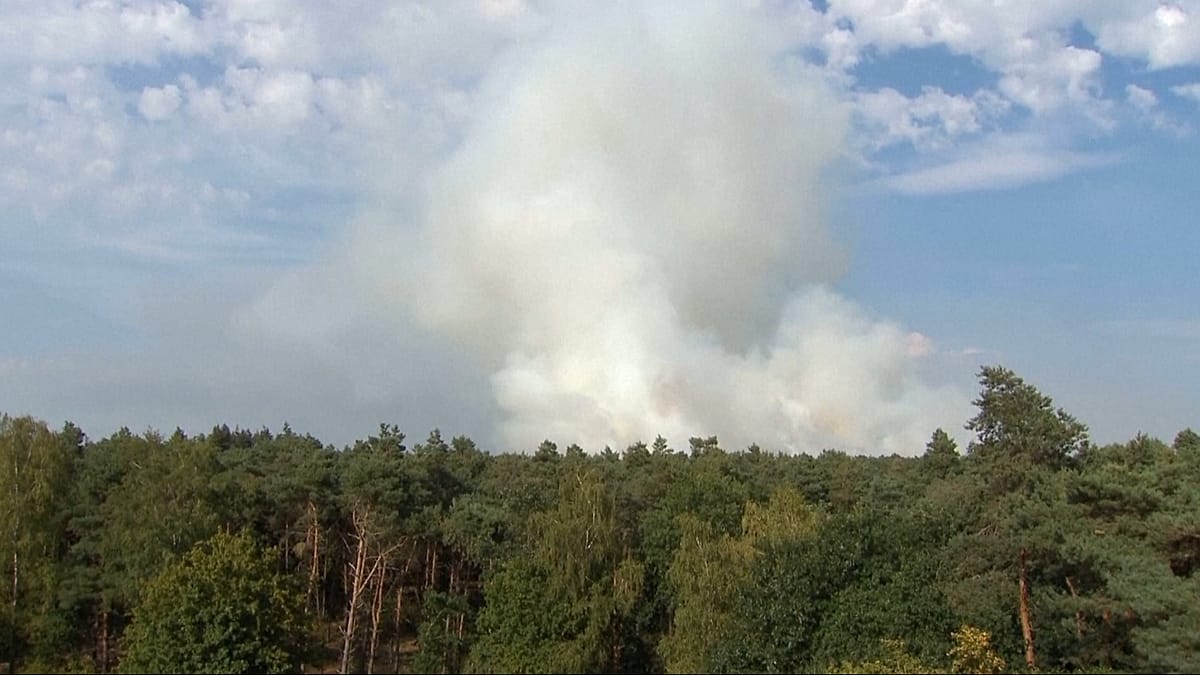
Firefighters in the southeastern Netherlands are battling a forest fire that expanded overnight to cover roughly 100 hectares by Tuesday morning, according to provincial authorities. The blaze, which began Monday afternoon in a nature reserve near the village of Oostrum in Limburg province, close to the German border, was still not under control as of early Tuesday.
The regional safety service told the ANP news agency that shifting winds had accelerated the fire's spread, making containment efforts more difficult. Around 300 emergency workers were deployed overnight, and firefighting helicopters were scheduled to resume operations at daybreak.
A nearby campsite was evacuated as a precaution, and train services through the area were suspended. Provincial authorities warned that the ongoing drought means "fire can spread quickly in nature reserves," though they did not specify a cause for the outbreak.
Europe's drought crisis deepens
The Dutch blaze is part of a broader pattern of wildfires striking western Europe this summer, following record-breaking heatwaves that have dried out vegetation and depleted riverbeds. Scientists from the World Weather Attribution network warned last month that human-induced climate change has accelerated moisture loss from soil, lakes, and rivers, heightening the risk of extreme drought events.
Across the continent, France and Greece have battled major blazes, while southern Europe faces rising wildfire risk despite a slight reduction in the number of fires. The situation has also exposed gaps in preparedness: an EU wildfire prevention plan has faltered even as southern member states burn.
In the Netherlands, the fire near Oostrum is a stark reminder that no region is immune. Limburg, known for its rolling hills and forests, has experienced unusually dry conditions this year, with local water boards imposing restrictions on irrigation and recreational water use.
Authorities have not yet determined how the fire started, but they are investigating. The province said it would provide updates as the situation evolves, and urged residents to avoid the area to allow emergency services to work.
Climate scientists point to a worrying trend: as global temperatures rise, the frequency and intensity of droughts and wildfires are expected to increase across Europe, even in regions traditionally less prone to such disasters. The Dutch fire serves as a case in point, underscoring the need for robust prevention and response strategies across the continent.
For now, the immediate priority is containing the blaze and ensuring the safety of nearby communities. Firefighting crews remain on high alert, with water-dropping helicopters and ground teams working in tandem to halt the fire's advance.