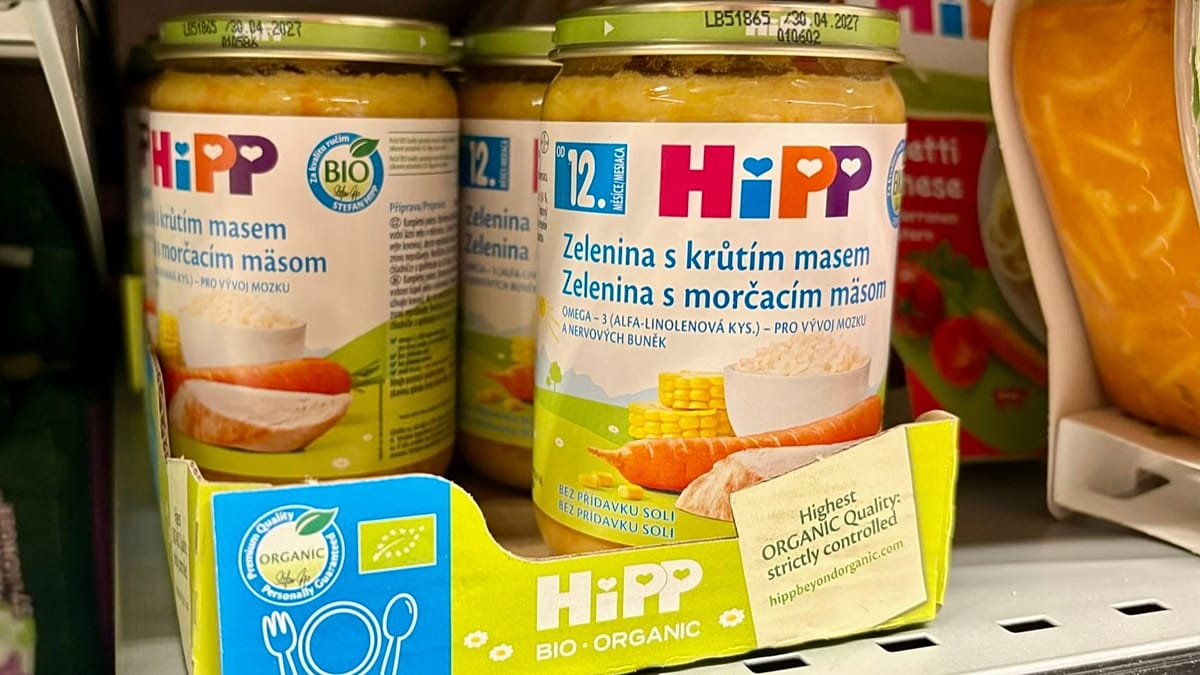
Authorities in Austria have launched a criminal investigation after discovering rodent poison in jars of organic baby food, prompting a major recall across three Central European countries. The affected products, from the prominent German brand HiPP, were sold through the SPAR supermarket chain in Austria, as well as in parts of Slovakia and the Czech Republic. Officials are treating the incident as a case of suspected deliberate tampering.
The Austrian Agency for Health and Food Safety (AGES) confirmed the contamination on Sunday, 19 April, following a report from a vigilant customer. The product in question is a 190-gram jar of carrot and potato purée, intended for infants from five months old. In a statement, HiPP stressed that the jars left its production facility in perfect condition, squarely placing the blame on external interference. “This recall is not due to any product or quality defect on our part,” the company said. “The recall is related to a criminal act currently under investigation by the authorities.”
Health Risks and Warning Signs
According to AGES, the poison detected is likely bromadiolone, a potent anticoagulant commonly used in rat pesticides. The substance inhibits blood clotting, and even small amounts can pose a severe, potentially fatal risk to infants. Symptoms of poisoning, which can take two to five days to appear, include bleeding gums, nosebleeds, unexplained bruising, and blood in stool. The agency notes that poisoning can be effectively treated with vitamin K if caught in time.
Burgenland Police have issued urgent guidance for parents and caregivers. They should inspect any recently purchased HiPP baby food jars for specific signs of tampering: a white sticker with a red circle on the base, a damaged or already-opened lid, an unusual or spoiled smell, or the absence of the characteristic popping sound when the seal is first broken. Fortunately, no consumption of the contaminated product has been reported to date.
Scope of the Recall and Consumer Response
HiPP has initiated a precautionary recall of all its baby food jars sold through SPAR, EUROSPAR, INTERSPAR, and Maximarkt outlets in Austria. Customers can return the products for a full refund without needing a receipt. In Slovakia and the Czech Republic, retailers have preemptively removed all HiPP baby food jars from sale, though no positive tests have been publicly confirmed outside Austria.
The incident has shaken consumer confidence in a region where food safety is typically tightly regulated. It raises immediate questions about supply chain security and the vulnerability of everyday products to malicious acts. While the EU maintains robust mechanisms for crisis response and coordination, this case highlights challenges that transcend borders and require swift, joint investigative efforts.
This is not the first time Austria has been at the centre of a complex security investigation with international dimensions. The case echoes the gravity, though not the substance, of other sensitive probes, such as the legal proceedings involving a former Austrian diplomat linked to documents concerning the Novichok nerve agent.
The economic and reputational fallout for HiPP, a family-owned company with a strong reputation for organic quality, could be significant. The brand is a major player in the European baby food market, and such an incident, if proven to be criminal, underscores the broader security risks facing consumer goods industries. It also intersects with wider European concerns about health security and the integrity of the single market.
As the investigation proceeds, coordinated by Austrian police, the focus will be on tracing the point of contamination in the distribution chain. The cross-border nature of the recall—affecting Slovakia and the Czech Republic—demonstrates how swiftly such threats can propagate within Europe's integrated market. It serves as a stark reminder that external and internal shocks, whether geopolitical or criminal, continue to test the resilience of European systems.
For now, the priority remains public safety. Authorities across the affected countries are urging caution, while the investigation seeks to determine the motive and method behind a disturbing act that targeted society's most vulnerable.