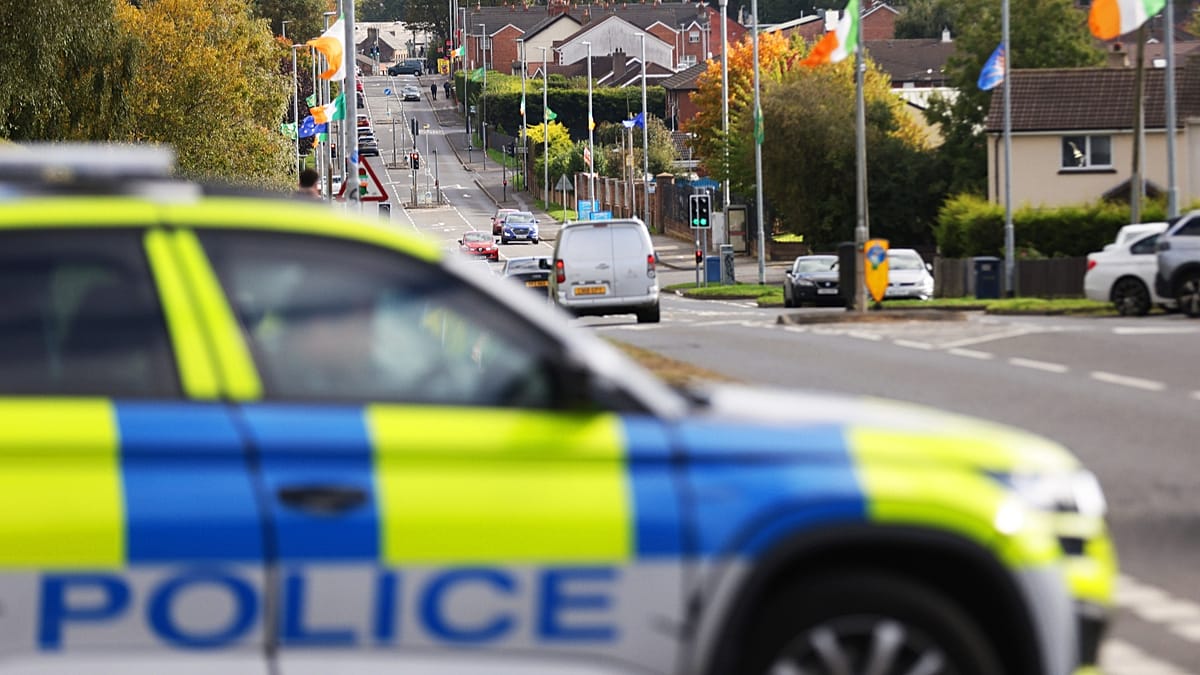
Dozens of schools across Northern Ireland and Scotland were hit by a wave of bomb threats on Monday, prompting evacuations and a major police response, though authorities say the warnings appear to be a hoax.
Northern Ireland's Education Minister Paul Givan told reporters that around 160 schools had received the threat by email. "At this stage the advice to schools is that we're not treating this as a viable threat, but it has clearly caused huge alarm," he said.
Givan described the content of the messages as coming from individuals claiming to be Islamists, threatening that Sharia law would be imposed and asserting that explosive devices were planted at the schools. The emails were reportedly signed with the phrase "Allah Akbar."
The Police Service of Northern Ireland (PSNI) confirmed they had received reports of an email sent to a number of schools across the region. In a statement, they said officers were conducting urgent enquiries and liaising with the affected schools.
Local media and Givan indicated that some schools had closed as a precaution, while others were evacuated. The disruption comes at a sensitive time for the education sector, which has already faced challenges this term.
Scottish schools also targeted
Across the Irish Sea, Police Scotland said they had received reports of "threatening messages" sent to "a number of schools across Scotland." The force stated that the messages were being treated as a hoax and that officers were investigating.
The exact number of Scottish schools affected and the nature of the messages remained unclear on Monday afternoon. Police urged schools and parents to remain vigilant but reassured the public that there was no immediate threat.
This incident echoes similar hoax threats that have disrupted schools in other parts of Europe in recent months. In France, for example, a series of bomb alerts have forced repeated evacuations of schools, contributing to a climate of anxiety among students and parents. The French government has struggled to contain the wave of false alarms, which have often been linked to online pranks or extremist rhetoric.
Security experts note that such hoaxes, while not posing a direct danger, can have a significant psychological and operational impact. They tie up police resources, cause panic, and can disrupt education for thousands of children.
In Northern Ireland, the education minister said the authorities were working to trace the origin of the emails. "We are taking this extremely seriously," Givan said, adding that the police were treating the matter as a criminal investigation.
The incident also highlights the broader challenge of protecting schools from digital threats, a topic that has gained urgency across the continent. As schools increasingly rely on email and online communication, they become vulnerable to such coordinated hoaxes.
Parents in both regions have been advised to check official school communications for updates. Some schools have announced that they will remain closed for the rest of the day, while others have resumed normal operations after thorough searches found nothing suspicious.
This is not the first time that schools in the UK have been targeted by hoax threats. In 2023, a similar wave of bomb threats hit schools in England, which were later deemed to be a prank. The recurrence of such incidents raises questions about the effectiveness of current security protocols and the need for better coordination between schools and law enforcement.
For now, the priority for authorities is to reassure the public and ensure that the investigation proceeds swiftly. As one police spokesperson put it, "We understand the concern this causes, but we want to reassure parents and students that we are doing everything we can to keep them safe."