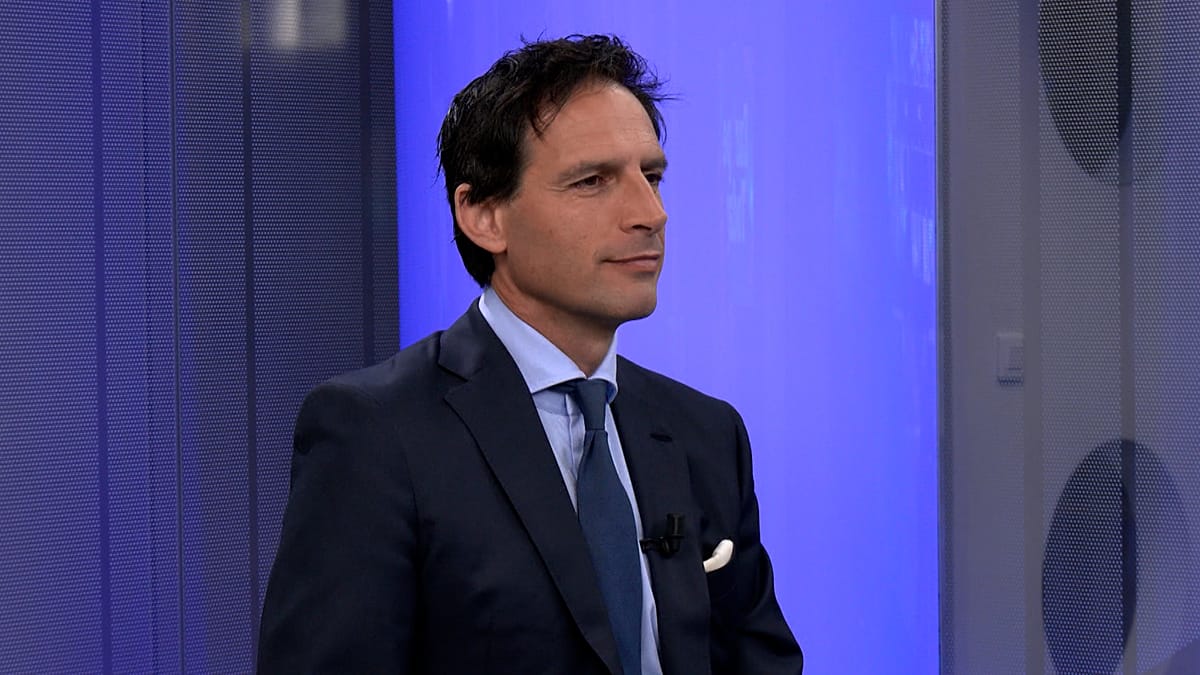
Following a summer marked by devastating wildfires and record-breaking heatwaves across the continent, the European Union's climate chief, Wopke Hoekstra, is pressing for a significant increase in spending on climate resilience. In an exclusive interview with Maria Tadeo, the Dutch politician argued that investing upfront in prevention is far more cost-effective than repairing the damage after disasters strike.
“We have seen the cost of inaction,” Hoekstra said, referencing the fires that scorched parts of southern Europe and the heatwaves that strained infrastructure from Madrid to Warsaw. “It is better to pay now to protect our communities than to pay much more later to rebuild them.”
Hoekstra, who serves as the European Commissioner for Climate Action, also turned his attention to the bloc's economic vulnerabilities. He warned that the EU has accumulated too many strategic dependencies, particularly in critical sectors such as clean energy technology and raw materials. To win the global race for climate leadership, he argued, Europe must reduce these dependencies and ensure a level playing field with major trading partners.
His sharpest criticism was reserved for China. “China is not playing by the rules on international trade,” Hoekstra said, accusing Beijing of using unfair practices that distort competition and undermine European industries. He called for the EU to take a firmer stance, using trade defence instruments where necessary to protect European jobs and investments.
Strategic autonomy and the green transition
The commissioner's remarks come as the EU seeks to balance its ambitious climate goals with the need to secure supply chains and maintain industrial competitiveness. The bloc has set a target of becoming climate-neutral by 2050, but achieving that will require massive investments in renewable energy, battery production, and other green technologies—many of which currently rely on imports from Asia.
Hoekstra's call for greater strategic autonomy echoes a broader shift in Brussels towards a more assertive industrial policy. The EU has already introduced measures such as the Carbon Border Adjustment Mechanism and the Critical Raw Materials Act, but Hoekstra suggested that more needs to be done. “We cannot be naive about the challenges we face,” he said. “We need to be smart, strategic, and willing to act decisively.”
The interview also touched on the link between climate resilience and European security. Hoekstra noted that extreme weather events can have cascading effects on food production, water supplies, and energy systems, which in turn can fuel social and political instability. Climate resilience and EU security are two sides of the same coin, he argued, urging member states to treat climate adaptation as a matter of strategic importance.
His comments on China are likely to resonate in capitals across Europe, where there is growing concern about the bloc's trade deficit with Beijing and its reliance on Chinese-made solar panels, wind turbines, and electric vehicle batteries. The EU trade chief has also accused China of unfair trade practices, signalling a coordinated approach within the Commission.
Hoekstra's warnings come as the EU prepares for a series of climate-related negotiations and policy reviews in the coming months. With the summer's extreme weather fresh in the minds of voters and policymakers, the pressure is on to deliver concrete action. “We have the tools and the technology,” Hoekstra said. “What we need now is the political will and the investment to match our ambitions.”
As Europe looks ahead to a future of more frequent and intense climate shocks, Hoekstra's message is clear: prevention is not a luxury, but a necessity. And in the global race to lead the green transition, Europe must be willing to stand up for its interests.