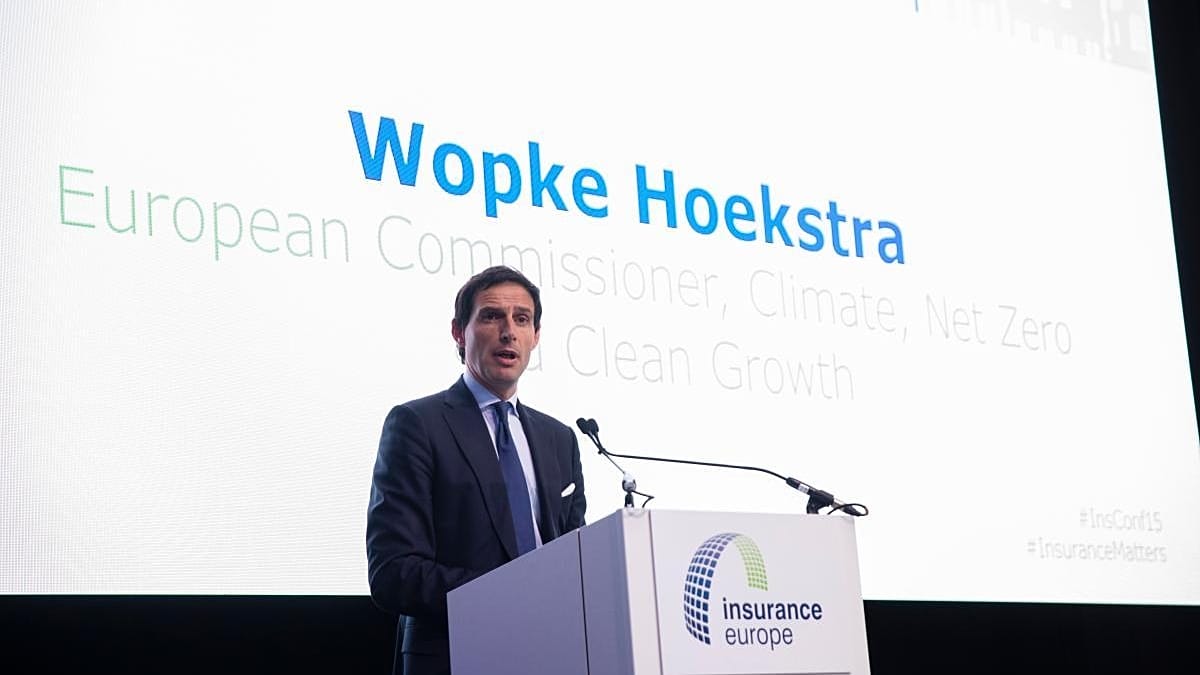
Europe must invest more now to shield itself from the escalating impacts of climate change, or it will end up paying far more in the aftermath of fires, floods, and other disasters, EU Climate Action Commissioner Wopke Hoekstra has warned.
In an exclusive interview with Euronews, the Dutch commissioner said that the evidence is clear: proactive spending is far cheaper than reactive relief. "All evidence shows that making the upfront investments is way cheaper than just being hit by fire, being hit by floods and then paying for the damage. That's just way more costly," he told Europe Today.
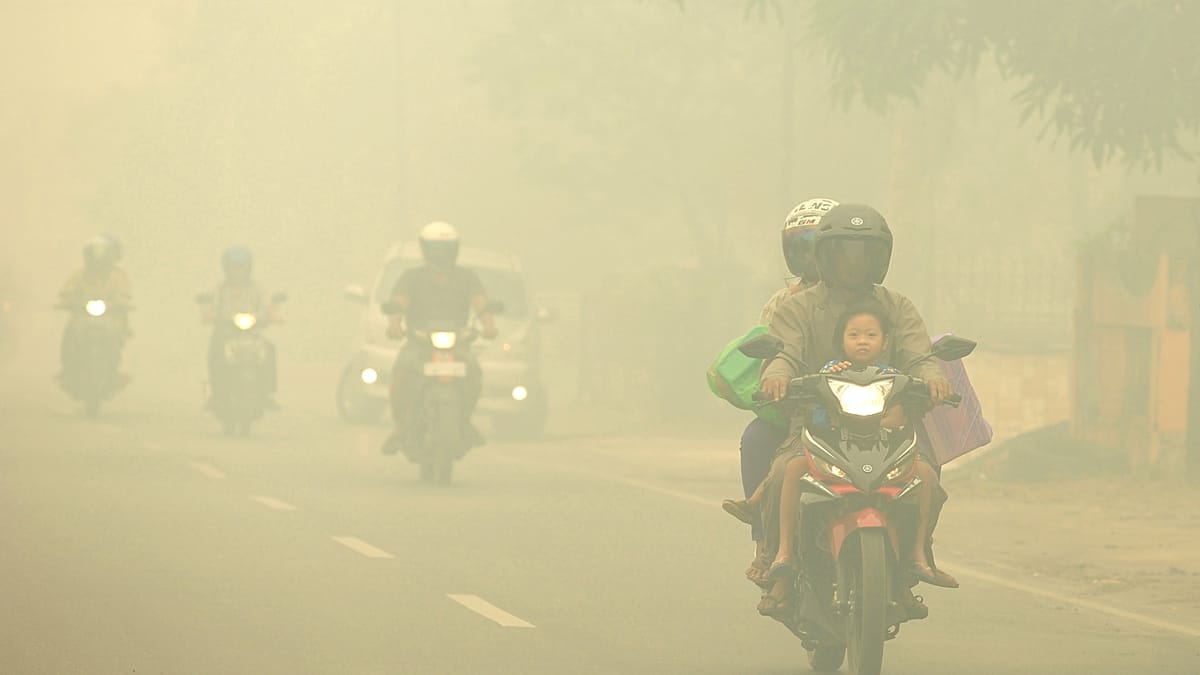
Describing the summer as "dramatic," Hoekstra acknowledged that while the EU was better prepared than last year—with more firefighters, planes, and helicopters deployed—the scale of destruction remained alarming. An area twice the size of Luxembourg was consumed by wildfires, with economic losses estimated between €50 billion and €70 billion. Spain and France lost thousands of hectares, and at least 14 first responders died battling the blazes.
Rethinking infrastructure, not just replacing it
Hoekstra rejected the idea of attaching a single figure to climate resilience. Instead, he called for a fundamental rethink of how infrastructure is designed and built. Bridges, for example, should be reconstructed to withstand future floods, not simply restored to their previous state.
Pressed for a specific number, Hoekstra declined to commit, but suggested that national budgets would carry the bulk of the burden. "The reality is that we need to become much more granular and do a couple of things at the same time," he said. "We need to be crystal clear about who is responsible for what. What is for the local governments, what is for regional governments, what is for national governments and what is for Europe."
This comes as EU member states are under pressure to tighten spending, with negotiations over the bloc's long-term budget for 2027–2034 set to resume. Germany, Austria, Denmark, Finland, the Netherlands, and Sweden are pushing for cuts. Hoekstra acknowledged the fiscal constraints but insisted that upfront investment is cheaper than repeatedly paying for climate damage. He also pushed back against framing climate action and economic competitiveness as competing priorities.
"There is no easy way out and there's no alternative to continuing with our climate ambition," he said, after a summer of devastating fires and heatwaves that caused at least 30,000 excess deaths across 23 countries, according to the European Mortality Monitoring Platform.
Linking climate, competitiveness, and independence
Hoekstra's preferred approach combines climate action, competitiveness, and European independence. This means continuing the green transition while reducing Europe's reliance on China for clean technologies. He pointed to Finland, Denmark, and Sweden as examples where climate policy and economic competitiveness can reinforce each other.
"It is imperative that we marry-bridge climate action with competitiveness and with independence," he stressed.
The commissioner also linked the bloc's climate policy to its energy vulnerability, particularly in light of the ongoing blockade of the Strait of Hormuz, which handles about 20% of global oil and gas transit and affects energy prices worldwide. He warned that the EU cannot rely indefinitely on imported fossil fuels, citing the bloc's roughly 80% dependence on gas imports and 95% on oil imports as a sign that Europe holds "a very bad hand."
His proposed escape route includes expanding nuclear, solar, and wind power, combined with electrification and increased domestic energy production. In the medium term, he argued, "by far our best bet is to move to a completely different energy system and that is where the money should be going."
On the immediate gas situation, which is at its lowest level (around 62% capacity) since 2011, Hoekstra said EU countries must continue filling storage and prepare for the possibility of low storage combined with a severe winter—a scenario he called "no one can afford."
The commissioner's remarks come as climate change adds a month of dangerous heat for 560 million children, and as France's climate crisis tests presidential hopefuls' green credentials. The EU's energy security is also under scrutiny, with Finnair suspending its Helsinki–Dubai route through winter on security fears.