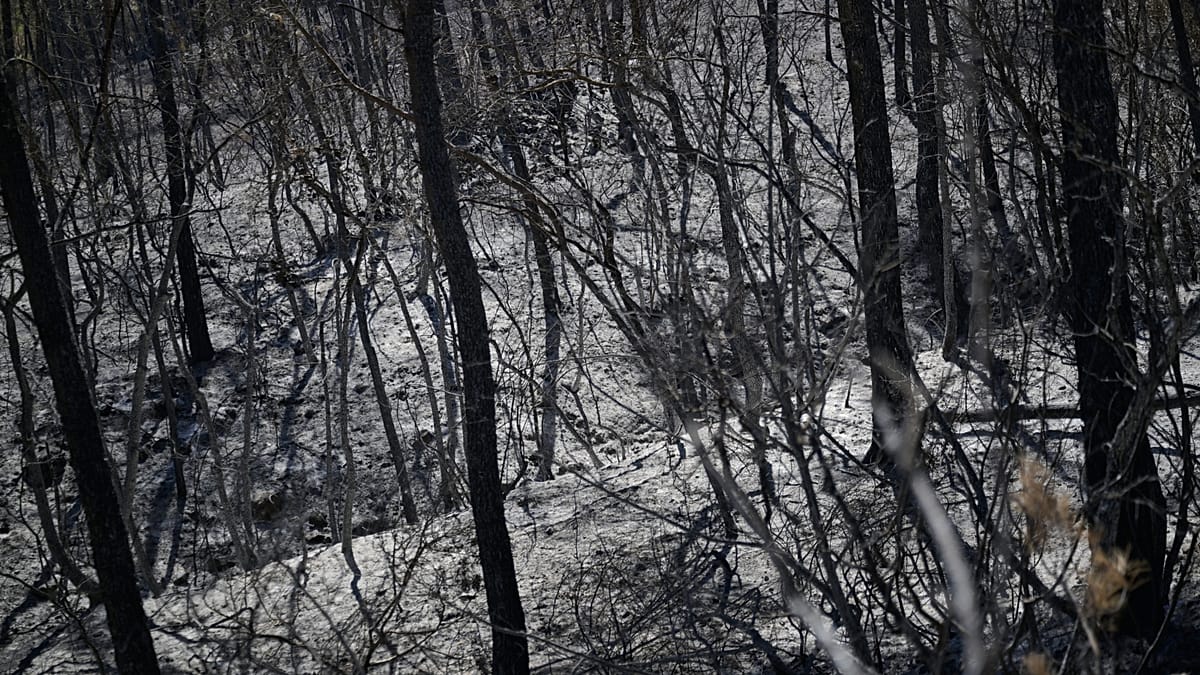
This summer, France has been battered by extreme weather: vast wildfires in Gironde, the Landes and the Var, back-to-back heatwaves, and a drought that has hit farmers hard. Last winter, storms Goretti, Ingrid, Nils and Pedro brought severe flooding across the mainland. With the presidential election just months away, one might expect environmental issues to dominate the campaign. But experts say the political response has been strikingly timid.
A summer of extremes, a muted political echo
According to the Réseau Action Climat association, France "no longer has a choice: it must adapt, and fast." The group criticises successive governments for failing to prepare the country for the effects of climate change. The warnings have been loud for years: as early as 2013, the IPCC stated that warming of the climate system is unequivocal, and that the period from 1983 to 2012 was likely the warmest 30-year stretch in the Northern Hemisphere in 1,400 years.
Public concern is rising. An Ipsos survey published on 24 August found that 64% of French people felt anxiety or fear for their loved ones' health during the summer, and 48% for their own health. The same poll showed 79% want public measures to help cope with heatwaves. A separate Ademe study estimated that 6.3 million French people are moderately eco-anxious, with 2.1 million highly eco-anxious and 420,000 at genuine mental health risk.
Yet political leaders seem disconnected. Anne Bringault, programme director at Réseau Action Climat, told Euronews: "Most parties and presidential candidates seem out of touch with the everyday realities of French people who have been severely affected." She added: "Given the unprecedented challenge facing humanity and biodiversity, the numerous deaths caused by heatwaves, the economic losses, especially for farmers, the houses destroyed by fires and parched natural environments, the political response appears very timid and nowhere near meeting the expectations of French people."
Jean-Marc Jancovici, founder of the Shift Project think tank, went further, telling France Inter that the political class is "in a form of denial" about climate change. "Which of the candidates puts at the core of their programme the fact that the world is going to change? No one," he said.
Why ecology struggles in election season
Eva Morel, secretary general of QuotaClimat, argues that elections are precisely the moments when ecology struggles to find a way through. She points to a media environment that rarely pushes candidates to engage with the root causes of climate disasters. "When climate disasters occur, we only talk about the facts and do not try to understand the underlying factors," she said. "For instance, we talked more about climate, which is unavoidable. But we talked less about fossil energy."
Morel also notes that the political system "rewards demagoguery," making it hard for candidates to propose ambitious climate action that would disrupt citizens' lifestyles. "We cannot hope for a constructive debate on the subject if we do not address the causes and structural solutions," she added.
The right and centre have largely stuck to their traditional lanes. Anne Bringault points to Édouard Philippe, who chose to highlight immigration issues during a trip to Mayotte. "Even just on adaptation, the right, as a political family, still does not see it as a political issue," Morel said.
On the left, "electoral opportunism" seems to play a part, according to Bringault, as parties compete for green votes. While left-wing programmes are more substantial on the environment than those of the right, the gap between scientific urgency and political discourse remains wide. As the campaign unfolds, voters are left wondering whether any candidate will offer a credible plan to confront the climate crisis. The stakes could not be higher, as Germany's record heat-related deaths this summer have shown.
With the election approaching, the question is whether the political class will rise to the challenge. So far, the answer seems to be a resounding no.