A missile fired by Yemen's Houthi rebels struck a Saudi-flagged oil tanker in the Red Sea on Wednesday, setting the vessel ablaze about 63 nautical miles west of the port city of Yanbu. The attack is the latest in a series of strikes under the Houthis' self-declared blockade of Saudi Arabia, a campaign that now directly threatens the kingdom's ability to export millions of barrels of crude oil each day.
The vessel, whose name has not been officially released, was hit while transiting one of the world's most critical maritime chokepoints. The Red Sea route, which funnels oil and container traffic toward the Suez Canal, is vital not only for Saudi exports but also for European economies that rely on the swift passage of energy and goods. Any sustained disruption here has immediate ripple effects on fuel prices and supply chains across the continent.
European energy security at stake
For European Union member states, the Red Sea is a strategic artery. Roughly 12% of global seaborne oil and 8% of liquefied natural gas pass through the Bab el-Mandeb strait and the Red Sea en route to Europe. The Houthi campaign, which began in earnest in late 2023, has already forced many shipping companies to reroute vessels around the Cape of Good Hope, adding weeks to voyages and driving up freight and insurance costs.
"Every attack on a tanker in the Red Sea is an attack on the global economy, and Europe feels it acutely," said Dr. Elena Marchetti, a maritime security analyst at the European Council on Foreign Relations in Berlin. "The EU's dependence on Middle Eastern oil and gas, even with diversification efforts, remains significant. This is not just a regional conflict; it is a direct challenge to European energy security."
The strike near Yanbu comes just days after French President Emmanuel Macron hosted Saudi Crown Prince Mohammed bin Salman in Paris, a visit aimed at deepening economic and diplomatic ties. The timing underscores the delicate balance European leaders must strike between courting Gulf partners and responding to the instability that emanates from the region.
Houthi strategy and regional tensions
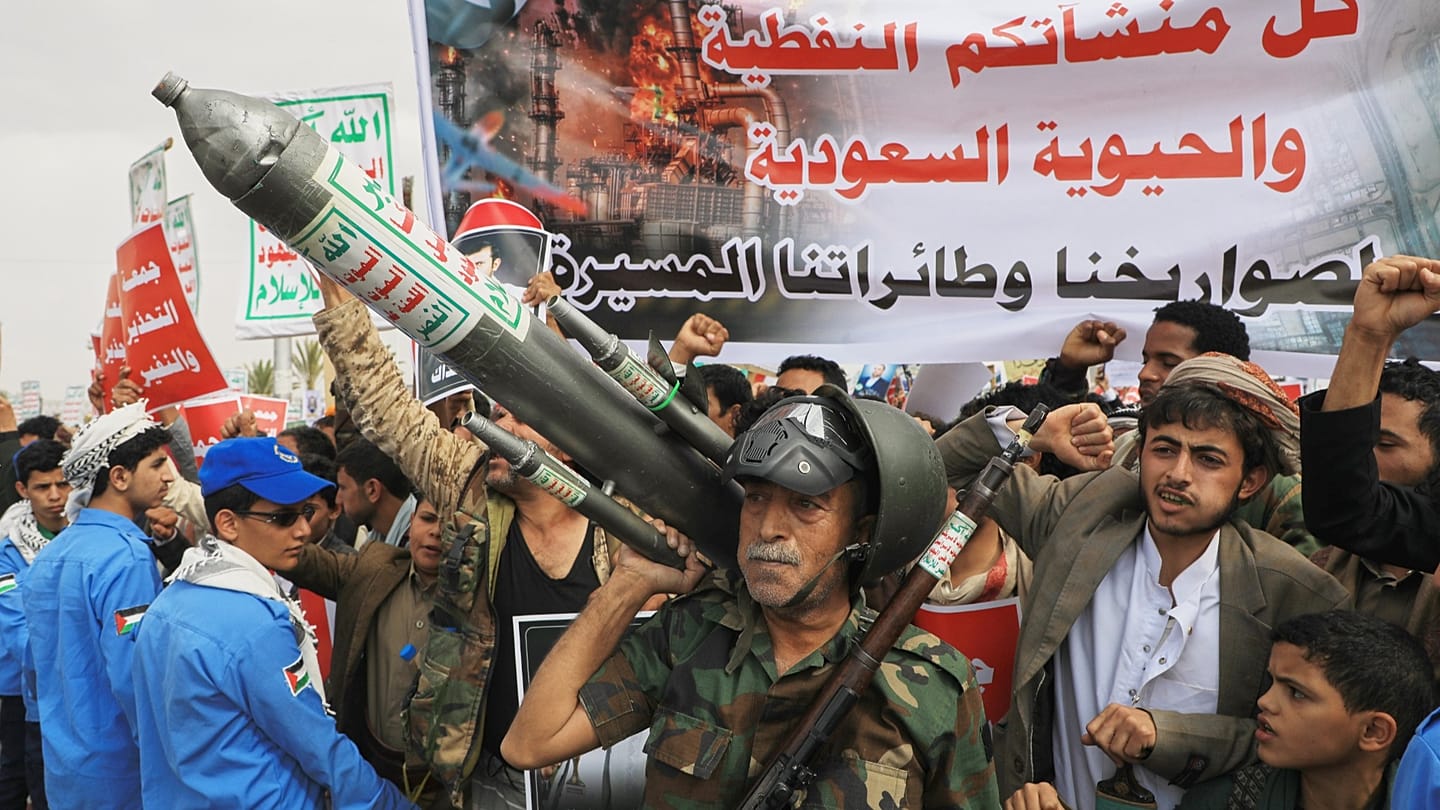
The Houthis, who control much of western Yemen, have framed their campaign as a response to the Saudi-led coalition's intervention in Yemen's civil war. Their blockade, which they have extended to include ships linked to Israel and the United States, has now expanded to target Saudi vessels directly. Analysts say the group is seeking to pressure Riyadh economically while also demonstrating its ability to disrupt international trade.
"The Houthis are not just firing missiles at random; they are sending a message that they can hit Saudi Arabia's economic lifeline," said Omar al-Hassan, a Yemeni political analyst based in London. "This is a calculated escalation that could force Saudi Arabia to reconsider its posture in Yemen, but it also risks drawing in other powers."
The attack has already drawn international condemnation. The United Nations called for restraint, while the Saudi-led coalition announced it would intensify its own strikes on Houthi targets in Yemen. The United States, which has been leading a multinational naval task force in the region, said it was "monitoring the situation closely."
For Europe, the crisis is compounded by the ongoing war in Ukraine, which has already reshaped energy flows and heightened concerns about critical infrastructure. The vulnerability of undersea cables and shipping lanes has become a central theme in European security discussions, and the Red Sea attacks are a stark reminder of how fragile global supply chains can be.
European naval forces, including those from France, Italy, and the Netherlands, have been participating in patrols in the region, but their rules of engagement have often been limited to defensive actions. Some EU officials have called for a more robust mandate, arguing that the bloc cannot afford to be a bystander while its energy lifelines are threatened.
The immediate impact on oil prices has been muted so far, with Brent crude trading around $85 a barrel, but analysts warn that a sustained blockade could push prices higher. "If the Houthis manage to disrupt Saudi exports for weeks, we could see a significant spike," said Marchetti. "Europe, still recovering from the energy crisis triggered by Russia's invasion of Ukraine, would be particularly hard hit."
The attack also comes at a time when the EU is trying to reduce its reliance on Russian energy, a policy that has increased its dependence on Gulf suppliers. The bloc's recent €6.1 billion commitment to Ukraine's air defences is part of a broader effort to bolster European security, but the Red Sea crisis highlights the limits of that approach.
As the Houthis show no signs of backing down, European governments are left to weigh their options. Diplomatic pressure, naval escorts, and economic contingency plans are all on the table, but none offers a quick fix. The strike on the Saudi tanker is a reminder that the Red Sea, once a reliable corridor for global trade, has become a flashpoint with direct consequences for the European continent.