Beneath the surface of Europe's seas lies a network that keeps the continent running. Submarine cables carry over 95% of international digital communications, while pipelines transport much of the oil and gas that powers European industry. Around 80% of global trade moves by ship, and the vast majority of the EU's imports and exports pass through its ports. This hidden infrastructure is increasingly seen as a potential target for sabotage or military attack.
An assault on these undersea links—whether by divers, drones, unmanned underwater vehicles, or conventional weapons—could have immediate and cascading effects. Supply chains would stall, financial transactions would freeze, and energy security would be compromised, possibly within hours. The disruption would not be confined to one country; it would ripple across the entire European single market.
Europe's maritime defence response
In response to this growing threat, the EU has made maritime security a central pillar of its defence strategy. Since Russia's full-scale invasion of Ukraine, defence spending has accelerated through initiatives such as the Strategic Compass, the updated European Union Maritime Security Strategy, and the European Defence Industrial Strategy. Funding mechanisms like the European Defence Fund and the SAFE loan facility are channeling resources into naval production, autonomous systems, advanced sensors, and counter-drone capabilities.
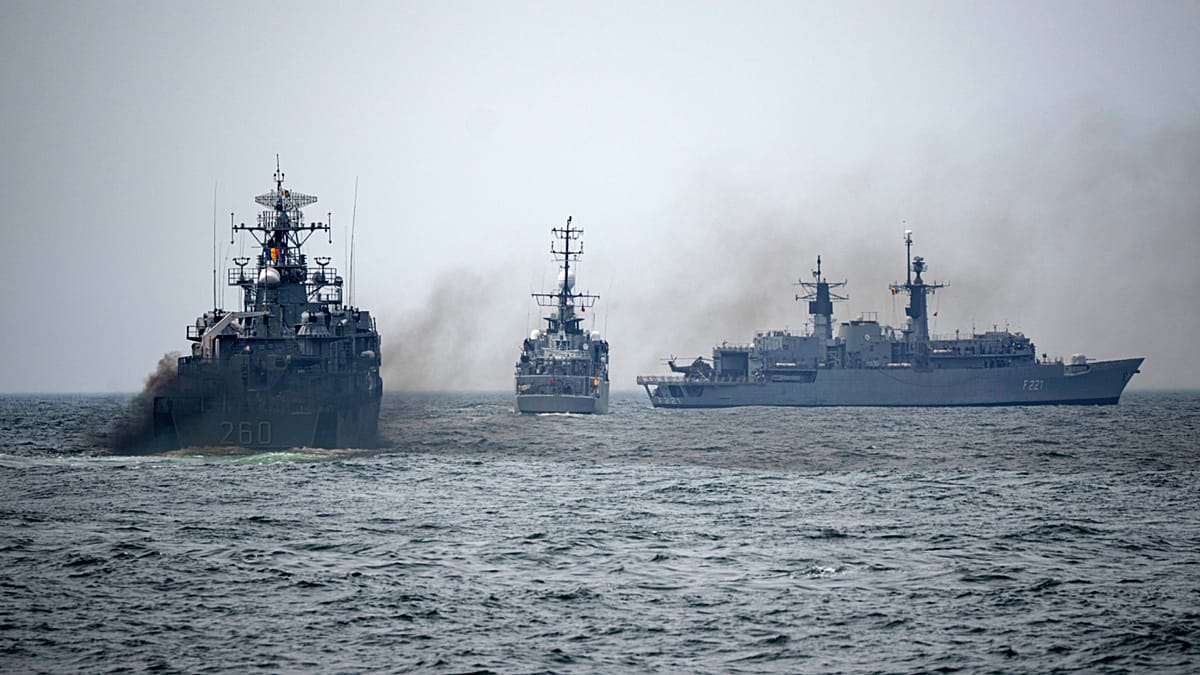
The investment is concentrated in a few countries that form the backbone of Europe's maritime defence industry. France, Germany, Italy, and Spain account for the vast majority of EU naval production, manufacturing submarines, surface vessels, and other equipment. The Netherlands, Sweden, and Poland complement these efforts with expertise in surveillance technologies and maritime security systems.
Yet the question remains: is this enough? The threat is not purely hypothetical. In recent months, there have been reports of suspicious activity near undersea cables in the Baltic Sea, and Lithuania has warned that Russia may stage false-flag drone attacks on Baltic infrastructure. Such incidents highlight the vulnerability of these critical assets.
European leaders are also aware that the threat extends beyond physical damage. Cyberattacks on maritime systems, or the use of hybrid tactics, could achieve similar results without a single shot fired. The EU's response must therefore be comprehensive, combining military preparedness with resilience in the private sector.
For the informed reader, the key takeaway is that Europe's economic security is tied to the safety of its underwater infrastructure. The EU's defence initiatives are a step in the right direction, but the scale of the challenge is immense. As the continent invests in new capabilities, it must also ensure that the private companies operating these networks are part of the solution.
The next battlefield may indeed be underwater, and Europe is racing to prepare. But whether these efforts will be enough to deter or withstand an attack remains an open question. The stakes could not be higher.