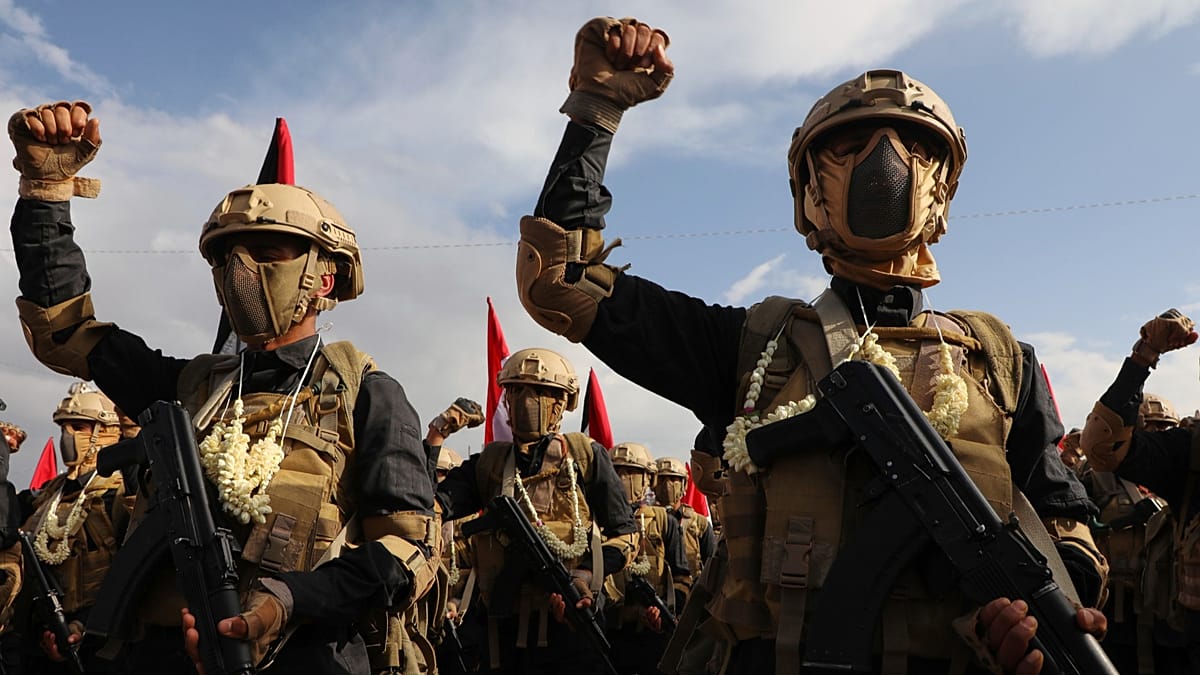
Yemen's information minister has accused the Houthi armed group of collaborating with Iran to impose a toll system on ships passing through the Bab el-Mandeb, the narrow strait at the southern entrance to the Red Sea. Moammar al-Eryani said on Wednesday that intelligence confirmed Iranian Revolutionary Guard Corps (IRGC) advisers were directly involved in designing the scheme, which he described as a dangerous escalation that would turn one of the world's most strategic maritime corridors into a permanent funding source for the militia's military and terrorist activities.
The Bab el-Mandeb, whose name in Arabic means "Gate of Tears", has become a critical route for crude oil deliveries after Iran's blockade of the Strait of Hormuz choked off Gulf energy exports. The Houthis, who control territory less than 100 kilometres from the strait, have already launched attacks on Israel-linked vessels during the Gaza war, forcing cargo volumes to plummet and ships to take lengthy detours around southern Africa.
Iran's playbook replicated
Eryani said the intelligence indicated that IRGC experts were helping to establish a dedicated entity responsible for collecting payments from shipping companies and commercial vessels. This mirrors Iran's long-standing claim to charge fees for transit through the Strait of Hormuz, a waterway that previously carried one-fifth of the world's crude oil and liquefied natural gas. Tehran insists on its right to collect tolls there, a position that remains a sticking point with the United States.
Anxieties are growing across the Gulf that the Houthis are hoping to copy Iran's Hormuz playbook by monetising access to the Bab el-Mandeb. Such a move would likely send world energy markets into further disarray, especially as the Strait of Hormuz crisis has already reignited European fuel prices after a brief ceasefire relief.
The Houthis, officially known as Ansar Allah, came to power in late 2014 after storming Sana'a and seizing the presidential palace and key military sites, forcing Yemen's government into exile. They are part of Tehran's so-called "Axis of Resistance", a network of militant groups that includes Hezbollah in Lebanon, Hamas in Gaza, and militias in Iraq.
Last week, the Houthis announced a maritime blockade of Saudi Arabia and have since claimed attacks targeting Saudi tankers and oil infrastructure. The blockade threatens Riyadh's ability to export millions of barrels of crude oil per day, and Saudi Arabia has retaliated with strikes on Houthi positions. On Wednesday, the US and Saudi Arabia launched strikes on members of a paramilitary alliance in Iraq that includes pro-Iran groups, killing at least 20 people, according to the Iraqi alliance.
The developments come as Gulf states and Iraq race to bypass the Strait of Hormuz amid the ongoing Iran conflict. Iraq has offered Turkey 1 million barrels of oil daily as the crisis reshapes energy routes, while Iran has rejected a US role in setting terms for war or peace, keeping the Strait of Hormuz closed.
For Europe, the implications are significant. The Red Sea route is a vital artery for trade between Asia and Europe, and any disruption to shipping there could drive up costs for European consumers and businesses. The European Union has already seen fuel prices spike due to the Hormuz crisis, and a similar scenario in the Bab el-Mandeb would compound the pressure.
Eryani's warning underscores the growing reach of Iran's influence in the region, as the Houthis seek to replicate Tehran's strategy of using maritime chokepoints as leverage. The international community, including European powers, will need to monitor the situation closely to prevent further escalation that could destabilise global energy markets and trade routes.