At least 11 people were killed and 96 wounded in a fresh wave of Russian strikes that swept across Ukraine between the night of 11 and 12 September. The Odesa region bore the brunt of the assault, but the attacks also reached the Dnipropetrovsk, Donetsk, Zaporizhzhia, Kyiv, Sumy, Kharkiv and Kherson regions.
Ukraine's Air Force reported that Russia launched 129 drones of various types, along with Iskander-M/KN-23 ballistic missiles, eight Kalibr cruise missiles and six guided Kh-59/69 missiles. Around half of the drones were fitted with jet engines, complicating interception. Ukrainian air defences managed to destroy or disrupt 110 aerial targets, including six Kalibr missiles, two Kh-59/69 missiles, one S-8000 Banderol cruise missile launched from a drone, and 101 unmanned aerial vehicles.
Odesa under fire
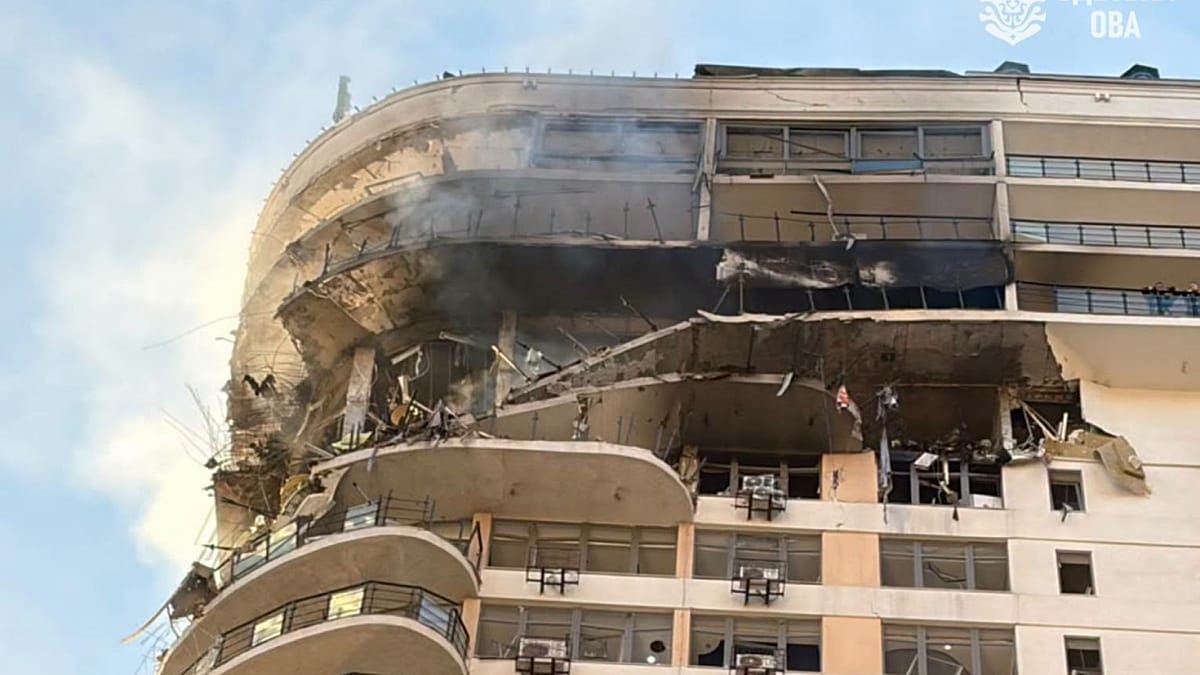
Odesa was one of the primary targets. At around 5:30 a.m., the Air Force warned that cruise missiles were heading towards the city from the Black Sea. A multi-storey residential building was damaged in the strike, according to regional governor Oleh Kiper. The number of wounded in the region climbed to at least 35, including a five-month-old baby and a 17-year-old, with several victims requiring hospitalisation.
The Dnipropetrovsk region also suffered heavily. In Dnipro, drones, artillery and air-dropped bombs struck an industrial facility, residential buildings, garages and vehicles, killing one person and injuring 19. Another strike on an industrial plant in Kryvyi Rih left one dead and three wounded, with a 54-year-old man in serious condition. In total, two people were killed and at least 22 wounded in the region, including a child, said governor Oleksandr Hanzha.
In the Zaporizhzhia region, Russian forces carried out strikes on 45 towns and villages over 24 hours, including five missile attacks on the city of Zaporizhzhia itself. Two people were killed and 11 injured. In the Donetsk region, four people died and five were wounded, with fatalities in Sloviansk, Kramatorsk and Yasnohirka, according to governor Vadym Filashkin.
The Kyiv region saw one death and three injuries, including a child, as attack drones hit five districts: Brovary, Obukhiv, Bucha, Boryspil and Vyshhorod. Fifteen facilities were damaged, including seven houses, vehicles, warehouses, hangars and a power line. In the Sumy region, a 68-year-old man was killed in a drone strike on the Myropillia community, and a 64-year-old man was wounded in a separate attack on Novoslobidske. Russian forces launched more than 50 attacks on 25 localities in the region, using artillery, mortars, FPV drones and guided bombs.
In Kharkiv, a 32-year-old man was killed, and a 19-year-old man was wounded elsewhere in the region. Russian forces struck Kharkiv and seven other localities with guided bombs and drones. In the Kherson region, 18 people were wounded as attacks targeted residential areas and critical infrastructure, damaging 15 residential buildings, shops, a petrol station, a service station, an ambulance and vehicles.
Ukraine hits Russian industrial targets
Ukraine's defence forces confirmed that during the same night they struck the Tolyattikauchuk plant in Russia's Samara region, a factory that supplies products used by the Russian military-industrial complex. The attack sparked a fire on the premises, and the scale of the damage is still being assessed, according to Ukraine's General Staff. The plant produces synthetic rubber, monomers, fractions and additives for high-octane fuels. Synthetic rubber is used in the production of solid fuel for short-range missiles and ballistic rockets.
Earlier, Ukrainska Pravda reported a Ukrainian strike on the Machine-Building Plant in Snizhne, located in Russian-occupied territory of the Donetsk region. That plant manufactures components for gas turbine engines, including compressor and turbine discs and blades.
Pressure on Russia's shadow fleet
While Russia bombarded Ukrainian cities, Kyiv continued its campaign against Russia's economic lifeline. On 12 September, Robert "Brovdi" Browdi, commander of Ukraine's Unmanned Systems Forces, announced further attacks on Russia's so-called "shadow fleet" — vessels used to transport Russian oil in circumvention of sanctions. According to Browdi, since the operation began about ten weeks ago, Ukrainian forces have attacked a total of 285 vessels belonging to the shadow fleet operating in the Azov and Black Seas.
The highest number of attacks came in July, with 215 vessels struck. In August, a further 54 were hit, and between 1 and 11 September another 16. Browdi claims that Ukrainian strikes have almost brought traffic by the shadow fleet in the Sea of Azov and the Kerch Strait to a halt, and have seriously impeded its activity in the northern and north-eastern parts of the Black Sea. He released footage that he said shows an attack by Ukraine's Unmanned Systems Forces on a sanctioned Russian vessel.
The campaign against the shadow fleet is part of a broader effort to choke off a key source of war funding. As European allies debate tapping frozen Russian assets and committing new aid, Ukraine is taking direct action to reduce Russia's oil revenue. The strikes also come amid growing concerns about NATO's ability to counter Russian hybrid threats, and as sanctioned Russian ships return to the Mediterranean under NATO watch.