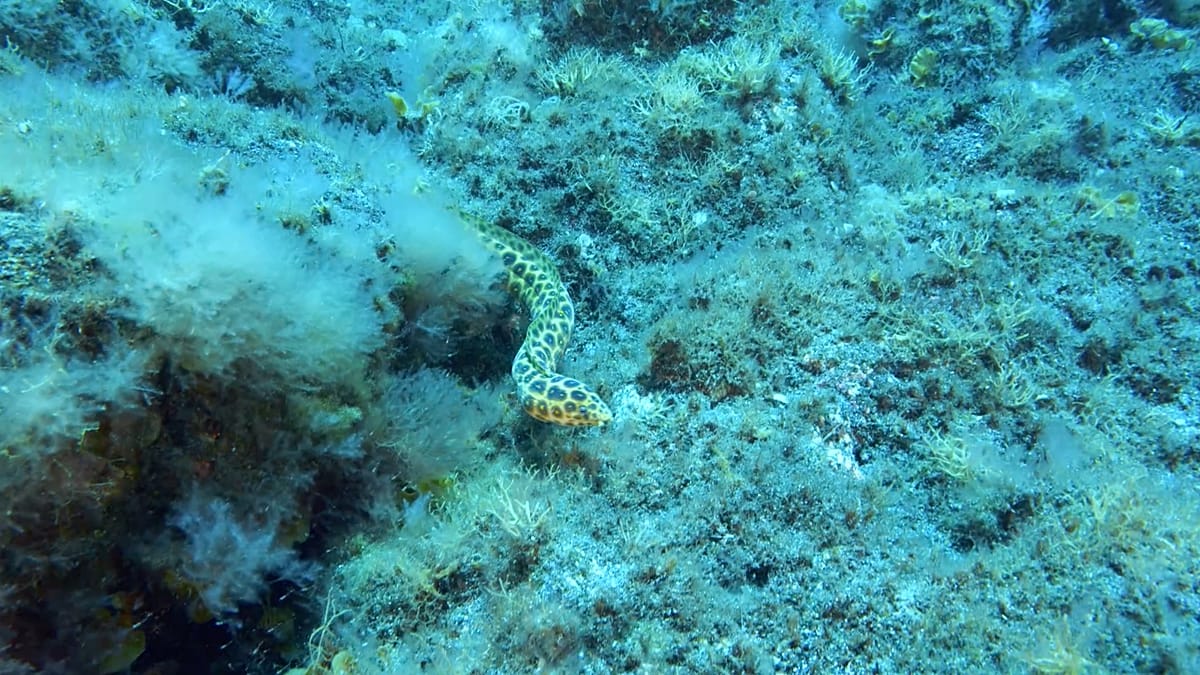
Off the coast of the Canary Islands, a growing network of divers, snorkelers, and beachgoers is helping scientists monitor the shifting composition of marine life. RedPROMAR, a citizen science initiative launched in 2015 by biologists Rogelio Herrera and Leopoldo Moro, relies on photographs uploaded by the public to track species that are new to these waters. The project has become a vital tool for understanding how climate change and human activity are reshaping the Atlantic archipelago.
Leopoldo Moro, a biodiversity specialist for the Canary Islands Government, explains that the idea emerged four years before the app went live. “Behind the RedPROMAR app is a huge team of validators and loads of active participants. We’re the ones steering the ship, but the strength of the vessel relies on all of our collective effort,” he says. The platform originally focused on jellyfish reports but has since expanded to cover a wide range of marine organisms.
Warming Waters and Tropical Arrivals
One key indicator the project monitors is the rise in surface water temperatures across the Canary Islands and the broader Macaronesia region—which includes the Azores, Madeira, and Cape Verde. Moro points to the Atlantic Meridional Overturning Circulation (AMOC) and the impact of climate change on its functioning. “The water here doesn’t get very cold in winter,” he notes, “and migrating tropical species are establishing themselves at an astonishing rate.”
Thanks to the large dataset collected through RedPROMAR, scientists can now draw conclusions that were impossible with limited data in the past. This big-data approach allows them to detect trends early and assess the ecological consequences of new arrivals.
Exotic, Invasive, or Neo-Colonising?
Moro draws a clear distinction between three categories of species that appear in new locations. A species is considered exotic only if its arrival is directly caused by human activity—for example, via ballast water in ships or attached to hulls. If such a species then spreads rapidly and disrupts local ecosystems, it becomes invasive. But there is a third category: neo-colonising species, which arrive naturally, without human assistance. A species that occurs naturally in Cape Verde, for instance, might drift with currents to the Canary Islands and proliferate on a massive scale. “It’s something we’ll never be able to control,” Moro says.
This distinction has practical implications. “We can take action against invasive alien species, but not against neo-colonising species,” he emphasises. The priority, therefore, is to prevent human-mediated transfers of fauna and flora. Exotic species often arrive in water tanks or on ship hulls; once established, they can harm both biodiversity and the local economy.
Similar challenges are playing out across Europe. In the Mediterranean, Greece has turned to fishermen to help cull invasive pufferfish, paying them with EU funds to reduce the population. Meanwhile, France has deployed sterile mosquitoes to combat the invasive tiger mosquito, and in the Balearic Islands, invasive snakes threaten the unique lizard species of Ibiza and Mallorca. These examples underscore the need for coordinated, science-based responses.
Moro’s work also highlights the importance of citizen engagement. By turning every beachgoer into a potential data collector, RedPROMAR amplifies scientific capacity without requiring vast budgets. The project’s success in the Canary Islands could serve as a model for other European regions facing similar ecological shifts.