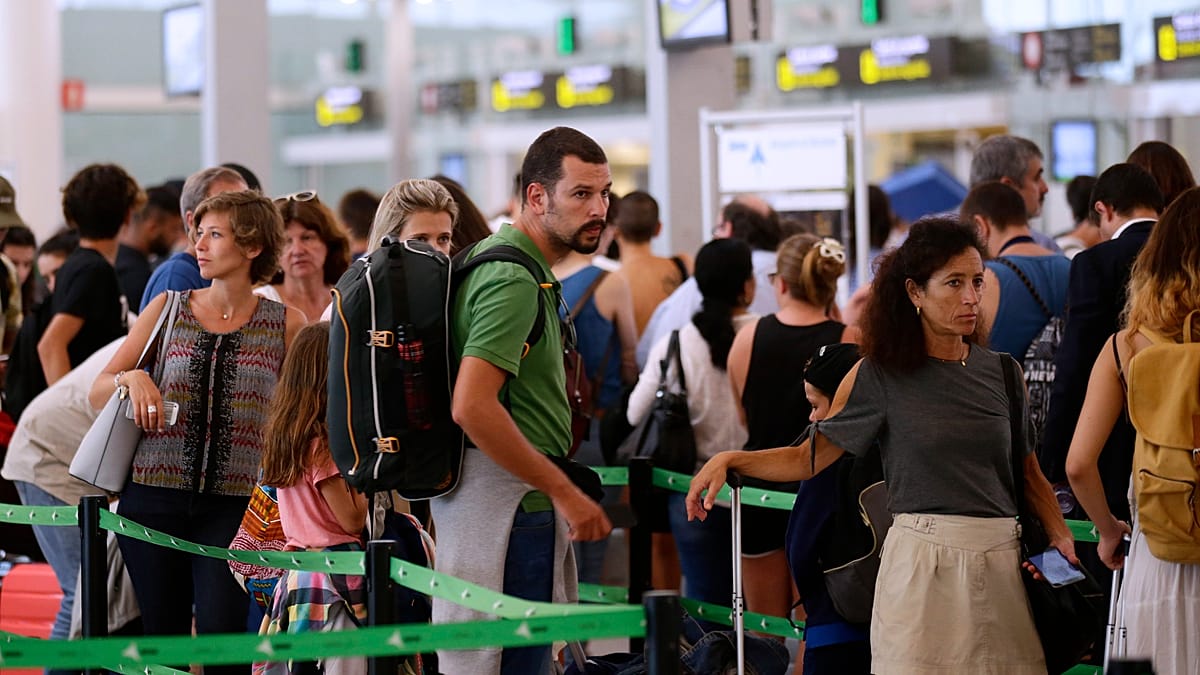
For two decades, European air passengers have faced a paradox: the EU’s Regulation 261/2004 grants them clear rights to compensation for flight delays, cancellations, and denied boarding, yet airlines have systematically avoided paying. According to consumer groups, this has left an estimated €3.2 billion in unpaid compensation—a gap that a new breed of intermediaries, known as claim agencies, has rushed to fill.
The European Council approved a long-awaited update to air passenger rights on 13 July, following the European Parliament’s backing on 7 July. The revision, which will take effect in mid-2027, aims to shift the burden of enforcement from passengers to airlines. But for now, the system remains deeply flawed, and claim agencies like AirHelp have built a profitable business model around that failure.
Why passengers fail to claim what they are owed
Low awareness is the primary obstacle. A survey by AirHelp found that 79 percent of respondents did not know their rights under EC261. Airlines inform travellers about their entitlements in only 40 percent of cases. Even when passengers are aware, complex procedures and deliberately confusing airline websites deter them from acting. “Airlines have no intention of giving clear information,” said Eric Napoli, chief legal officer at AirHelp.
Kristína Gírethová, aviation and rail policy officer at the European Consumer Association (BEUC), told Euronews: “Low awareness and burdensome procedures have prevented many passengers from exercising their rights under EC261. Only 38 percent of eligible passengers actually receive compensation. A majority of travellers do not even complain.”
Airlines frequently invoke the “extraordinary circumstances” clause—covering events like bad weather or technical faults—to reject claims. Passengers often lack the means to challenge these rejections. According to Napoli, “there is a huge difference between what the airline and what the passengers know. The consumer does not really have access to information on whether the airline is correct.” AirHelp’s data shows that airlines wrongfully reject 52 percent of claims, citing alleged bad weather, insufficient documentation, or technical problems.
How claim agencies turn rights into payouts
Claim agencies like AirHelp act as specialised legal intermediaries. Passengers submit flight details online; the agency uses automated systems to check whether a flight was delayed or cancelled, the duration, and the cause. If the airline’s rejection appears unjustified, the agency challenges it. “If the delay is not an extraordinary circumstance and therefore the airline should pay, we go to the airline and show them that it can’t be bad weather because within five minutes, there were five other planes that took off,” Napoli explained.
AirHelp claims to have secured compensation for more than 3 million passengers, winning 99 percent of cases—though only 2 percent went to court. “Airlines work with us on a regular basis to be very efficient. They know that we give them good claims. We often review them together and agree right on the spot. It’s a reduction of costs for them,” Napoli said.
This service comes at a price: AirHelp keeps 35 percent of successful compensations, rising to 50 percent if legal action is required. “We assume the cost of winning and losing. If you win, you pay. If you lose, you don’t,” Napoli said. The agency rejects about 20 percent of claims upfront because they are unlikely to succeed.
Critics, including the International Air Transport Association (IATA), label such agencies as “claim farms,” accusing them of “gaming the system and leaching off passengers.” But MEP Andrey Novakov of the European People’s Party, who served as rapporteur on the file, defended their role: “If everything worked, there would be no need for claim agencies. There wouldn’t be 12,000 court cases only in Berlin suing companies for compensation. This means that you are not protected and you look for protection from claim agencies.”
What the new rules mean for claim agencies
The revised regulation, which will apply from mid-2027, directly addresses the issues that have sustained the claim agency business. Airlines will be required to notify passengers of their rights, provide clear instructions for claiming compensation, and send compensation forms electronically within 96 hours of a disruption. They must acknowledge claims within 30 days and either pay or justify any refusal.
“The new rules shift the responsibility for seeking compensation to the airlines, to deal with bureaucracy, emails and forms,” Novakov said. “This will for sure make it easier for passengers to handle claims themselves.”
The regulation also maintains legal certainty around the concept of extraordinary circumstances, which should help prevent unjustified refusals. National Enforcement Bodies will be better equipped and expected to act more proactively, with closer cross-border coordination. As Gírethová noted, “If the rules become clearer, airlines provide information proactively and complaints are handled more efficiently, naturally some passengers will no longer need claim agencies.”
For now, however, the agencies remain a vital—if controversial—bridge between EU law and the travelling public. As the new rules phase in, the question is whether airlines will finally comply, or whether the claim agencies will simply adapt their business models to a new regulatory landscape.
For more on the timeline and details of the reform, see EU Airlines Get 12 Months to Implement New Passenger Rights Rules and EU Overhauls Air Passenger Rights: What Changes From 2027.