European manufacturers are weaving increasingly intricate supply chains that span the continent, drawing on suppliers, skills, and production capacity across multiple countries. For a company like Bosch, the United Kingdom occupies a distinct niche within this network—contributing specialized engineering expertise, a strong research base, and a stable business environment.
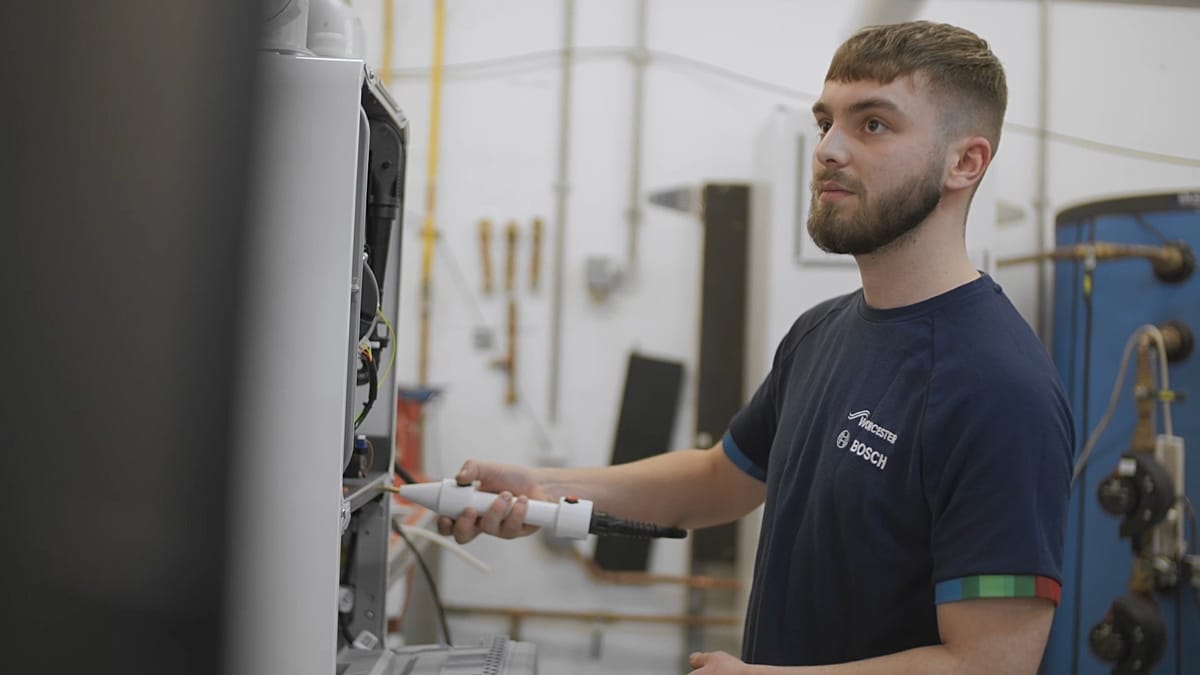
“Europe is… very much an integrated economy,” says Steffen Hoffmann, managing director of Bosch UK and Ireland. “It would not be sufficient to look for talent only in one country.” Bosch operates a network of manufacturing sites, research centres, and national businesses across Europe, sourcing components from different countries and supplying multiple markets. Hoffmann describes how this works in practice: “We have a number of plants in the UK for industrial products, including hydraulic drives in Birmingham and in Scotland, and a plant for heating boilers in Worcester. They all operate with suppliers, some of them based in the UK, but all of them supplying more than just one country.”
Frictionless Trade and Resilience
Suppliers provide mechanical parts, materials, and electronic systems, selected not only for their ability to serve a local site but for their competitiveness across Europe. This frictionless trade “is crucial to delivering supply-chain efficiencies and speed to market,” says Jo Shepherd, CEO of Worcester Bosch, Bosch’s UK-based heating business. It helps ensure consistent quality and reliability across markets. Sourcing decisions are increasingly shaped by wider economic and geopolitical factors. For European companies, resilience and independence are becoming more important. This cross-border model also helps manage risk in an increasingly uncertain global environment. “Resilience and reliability are absolutely essential to any manufacturer and this approach… gives us greater flexibility and less short-term exposure to global geopolitical volatility,” Shepherd adds.
Access to talent and innovation is another key factor. For Bosch, the UK’s research base supports the development of new technologies that feed directly into its supply chains. Hoffmann says: “We have a great university landscape – not only Oxford and Cambridge but also in London and elsewhere in the country, providing a good pool of graduates and talent, [and] a very vibrant start-up scene.” This combination of academic strength and entrepreneurial activity creates opportunities for collaboration and investment, feeding into Europe’s wider competitiveness. The UK’s role as a partner within Europe—with strong research capacity, established supply chains, and a stable business environment—becomes part of a broader business decision.
Local Expertise, European Scale
Operating across multiple countries also brings challenges. Products and services need to be adapted to local regulations and customer expectations in each market. At Worcester Bosch, this means combining insights from across the European business with local knowledge in the UK. “It is essential to take those learnings and apply them with genuine local care,” says Shepherd, referring to how products and services are tailored for UK customers. This combination of shared knowledge and ability to respond to local needs is central to maintaining performance across different markets.
As companies build more integrated supply chains across Europe, this approach is also being reinforced at policy level. Ceri Morgan, His Majesty’s Trade Commissioner for Europe, explains that the UK’s focus is now on strengthening cooperation and creating a more stable environment for businesses operating across borders. The relationship starts from “a very strong base,” with Europe remaining the UK’s largest export market. “We need to try to retain a certain [regional] independence,” Hoffmann says. “If we want to be taken seriously, we need to have a footprint and that requires independence from some of those other world regions.”
UK Government policy is reinforcing that position. The UK’s Industrial Strategy aims to support high-growth sectors, strengthen supply chains, and attract global talent, while providing long-term stability for business and investors. This aligns with broader European efforts to reduce dependencies on other world regions, such as the EU and US critical minerals pact aimed at countering China's supply dominance.
Both Hoffmann and Shepherd are clear that the UK’s value lies not in a single advantage, but in how it fits into a wider European system of collaboration. For Bosch, sourcing from the UK is part of an integrated approach that combines talent, innovation, and reliable supply chains. It is a practical partnership, shaped by everyday cooperation rather than abstract policy. As European companies continue to adapt to a more complex global environment—one where disruptions like those affecting global condom prices or jet fuel imports are increasingly common—that model, grounded in shared standards, local expertise, and cross-border collaboration, is likely to remain central to how they source and grow.