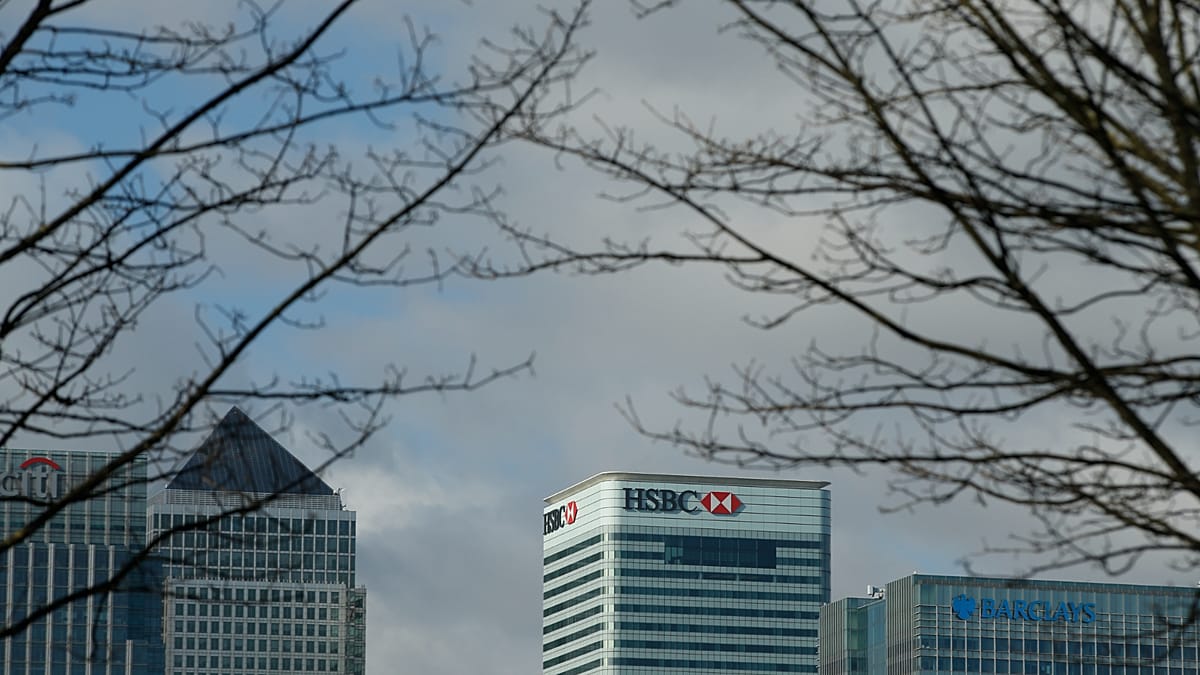
HSBC, Europe's largest bank by assets, delivered a robust first-half performance on Tuesday, posting a sharp rise in profit and unveiling a $1bn (€0.86bn) share buyback programme. The London-headquartered lender attributed the gains to higher net interest income and strong growth in fee and wealth management revenues.
Profit attributable to shareholders climbed approximately 27% to $14.6bn (€12.61bn) in the six months to June, up from $11.5bn (€9.93bn) a year earlier. Pre-tax profit rose 23% to $19.5bn (€16.84bn), while the second quarter alone saw pre-tax profit surge 60% year-on-year to $10.1bn (€8.72bn), supported by buoyant banking net interest income and robust wealth management activity.
Chief Executive Georges Elhedery, who took the helm in 2024, said the results reflect the bank's strategic execution. "HSBC is becoming the stronger bank we set out to build. We are executing our strategic priorities with pace, precision and discipline," he stated.
Capital returns and restructuring
In a sign of confidence, HSBC's board approved a second interim dividend of $0.10 (€0.09) per share and authorised a share buyback of up to $1bn (€0.86bn). This marks a return to buybacks after a three-quarter pause, during which the bank rebuilt capital following the privatisation of Hang Seng Bank.
The bank also raised its cost-savings target to $2bn (€1.73bn) from $1.5bn (€1.29bn), reflecting progress in its restructuring programme. HSBC said it would continue to simplify its operating model through a multi-year AI-led transformation aimed at streamlining workflows.
Since taking office, Elhedery has accelerated the bank's restructuring, including winding down much of its investment banking operations in the United States, Britain and Europe. The lender has announced 15 business or market exits since last year, with recent disposals including a $25.3bn (€21.85bn) Australian home loan portfolio sold to Blackstone and a $2.1bn (€1.81bn) Singapore insurance business sold to Germany's Allianz. On Sunday, HSBC also agreed to sell its retail banking business in Egypt.
These divestments are expected to free up capital for investment in strategic growth areas, the bank said. The moves are part of a broader effort to sharpen focus on core markets, particularly in Asia, where HSBC generates the bulk of its profits.
However, the strong results were partly offset by expected credit losses of $2.4bn (€2.07bn), $400m (€345.20m) higher than in the first half of 2025. The bank incurred $400m (€345.20m) of losses linked to a fraud involving a British financial sponsor and $200m (€172.60m) relating to Hong Kong's commercial property sector.
Despite these headwinds, HSBC's performance underscores the resilience of Europe's banking sector amid global economic uncertainty. The bank's focus on wealth management and fee income, alongside its disciplined cost management, has positioned it well to navigate a challenging interest rate environment.
Analysts noted that HSBC's buyback and dividend increase signal confidence in its capital position, even as it continues to offload non-core assets. The bank's restructuring, which has seen it exit several markets, is expected to yield further efficiencies in the coming quarters.
HSBC's results come as other European banks, such as BP, also report strong earnings, reflecting a broader trend of robust corporate performance across the continent. However, the bank's exposure to Asia, particularly Hong Kong and China, remains a key factor for investors to watch.