The European Commission has responded cautiously to Iceland's decision to reject reopening EU accession talks, a result that could slow the bloc's enlargement ambitions. In a referendum held on Sunday, 52.8% of voters chose "No" against 47.2% for "Yes", a margin that surprised many given the high turnout.
In a brief statement, a Commission spokesperson said: "The European Commission takes note of the outcome of Iceland's referendum. The Commission respects the choice of the Icelandic people. Iceland remains a close partner of the European Union."
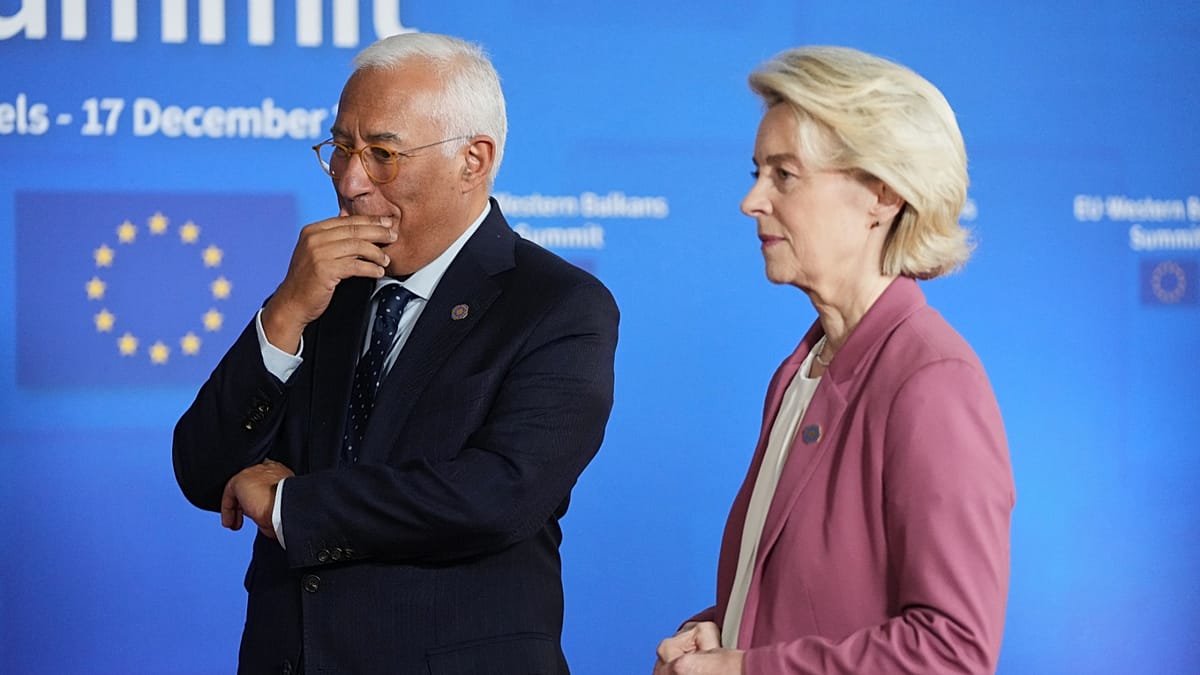
European Council President António Costa also reached out to Icelandic Prime Minister Kristrún Frostadóttir. According to his spokesperson, Costa "stressed that the EU fully respects the democratic choice of the Icelandic people" and that Iceland remains "one of the EU's closest and most trusted partners." Both leaders expressed a desire to continue strengthening EU-Iceland relations.
Frostadóttir, who had pledged to drop the membership question for the rest of her term if voters said no, acknowledged the result. "47% of the population was interested in it," she said on Sunday. "I think it is important that we go into the coming months and weeks and respect that point of view."
The outcome is a setback for Brussels, where officials had viewed Iceland as a near-ideal candidate that could have countered scepticism about enlargement. Given Iceland's deep integration with the EU through the European Economic Area, it was widely expected to become a frontrunner in the accession process, potentially alongside Montenegro.
Why Iceland said no
Iceland's reservations are long-standing. The last time Reykjavík and Brussels held accession talks, in 2013, the process was put on hold, largely due to concerns over fisheries and agriculture. Those two sectors remain excluded from Iceland's current single-market access, and the EU had signalled a willingness to find "creative" solutions to bridge the gap. But the referendum shows that many Icelanders remain unconvinced.
The narrow margin, however, suggests the issue is far from settled. With nearly half the electorate in favour of resuming talks, the debate is likely to continue, even if the government now sets the matter aside.
Impact on EU enlargement
The Icelandic vote comes at a delicate time for the EU's enlargement policy, which regained urgency after Russia's invasion of Ukraine. Montenegro is currently the frontrunner, having provisionally closed 18 of 33 negotiating chapters, and aspires to join by 2028 under the "28 by 28" slogan. Some in Brussels had hoped to pair Montenegro with Iceland to create a success story that would reassure sceptics that enlargement can work.
While the EU avoids setting artificial deadlines, it recognises the need to show progress before candidate countries lose patience. The rejection from Iceland, a country already closely aligned with EU rules, may make it harder to argue that enlargement is a smooth path. Yet the EU's response has been deliberately low-key, emphasising partnership rather than disappointment.
As the blow to enlargement ambitions becomes clearer, attention will turn to how the EU manages its relationships with other non-members, such as Norway and Switzerland, which also have close ties but have chosen to stay outside the bloc. The Icelandic result may reinforce the view that even the most integrated partners are not automatically willing to take the final step.
For now, Brussels is focusing on maintaining a constructive dialogue with Reykjavík. The EU's enlargement chief has unveiled plans to break the deadlock in other candidate countries, but the Icelandic referendum serves as a reminder that public opinion can be a formidable obstacle.
The coming months will show whether the EU can keep its enlargement drive on track without Iceland, or whether the No vote will embolden those who argue that the bloc's expansion has reached its natural limits.