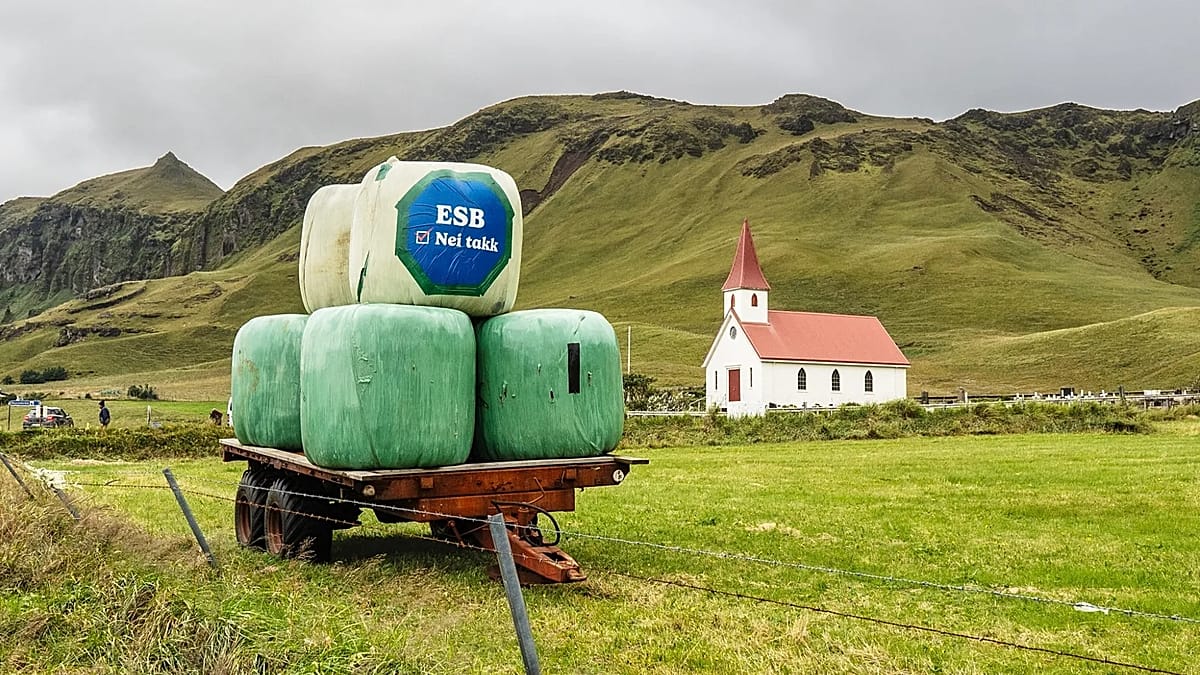
Reykjavík has spoken, and the message to Brussels is clear: the price of full membership, in terms of national control, remains too high. In a referendum on 1 March, Icelanders voted by 52.8% to 47.2% against restarting the accession negotiations that were frozen in 2013. While the vote was not a direct ballot on EU membership itself, it effectively slams the door on any near-term return to the negotiating table.
The outcome is a bitter pill for the European Commission, which had hoped that Iceland—a stable, wealthy democracy already deeply integrated into the EU's internal market through the European Economic Area and the Schengen zone—could serve as a showcase for the bloc's revitalised enlargement policy. Instead, the rejection underscores the limits of that policy, even in a country with such close ties to the Union.
Fish trumped Trump
The narrow result suggests that the assertive posture of the Trump administration in the Arctic did not push Icelanders closer to the Union. Washington's repeated interest in acquiring Greenland, and occasional rhetorical confusion between the Danish territory and Iceland, has highlighted the strategic importance of the North Atlantic. For pro-EU campaigners, that was an argument for seeking the safety of the bloc. But it was not enough.
The campaign was dominated by the familiar fault lines that have shaped Iceland's EU debate for two decades: control over fisheries and agriculture, sovereignty, and the country's distinctive economic model. The prospect of negotiating the Common Fisheries Policy with Brussels frightened voters more than any threat from Washington. As one Reykjavík-based analyst put it, 'Icelanders are more worried about losing their fish than about losing their sovereignty—though they see both as intertwined.'
Supporters of the 'No' side leaned heavily on warnings that ceding economic policy to Brussels would erode national control. The 'Yes' camp, meanwhile, failed to convince the public that the benefits of full political integration would outweigh the loss of autonomy. Even Prime Minister Kristrún Frostadóttir, who had cautiously framed the referendum as a chance for the nation to decide its own future, acknowledged that it was impossible to know whether the advantages would outweigh the drawbacks before actual negotiations took place.
A reputational setback for Brussels
For the EU, the political symbolism is worse than the practical impact. Since Russia's full-scale invasion of Ukraine, Brussels has tried to revive enlargement as a strategic project, fast-tracking candidate status for Kyiv and Chișinău while keeping the Western Balkans engaged through investment and partnership. Iceland's accession would have offered a fresh narrative: a wealthy, well-governed country choosing to join the club, proving that membership remains attractive beyond the poorer candidate states of the east.
Instead, the referendum result is an unwelcome reminder that even a country as closely aligned as Iceland can see full membership as a step too far. It echoes earlier popular rejections of EU treaties and expansions. In 2005, French and Dutch voters torpedoed the Constitutional Treaty. In 2008, the Irish rejected the Lisbon Treaty before approving it in a second vote a year later. The closest parallel, however, is Norway, which twice voted against membership—in 1972 and 1994—over similar concerns about sovereignty and fisheries. Switzerland, too, has repeatedly opted for tailored bilateral arrangements over deeper integration.
The Icelandic 'No' does not mean the country is turning anti-European. Its relationship with the EU, through the EEA and Schengen, remains intact. But the vote offers a sobering lesson for Brussels: in an increasingly uncertain world, national control can appear more valuable than ever. As the EU pushes ahead with its enlargement agenda, it may have to accept that some doors will remain closed, no matter how inviting the offer.