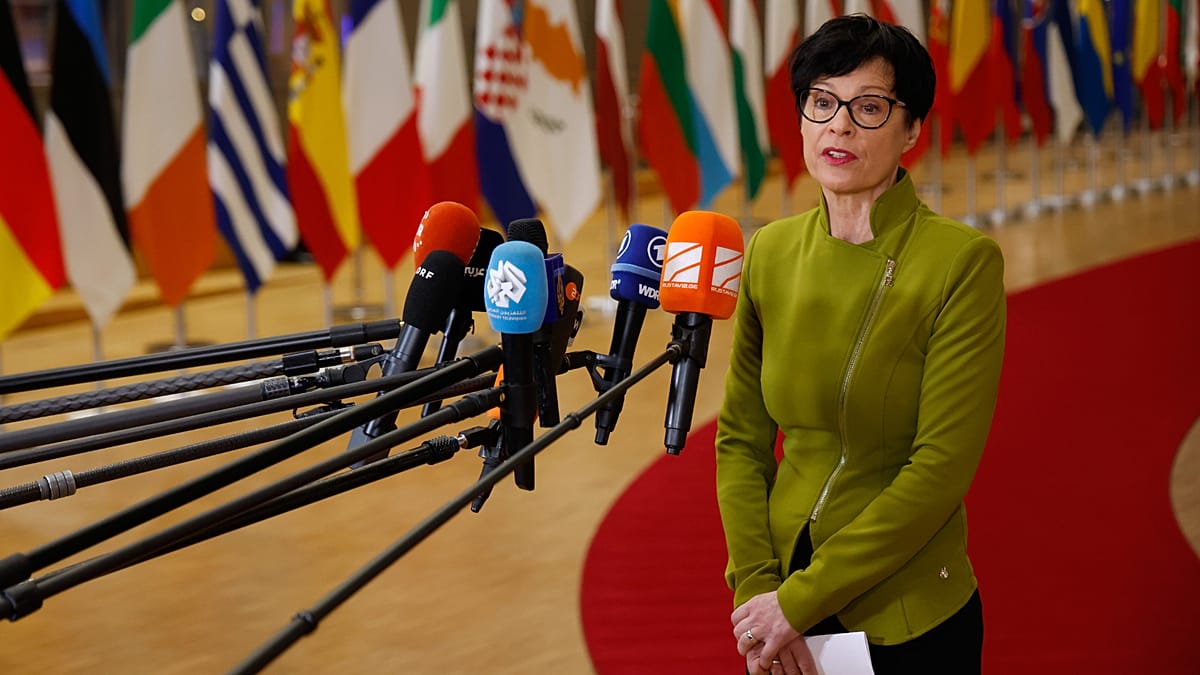
European Commissioner for Enlargement Marta Kos has laid out a comprehensive strategy to overhaul the EU's accession process, aiming to break the current deadlock and prepare the bloc for a future of more than 30 member states. Speaking at the Croatian Ambassadors Conference in Zagreb on Tuesday, Kos described the moment as a new "Helsinki Moment," drawing a parallel to the 1975 conference that set the stage for the post-Cold War expansion of the EU.
"The world has changed. And enlargement must change with it," Kos said, emphasizing the need for a fresh approach as candidate countries like Montenegro, Albania, Ukraine, and Moldova make progress. The Commission's upcoming pre-enlargement policy review, long shelved, is being revived to regain momentum ahead of a critical discussion among EU leaders in October.
Internal reforms without treaty changes
Kos argued that a larger Union requires significant internal reforms to remain effective in times of crisis. Crucially, she believes these changes can be achieved without amending the EU treaties, which would involve lengthy negotiations and unpredictable ratification processes. Instead, she suggested making decision-making "leaner and more flexible," potentially reducing the number of areas where a single member state can block action, and making institutions smaller.
She also highlighted the potential of enhanced cooperation, a mechanism that allows a group of countries to move forward on initiatives when others are not ready, as seen with the Schengen area and the euro. This approach, she argued, could help the EU adapt more swiftly.
Democratic safeguards to prevent backsliding
Another key element is strengthening safeguards to prevent new members from backsliding on democratic standards and the rule of law, a lesson drawn from the experience with Hungary under Viktor Orbán. "We need to take it one step further. We must make sure we do not let in Trojan horses. Not today, not in 10 or 20 years from now," Kos said.
The proposal has sparked controversy, as it risks creating a two-tier membership system, contrary to the EU's principle of equal treatment. However, Montenegro's EU ambassador, Petar Marković, told Euronews that Podgorica would support such safeguards if they are based on objective criteria and applied case-by-case. Kos added that stronger safeguards could also ease the ratification process in existing member states.
Gradual integration to bridge the gap
France and Germany have pushed for a new enlargement methodology, particularly "gradual integration," offering candidate countries tangible benefits earlier in the process. Kos stressed the need to move away from an "all or nothing" logic, as the current process can take decades, leaving room for adversaries to exploit uncertainty.
"We need a more structured approach to bridge the time we no longer have," she said. Early benefits, such as joining the Single Euro Payments Area (SEPA) or connecting to the EU's energy grid, are positive but insufficient. The urgency is heightened by Ukraine's accession process, with some EU capitals considering membership and security guarantees as part of a potential peace deal with Russia.
Transitional measures and budget protection
Finally, Kos emphasized the need to understand the impact of new members on existing states and protect the EU's interests. "We have experience with far-reaching transitional measures to make sure the integration of newcomers runs smoothly," she said, adding that the EU budget must continue to finance priorities.
The Commission's proposal comes as the EU faces strains on its negotiating capacity and internal debates over budget constraints. The path forward will be a key topic at the October summit, where leaders will debate the future of enlargement.