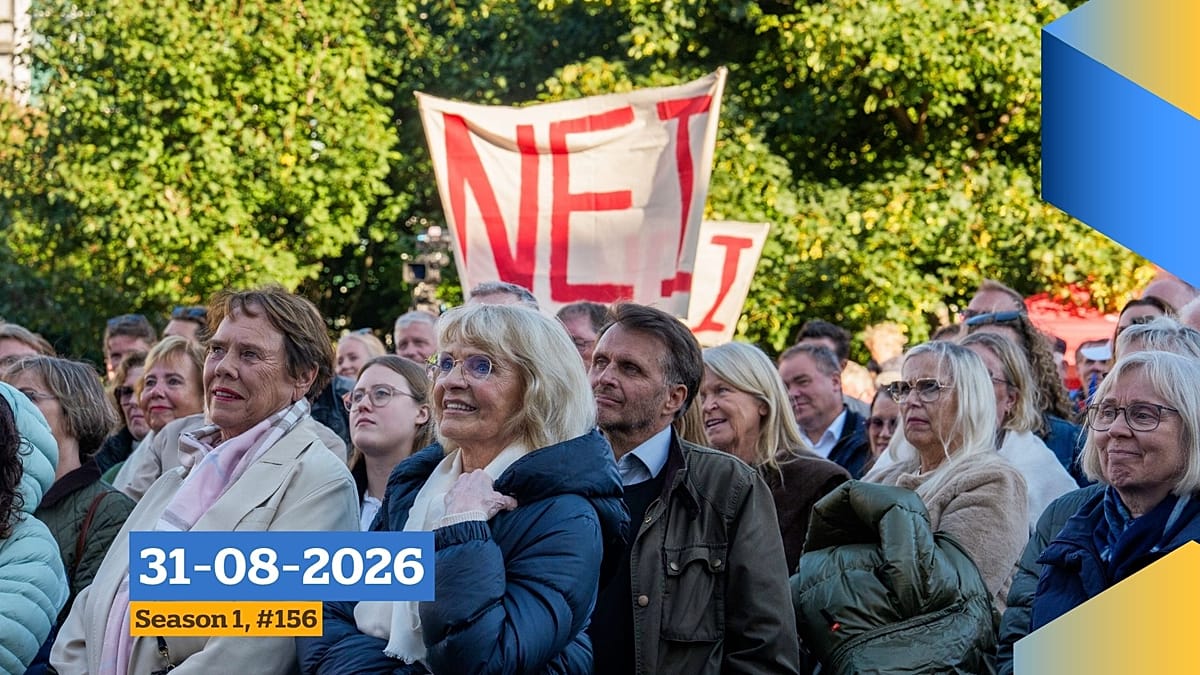
Reykjavík — Iceland has delivered a clear "No" to resuming European Union membership talks, a decision that effectively shelves the island's accession ambitions for the foreseeable future. The referendum, held over the weekend, saw voters reject the proposal to reopen negotiations with Brussels, a process that had been dormant since 2015 when the previous government withdrew the application.
The outcome is a significant setback for EU enlargement advocates, who had hoped that Iceland's return to the table would bolster momentum for bringing new members into the bloc. Instead, the result adds to a growing list of hurdles for the EU's expansion agenda, which already faces challenges in the Western Balkans and Ukraine.
Why Iceland said no
The "No" camp, led by fishing and farming interests, argued that EU membership would threaten Iceland's control over its natural resources, particularly its lucrative fisheries. The Icelandic Farmers' Association was at the forefront of the campaign, warning that Brussels' common fisheries policy would undermine the country's sustainable management of its waters.
Margrét Ágústa Sigurðardóttir, secretary general of the Icelandic Farmers' Association, said the result reflected a deep-seated desire to maintain national sovereignty over key sectors. "Icelanders have spoken clearly: we want to keep our own decisions on our resources, our environment, and our rural communities," she told Europe Today.
Pro-EU voices, however, expressed disappointment, arguing that the referendum was a missed opportunity to strengthen Iceland's position in Europe. Dagur B. Eggertsson, a member of parliament and former mayor of Reykjavík, said the result would leave Iceland on the sidelines as the EU deepens cooperation on security, trade, and climate. "This is a conservative choice that will have long-term consequences for our influence in Europe," he said.
The narrow margin of the vote — with just over 50% against — suggests a deeply divided nation. Analysts point to a generational split, with younger voters more open to EU membership, while older generations remain skeptical. The narrow no vote has left both camps claiming a mandate, but the path forward remains unclear.
Hoekstra's warning on wildfires
As Iceland turned inward, the EU's climate chief used the summer's devastating wildfires to call for a shift in strategy. Wopke Hoekstra, the European Commissioner for Climate, Net Zero and Clean Growth, told Europe Today that the bloc must invest more in prevention rather than paying for the damage after the fact.
"We are seeing more frequent and more intense wildfires across Europe, from the Mediterranean to the Atlantic coast," Hoekstra said. "Every euro spent on prevention saves many more in recovery costs. We need to act now, not after the next disaster."
His comments come after a summer of record heatwaves and fires in Greece, Spain, Portugal, and even countries like Ireland and the UK, which are unaccustomed to such blazes. Hoekstra emphasized that climate adaptation must be a core part of the EU's budget and national planning.
The commissioner also touched on the bloc's relationship with China, warning that European companies must reduce their dependence on Chinese supply chains for critical raw materials and clean energy technologies. "We cannot trade one dependency for another," he said, urging a more strategic approach to economic security.
NATO spy scandal in Mons
Separately, a spy scandal has shaken NATO's headquarters in Mons, Belgium. A Canadian national of Chinese origin, who was interning at the alliance, has been accused of espionage. Details of the case remain tightly guarded, but the incident has raised serious questions about how an alleged spy could gain access to one of the world's most sensitive military organizations.
Angela Skujins, reporting from Mons, noted that the case has prompted a review of NATO's vetting procedures. "The fact that this individual was able to secure an internship and access classified information is deeply concerning," she said. "It highlights vulnerabilities in the alliance's security protocols."
The accused individual has not been named, and the charges have not been formally filed. NATO has declined to comment, citing the ongoing investigation. The incident is likely to fuel debates about foreign influence and espionage within Western institutions.
For Iceland, the referendum result may also have security implications. As a member of NATO but not the EU, Iceland relies on the alliance for its defense. The "No" vote does not change that, but it does mean that Iceland will not have a seat at the table when the EU discusses defense cooperation, a growing area of focus for the bloc.
The EU enlargement momentum has already been slowed by the bloc's internal debates over the pace of expansion. Iceland's decision adds another layer of complexity, as the EU seeks to demonstrate that membership remains an attractive prospect.
For now, the Icelandic government has said it will respect the outcome and will not pursue further talks. The issue is unlikely to return to the political agenda for years, leaving the island in a unique position: closely integrated with Europe through the European Economic Area, but firmly outside the political union.