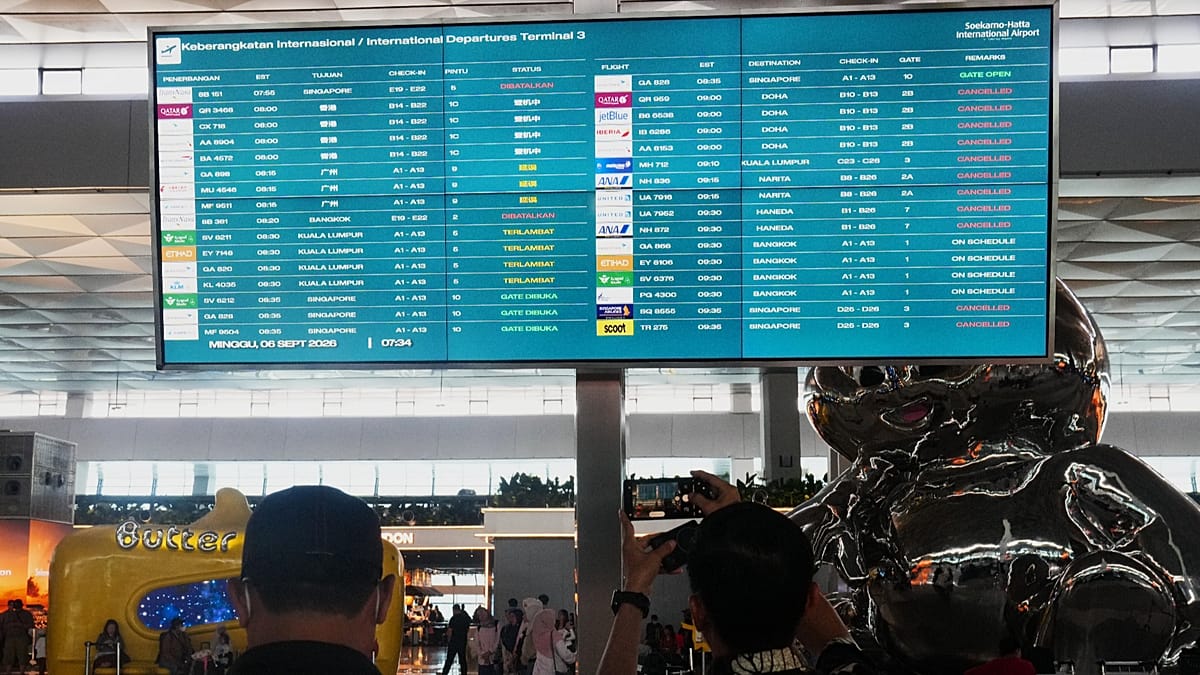
Indonesian aviation is slowly returning to normal after a volcanic eruption forced the closure of major airports for two days, disrupting travel for hundreds of thousands of passengers. The Anak Krakatau volcano, located in the Sunda Strait between Java and Sumatra, erupted over the weekend, blanketing airports in ash and prompting authorities to halt operations.
On Tuesday morning, the main airport serving Jakarta, Soekarno–Hatta International Airport, along with four other airports, reopened after crews cleared volcanic ash from runways and critical infrastructure. Transport Minister Dudy Purwagandhi told reporters that flight schedules would take time to fully recover, as safety checks are being conducted on aircraft that were grounded during the closure.
“We will be operating these aircraft, but before we do so, we want to ensure their airworthiness. So, it may take a bit of extra time,” Dudy said. He added that around 178 aircraft were parked at Soekarno–Hatta during the disruption, and each must be inspected before returning to service.
“We ask for a little patience from passengers and the public, as we will be carrying out inspections to ensure that these aircraft are fit to fly,” he added. The minister confirmed that three flights departed shortly after the airport reopened, including two commercial services to eastern Indonesia.
The eruption of Anak Krakatau, whose name means “child of Krakatau,” is a reminder of the region's volatile geology. The volcano is the offspring of the infamous Krakatau, whose catastrophic 1883 eruption caused global cooling. Anak Krakatau has been active for decades, and a 2018 collapse triggered a tsunami that killed more than 400 people in Sumatra and Java.
According to Lana Saria, head of the Geology Agency, the volcano erupted at least three times on Tuesday morning alone. The ash cloud from these eruptions has been drifting across the region, posing risks to aviation and public health.
Indonesia sits along the Pacific “Ring of Fire,” a zone of intense seismic activity where tectonic plates collide. The country has more than 120 active volcanoes, making eruptions a recurring challenge for its infrastructure and economy. This latest disruption affected nearly 3,000 flights and stranded more than 340,000 passengers, according to official figures.
Airport operator Angkasa Pura Indonesia said in a statement that volcanic ash had been cleared from runways and other areas to ensure facilities were safe for flights. The company is working with airlines to restore normal operations as quickly as possible, but passengers are advised to check with their carriers for updated schedules.
Broader regional impact
The closure of Jakarta's main airport had ripple effects across the region, with some flights diverted to other hubs in Southeast Asia. The disruption also comes amid concerns about air quality, as volcanic ash can be hazardous to health, particularly for those with respiratory conditions.
While the immediate focus is on restoring flight operations, the longer-term implications for travel and trade are significant. Indonesia is a major tourist destination and a key player in global supply chains, and any prolonged disruption could have economic consequences.
For European travelers, the situation is a reminder of the fragility of air travel in volcanic regions. Similar events in the past, such as the 2010 Eyjafjallajökull eruption in Iceland, caused widespread cancellations across Europe, highlighting the need for robust contingency plans.
As Indonesia works to get its aviation sector back on track, authorities are also monitoring the volcano's activity. The Geology Agency is keeping a close watch on Anak Krakatau, and further eruptions could lead to renewed disruptions. For now, passengers are being urged to remain patient as airlines and airports prioritize safety.