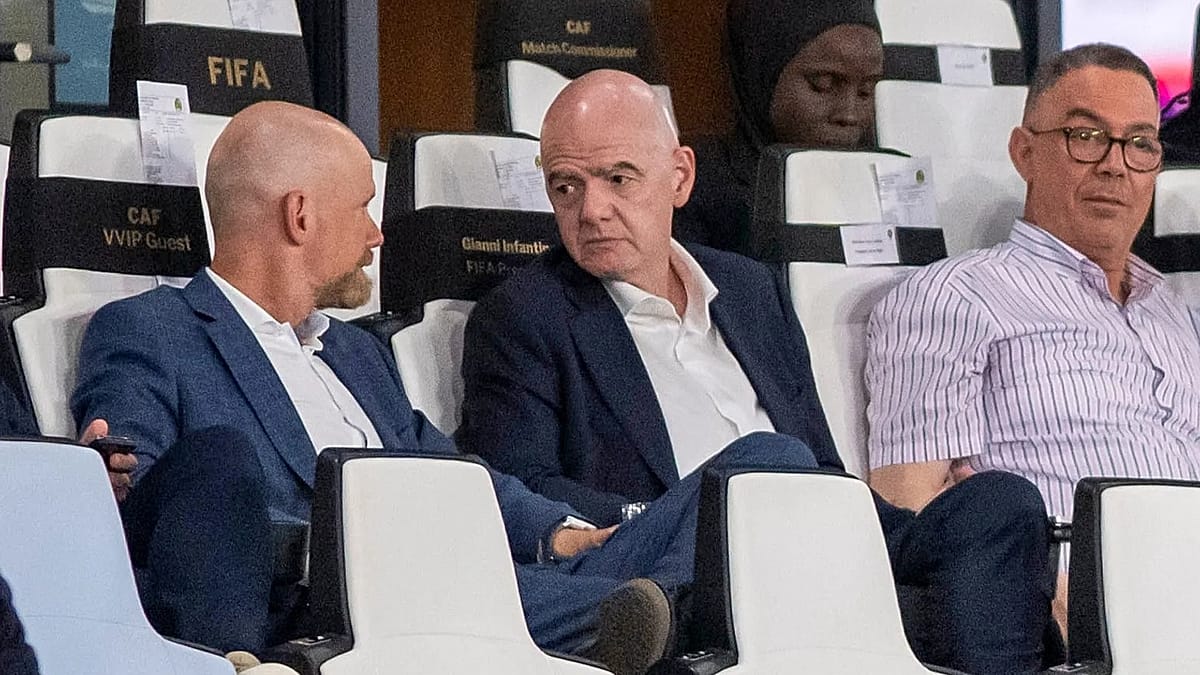
The aftermath of the 2026 World Cup was supposed to see FIFA retreat from the spotlight, allowing club football to reclaim the headlines. Instead, the governing body has found itself at the centre of a governance storm that is splitting the global game into two camps: those demanding Gianni Infantino's departure, and those rallying behind him.
The controversy erupted in late July when FIFA unveiled a proposal to create a new subsidiary, the FIFA Forward Enterprise (FFE), which would have managed its commercial operations and flagship tournaments, including the World Cup. Private investors would have been invited to buy stakes, with FIFA suggesting the venture could raise up to $4.2 billion based on an initial valuation of $20 billion. The plan was met with immediate and widespread condemnation from across the football community, forcing FIFA to shelve it and issue an apology. Infantino, who has led FIFA since 2016, has vowed to continue in his role despite the mounting pressure.
Now, the crisis has evolved into a clear geographical and financial divide. European football's governing body, UEFA, has been the most vocal opponent. Its 55 member associations threatened to boycott FIFA competitions unless the FFE plan was withdrawn. Although FIFA scrapped the proposal, UEFA said the apology and continued support for Infantino "changes nothing." In a statement, UEFA insisted that its conditions had not been met: the sell-off plans had to be dropped, and guarantees given that such attempts to "disfigure the game" would never be repeated.
Several national federations have gone further, withdrawing their backing for Infantino's re-election bid. Wales, Finland, Serbia, and Sweden were among the first to announce they would no longer support him, with the Serbian FA describing its decision as the "only logical and rational course of action" after events that had "seriously damaged the standing and reputation of both FIFA and its president." They have since been joined by the football associations of England, Norway, Jordan, and Albania.
The Norwegian FA has taken the most decisive step, calling for Infantino's resignation. Its president, Lise Klaveness, said: "We believe that trust has now been lost and that FIFA needs new leadership. When trust is lost, the leadership must also be reassessed. We therefore believe that Gianni Infantino’s time as FIFA President should be over, and we are asking him to step down."
Yet Infantino retains significant support, particularly among associations that rely heavily on FIFA's development funding. On Thursday, the Confederation of African Football (CAF) announced it had "unanimously reconfirmed its support" for Infantino, thanking him for his role in developing African football. CAF president Patrice Motsepe said the confederation would "continue to focus on making African Football amongst the best in the world" and reaffirmed its commitment to governance and transparency.
That backing is not without reason. In October, Infantino told an audience in Kinshasa that FIFA had invested more than $1 billion into African football through its Forward Programme since 2016, with a projected total of $1.28 billion by the end of 2026. For many smaller federations, such funding is essential to remain competitive on the international stage.
World Cup co-hosts Mexico have also stood by Infantino, as have Paraguay and World Cup runners-up Argentina. Despite criticism from CONCACAF, the Mexican Football Federation said it "supports president Infantino's leadership to continue driving the development of football through institutional strengthening."
The divide is not merely about money; it reflects deeper tensions between European football's established powers and the rest of the world. European associations, with their wealthy domestic leagues and strong governance traditions, are less dependent on FIFA's largesse and more concerned about the sport's integrity. In contrast, many African, Asian, and Latin American federations see Infantino as a benefactor who has redirected resources to regions that have long been marginalised.
As the debate intensifies, the future of FIFA's leadership remains uncertain. Infantino has survived previous crises, including a recent emergency meeting that failed to resolve the impasse. But with UEFA holding firm on its boycott threat and European federations rallying against him, the pressure shows no sign of abating. The coming months will test whether Infantino can bridge the gap or whether the divide becomes a chasm that forces a change at the top.