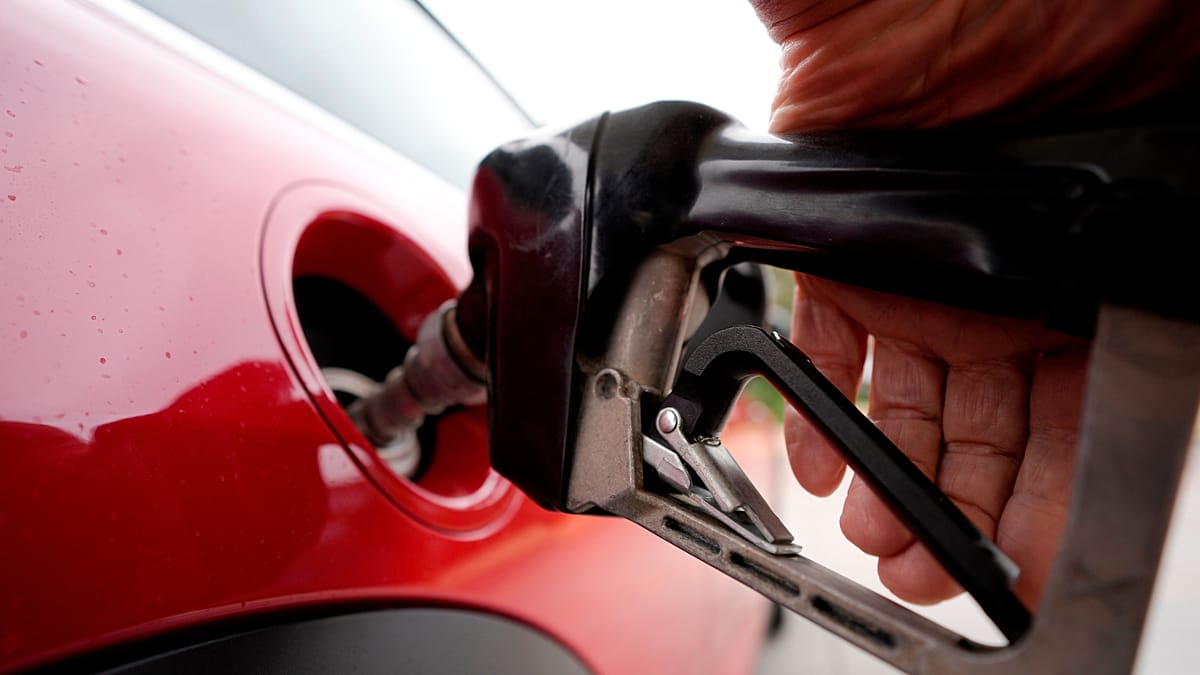
US inflation accelerated to 3.8% in April, the highest level in over a year, as the ongoing Iran conflict sent petrol prices soaring by more than a quarter year-on-year. The data, released by the US Department of Labour on Tuesday, underscores how geopolitical turmoil in the Middle East is rippling through the world's largest economy—and carries direct consequences for European energy security and trade.
On a monthly basis, the consumer price index rose 0.6% from March, with petrol alone up 5.4%. The American Automobile Association reported the average gallon of petrol at $4.50 (€3.84), roughly 44% higher than a year ago. Core inflation, which strips out volatile food and energy, rose a more modest 0.4% month-on-month and 2.8% annually, suggesting that the energy price shock has not yet fully spread to other sectors.
Real wages fall for first time in three years
For American households, the pinch is tangible. Average hourly wages, adjusted for inflation, dropped 0.3% year-on-year in April—the first such decline in three years. Heather Long, chief economist at Navy Federal Credit Union, described the situation as a "real financial squeeze" that is forcing middle-class and lower-income families to cut back on spending. "For the first time in three years, inflation is eating up all wage gains," Long wrote. "This is a setback for middle-class and lower-income households, and they know it."
Grocery prices rose 0.7% from March to April, driven by higher meat costs, adding to the burden. Grace King, a 31-year-old administrative assistant from Ames, Iowa, told reporters she has stopped spending $200 (€170) a month on clothing, a habit she previously maintained through Amazon purchases.
Hormuz blockade and the energy shock
The root cause of the latest inflationary spike lies in the conflict that erupted on 28 February, when the US and Israel launched strikes against Iran. Tehran retaliated by bombarding neighbouring states and effectively shutting the Strait of Hormuz, a chokepoint through which roughly a fifth of the world's oil and liquefied natural gas (LNG) passes. Energy prices skyrocketed, and the effects are now cascading through global supply chains.
European markets have not been immune. The disruption has driven up oil prices above $100 per barrel, benefiting producers like Shell, whose profits have doubled, but pressuring import-dependent economies across the continent. The European Central Bank faces a delicate balancing act as it monitors whether higher energy costs will feed into broader inflation, potentially delaying its own rate-cutting cycle. Meanwhile, European stocks have surged in 2026, driven by gains in AI, defense, and hydrogen sectors, but the energy shock remains a wildcard.
Fed cautious as Trump pressures for rate cuts
The US Federal Reserve, which had been expected to begin cutting its benchmark interest rates in 2026, has adopted a wait-and-see stance. Chair Jerome Powell faces pressure from President Donald Trump to slash rates to stimulate the economy, but the uncertainty surrounding the duration of the Iran war and its spillover effects has made the central bank cautious. Kevin Warsh, Trump's nominee to succeed Powell, is expected to be confirmed by the Senate this week. It remains unclear whether Warsh would pursue lower rates given the inflationary risks, or whether he could secure consensus on the rate-setting committee.
The conflict is also hitting corporate America. Whirlpool, the manufacturer of KitchenAid and Maytag appliances, reported a nearly 10% drop in quarterly revenue last week, blaming a "recession-level industry decline" linked to the war that has undermined consumer confidence. Such developments echo concerns in Europe, where manufacturers are grappling with similar demand weakness and input cost pressures.
The broader implications for Europe are significant. The disruption of Hormuz flows has already reshaped inflation hedges, with oil outperforming gold as rates rise. European policymakers are watching closely, as any sustained rise in US inflation could force the Fed to keep rates higher for longer, strengthening the dollar and putting pressure on eurozone exports. The conflict also raises questions about energy diversification, a topic that has gained urgency since Russia's invasion of Ukraine.
For now, the data paints a stark picture: inflation in the US is running well above the Fed's 2% target, and the war shows no signs of abating. European readers should note that while the immediate impact is felt in American petrol stations and supermarkets, the interconnected nature of global energy and financial markets means that the fallout will inevitably reach the continent's shores.