Tehran has pushed back against a flippant remark by US President Donald Trump, insisting that the Strait of Hormuz will stay under Iranian control. The exchange underscores the fragile state of US-Iran relations, with the strategic waterway still closed to most shipping despite a provisional agreement reached in June.
Speaking to reporters in New York on Friday, Trump chuckled as he said: "After we finish defeating Iran, which is being very badly defeated, pretty soon I'll be declaring the Hormuz Strait a territory of the United States." He added, "We have the blockade. No ships get through unless we want them to."
It was unclear whether the president was speaking literally, but the comment drew an immediate and forceful response from Tehran. In a post on X on Saturday, Iran's Deputy Foreign Minister for Legal and International Affairs, Kazem Gharibabadi, wrote: "The Strait of Hormuz has been Iranian, is Iranian, and will remain Iranian." He went on to say that the strait "will only be closed and opened under Iran's command," and warned that unless Washington "accepts the reality of defeat and ceases its fanciful delusions," Iran will continue to enforce the blockade.
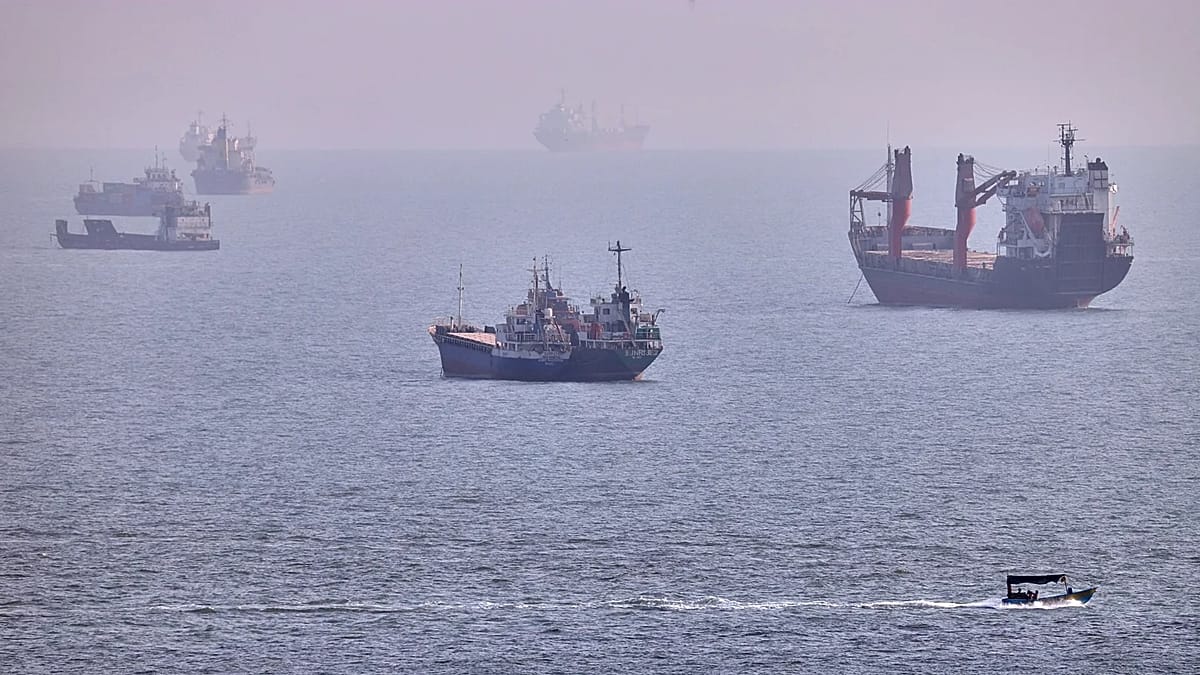
The Strait of Hormuz is one of the world's most critical energy chokepoints, connecting the Persian Gulf with the Gulf of Oman and the Arabian Sea. Roughly a quarter of global seaborne oil trade passes through its narrow shipping lanes, making any disruption a matter of immediate concern for energy markets and for European economies that rely heavily on Gulf crude.
A fragile truce under strain
The latest war of words comes amid a fragile truce. In late February, Iran effectively closed the strait following the outbreak of the Iran war, a move that sent shockwaves through global energy markets. The closure has been a central sticking point in negotiations between Washington and Tehran, which have been trying to hammer out a more permanent arrangement.
Under the memorandum of understanding signed in June, Iran was required to reopen the waterway and reaffirm that it "shall not procure or develop nuclear weapons." In return, the United States agreed to lift its naval blockade and drop sanctions on Tehran. The deal gave both sides 60 days to negotiate a final settlement, but that window has now passed without a breakthrough.
European capitals have watched the standoff with growing unease. The European Union has repeatedly called for de-escalation and for the reopening of the strait to ensure stable energy supplies. The bloc's diplomatic efforts, however, have been hampered by the broader breakdown in US-Iran relations and by the Trump administration's willingness to act unilaterally.
Trump's latest remarks, even if delivered in jest, have not gone unnoticed in Brussels or in national capitals. Analysts point out that any attempt to unilaterally declare the strait a US territory would be a violation of international law, which guarantees freedom of navigation through international waters. The United Nations Convention on the Law of the Sea, to which both the US and Iran are signatories, sets out clear rules for transit passage.
Iran's military has also weighed in, with commanders dismissing Trump's claim as "lies" and reiterating that the strait is an integral part of Iranian territory. The Islamic Revolutionary Guard Corps has maintained a visible presence in the area, and Iranian officials have repeatedly warned that they will not hesitate to close the waterway again if they feel threatened.
The standoff has had tangible consequences for global oil markets. The International Energy Agency and OPEC have issued sharply divergent forecasts for 2026 oil demand, with the continued closure of the strait adding a layer of uncertainty. European refiners, particularly in Italy, Spain, and Greece, have had to seek alternative suppliers, driving up costs for consumers across the continent.
For now, the situation remains deadlocked. The 60-day negotiating window has lapsed, and neither side appears willing to make the first move. Iran's deputy foreign minister made it clear that Tehran sees the strait as non-negotiable, while Washington continues to assert its military dominance in the region.
As the standoff drags on, the risk of miscalculation grows. A single incident in the crowded waters of the strait could quickly escalate into a broader conflict, with devastating consequences for the region and for the global economy. European leaders, who have long advocated for diplomacy, are watching closely, hoping that cooler heads will prevail.