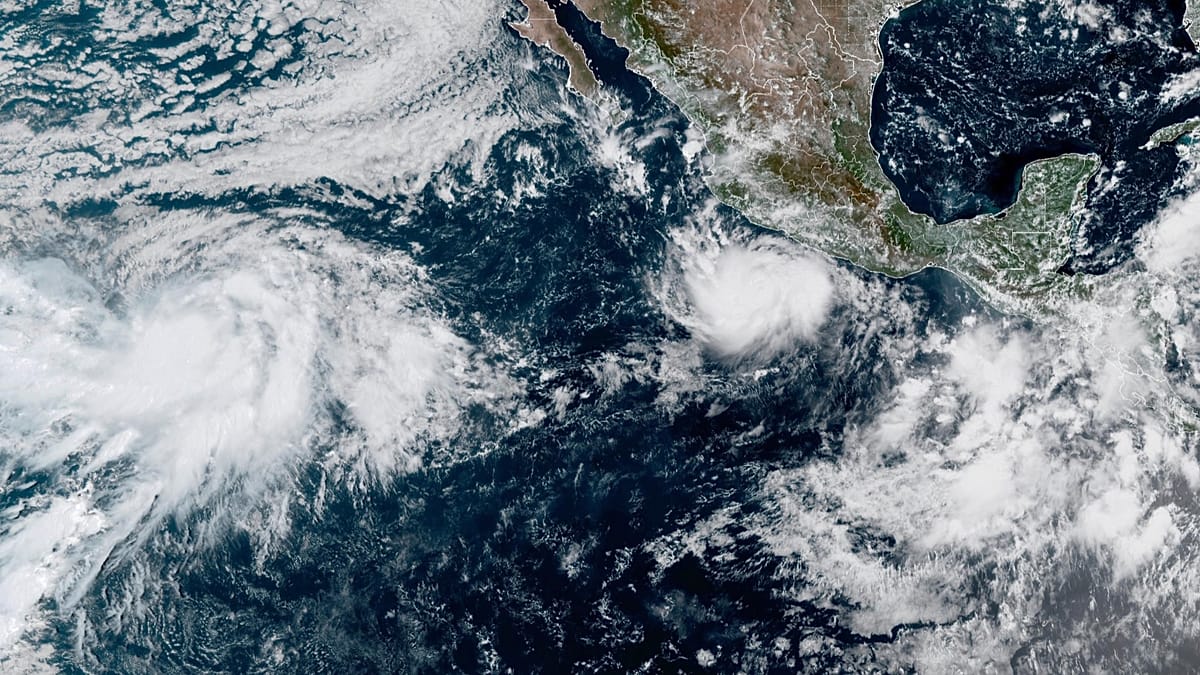
Hurricane Polo crashed into Mexico's Baja California peninsula on Tuesday, knocking out power and flooding coastal communities as storm surges overwhelmed sand barriers. The Category 3 storm made landfall near Las Barrancas, a small fishing village in Baja California Sur, according to the US National Hurricane Centre, which warned of life-threatening winds and flash flooding.
In Puerto San Carlos, a fishing port of nearly 6,000 residents, the sea broke through several sections of a protective sand barrier, sending water into the streets. Local authorities ordered people to shelter indoors as palm trees bent under the force of the wind and the town's electricity supply failed.
Residents brace for the worst
Juan Manuel Sarabia, a 53-year-old whale-watching and fishing guide, had boarded up his home and reinforced it with wooden beams. "It's coming with full force," he told AFP. The NHC reported sustained winds of up to 175 kilometres per hour as the storm moved inland.
Meteorologists have issued flood and heavy rain warnings for parts of ten US states, including Arizona, New Mexico, Texas and Colorado, several of which are already suffering drought. Fabian Vazquez, head of Mexico's meteorological service, said storm surges and torrential rain could cause "very severe" damage.
Across Baja California Sur, 169 shelters have been opened. At a high school near the coast, shopkeeper Maria Palomino, 57, was preparing to ride out the storm on a mattress on the floor. "If something happens, it's better to come to the shelter," she said. "We'll be among people we know."
Only a handful of homes and businesses in Puerto San Carlos had been boarded up or sandbagged. A passing police officer told AFP he believed the entire town should have been evacuated. "Everything is going to flood," he said.
Military deployment and a busy season
Mexico's military has deployed nearly 7,000 troops to Baja California Sur, where classes have been suspended and public servants told to work from home where possible. Laura Velazquez, National Coordinator of Civil Protection, said all maritime activities in the area had been halted.
This year's Pacific hurricane season is proving more intense than usual, driven by a Super El Niño that has caused unprecedented warming in the equatorial Pacific. The phenomenon raises surface temperatures in the central and eastern Pacific and alters wind and rainfall patterns globally. In addition to Polo, meteorologists are tracking tropical storm Rachel, also brewing off Mexico's Pacific coast, which is expected to run parallel to the shore and could strengthen into a hurricane by mid-week.
The storm's impact echoes concerns about extreme weather resilience that European policymakers have been grappling with, from grid resilience debates in Brussels to battery storage projects in Bulgaria that help cushion drought-hit power systems. As climate patterns become more volatile, the lessons from Baja California may resonate far beyond the Americas.