Iran's nuclear policy is under intense scrutiny in Tehran as lawmakers and senior officials weigh whether to revise the country's long-standing doctrine and potentially withdraw from the Treaty on the Non-Proliferation of Nuclear Weapons (NPT). The debate comes against a backdrop of repeated threats from Washington and Tel Aviv, which have designated Iran's nuclear capability as a primary target in any military confrontation.
Kamran Ghazanfari, a member of the Iranian parliament, told European Pulse that developing nuclear weapons is more vital for Iran than countering what he described as "US and Israeli propaganda." He argued that the Islamic Republic cannot remain indifferent to nuclear threats, stating: "When America and the Zionist regime have repeatedly threatened us with the use of nuclear weapons, we cannot be indifferent to this issue, as it is a threat that targets all the people of Iran and our very existence."
Ghazanfari, who sits on the parliament's national security committee, called on the leadership to review Iran's nuclear doctrine so that "the enemy knows that if it seeks a nuclear attack on Iran, it will face a reciprocal response." He drew a parallel with the post-1945 era, noting that nuclear-armed states have avoided direct nuclear conflict out of fear of retaliation. "The Islamic Republic must also create deterrent power," he insisted.
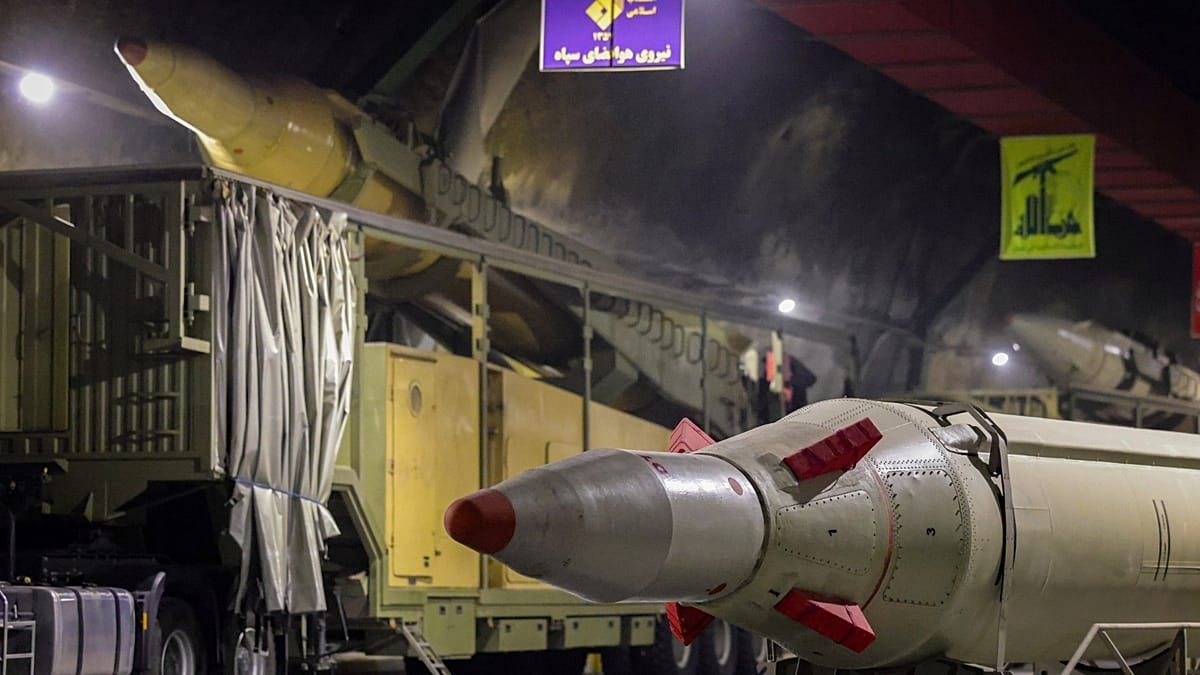
He dismissed concerns about the lack of nuclear-capable submarines or bombers, asserting that Iran's missile arsenal could serve as a delivery system for nuclear warheads. His remarks reflect a growing sentiment among hardliners that Iran's conventional capabilities are insufficient to deter a nuclear-armed adversary.
Opposing views on deterrence
However, Heshmatollah Falahatpisheh, a former member of parliament and former chairman of the National Security and Foreign Policy Committee, offered a starkly different perspective. In a telephone interview, he argued that possessing a few atomic bombs would not automatically confer nuclear deterrence. "Nuclear deterrence has three components: having an atomic bomb, a deterrent nuclear balance, and the ability to deliver the final blow," he explained. "Those who think nuclear deterrence is created simply by having an atomic bomb are mistaken."
Falahatpisheh, who has been a vocal critic of hardline policies, said he was not certain whether Iran actually possesses a nuclear weapon. He maintained that Iran's nuclear programme has been peaceful, and that the Joint Comprehensive Plan of Action (JCPOA) had closed the file on its possible military dimensions, removing Iran's case from Chapter Seven of the UN Charter. "In my view, Iran's military strategy is a conventional strategy, and this strategy has been fairly effective," he said.
He also cast doubt on recent remarks by Mohsen Rezaei, secretary of Iran's Supreme National Security Council, who hinted that Iran possesses "certain things." Falahatpisheh said he found it unlikely that Rezaei was referring to an atomic bomb. Ghazanfari, however, interprets those words differently, suggesting that Rezaei was alluding to a "special weapon"—a euphemism for a nuclear device.
NPT withdrawal: a divisive proposal
The debate has intensified over whether Iran should formally withdraw from the NPT, the landmark international treaty designed to prevent the spread of nuclear weapons. Ghazanfari claimed that a doctrinal shift has "in practice already happened" and that parliament is actively pursuing withdrawal. He said that last year, members of the presiding board blocked the plan, but MPs are still pressing for it to be debated on the open floor, despite ongoing obstruction.
Falahatpisheh, by contrast, warned that leaving the NPT would be counterproductive and could pave the way for future wars against Iran. "Iran's relations with the NPT have in practice been destroyed," he said, "and whether Iran remains in the NPT or not depends on the nature of relations between Iran and America." He argued that exiting the treaty would amount to "hiding part of Iran's nuclear programme" and would not serve national interests. He also noted that the Supreme National Security Council has not approved the MPs' triple-urgency bill to withdraw, which is why it has not reached an open session.
On Thursday, Iran's Assembly of Experts—a body tasked with overseeing the Supreme Leader—issued a statement calling for an examination of the NPT withdrawal issue, a review of the country's defence doctrine, and the creation of "necessary deterrence." The assembly described these steps as "an unavoidable necessity" and a "public and national demand."
The debate comes at a time of heightened regional tensions. The United States has recently conducted strikes on Iranian air defences, while Qatar has been pushing for nuclear talks. Meanwhile, there are reports that US President Donald Trump, Russian President Vladimir Putin, and Chinese leader Xi Jinping may hold trilateral talks in China on Iran and denuclearisation. These developments underscore the high stakes for European capitals, which have been closely monitoring Iran's nuclear programme and its implications for regional stability and non-proliferation efforts.
European Union diplomats have repeatedly urged Iran to remain within the NPT framework and to resume full compliance with the JCPOA. The bloc's foreign policy chief has warned that an Iranian withdrawal would have severe consequences for international security and would further destabilise the Middle East. As the debate in Tehran continues, European observers are watching closely to see whether Iran's leadership will heed the calls for a doctrinal shift or maintain its long-standing policy of nuclear ambiguity.