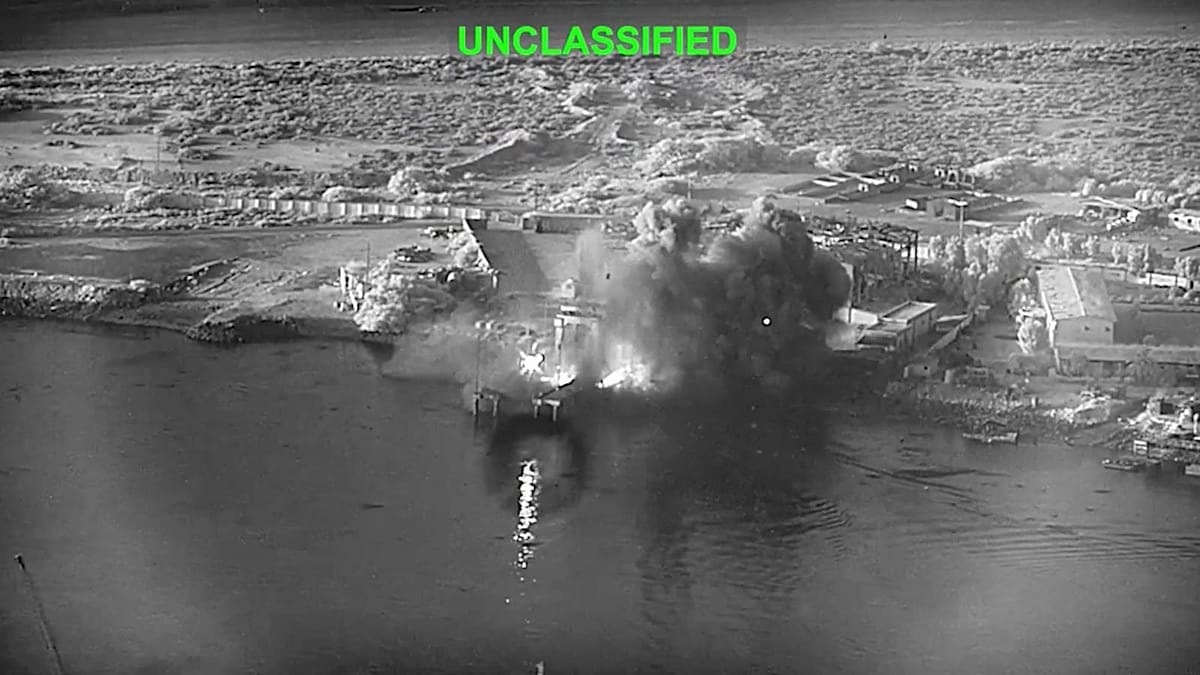
Iran's Islamic Revolutionary Guard Corps (IRGC) announced on Friday that its forces had destroyed a US early-warning radar installation in Bahrain, according to state media. The strike was described as retaliation for an attack on a telecommunications tower in Sirik County, in Iran's southern Hormozgan province, which occurred the previous day.
In a statement carried by the Fars news agency, the IRGC called the operation a "serious warning" to Washington to cease what it termed "aerial provocations and oil smuggling in the Strait of Hormuz." The Guard also declared that its forces were on "full alert and ready to respond without geographical limits" should further "violations and acts of aggression" occur.
Bahrain hosts the headquarters of the US Navy's Fifth Fleet, a cornerstone of American naval power projection in the Persian Gulf and surrounding waters. The US Central Command (CENTCOM) said on Wednesday that American forces were "working around the clock keeping the Strait of Hormuz open for commercial shipping" while also "strictly enforcing the ironclad naval blockade against Iran." CENTCOM added that roughly 1.7 billion barrels of crude oil had transited the strategic waterway under US protection since the summer.
Escalation and diplomatic efforts
The latest confrontation comes as US President Donald Trump has adopted an increasingly hardline stance toward Tehran. On Thursday, Trump stated that Washington no longer needed an agreement with Iran and asked Vice President JD Vance, who had been involved in diplomatic outreach, to focus on domestic matters. Trump also claimed that Saudi Arabia, Qatar, Kuwait, the United Arab Emirates, and Bahrain had urged him to postpone broader attacks against Iran.
Despite the military escalation, diplomatic efforts mediated by Qatar and Pakistan are reportedly continuing. Tehran has made any resumption of formal negotiations with Washington conditional on its demands being met, including the lifting of sanctions, an end to the naval blockade of Iranian ports, the release of frozen assets, and a halt to hostilities on all fronts.
The situation in the Gulf remains highly volatile, with oil markets already reacting to shipping attacks near Hormuz. For European observers, the stability of the Strait of Hormuz is of paramount importance: a significant share of Europe's energy imports transit these waters, and any disruption could have immediate consequences for fuel prices and supply chains across the continent.
European capitals have been watching the escalating US-Iran confrontation with concern. The EU has repeatedly called for de-escalation and has maintained its own channels of communication with Tehran, even as Washington's maximum-pressure campaign has intensified. The bloc's diplomatic efforts, however, have been complicated by the lack of a unified European position on how to engage with Iran, with some member states favoring a tougher line and others advocating for dialogue.
The IRGC's claim, if confirmed, would mark a significant escalation in the direct military confrontation between the US and Iran. The destruction of a US radar installation on Bahraini soil would be a major blow to American force protection in the region and could prompt a robust US response. However, the US military has not yet officially confirmed the strike, and independent verification is difficult given the restricted access to the area.
Analysts note that the IRGC's rhetoric about "responding without geographical limits" suggests a willingness to expand the conflict beyond the immediate Gulf region. This could have implications for European security, particularly given the recent charges against Iran-linked individuals in connection with plots in the UK, including attacks on a London synagogue and an RAF base. European intelligence services are on high alert for potential Iranian retaliation on European soil.
The diplomatic track, while fragile, remains the only viable path to de-escalation. Qatar and Pakistan have both played mediating roles in the past, and their continued involvement offers a glimmer of hope. However, Tehran's insistence on preconditions, including the lifting of sanctions and the release of frozen assets, presents a formidable obstacle. Washington, for its part, has shown little appetite for concessions, with President Trump's latest remarks suggesting a shift away from negotiation altogether.
For Europe, the stakes are high. The EU has a direct interest in preventing a full-scale conflict in the Gulf, which would not only disrupt energy supplies but also trigger a new wave of refugees and further destabilize the Middle East. European leaders have urged both sides to show restraint, but their influence is limited. As the crisis deepens, the EU may need to step up its own diplomatic initiatives, perhaps in coordination with regional actors like Qatar and Pakistan, to prevent an uncontrolled escalation.
The coming days will be critical. If the IRGC's claim is verified and the US responds militarily, the region could be plunged into a wider war. Conversely, if diplomatic efforts gain traction, there may still be a chance to pull back from the brink. Europe, with its economic and diplomatic weight, could play a pivotal role in either scenario—but only if it acts decisively and collectively.