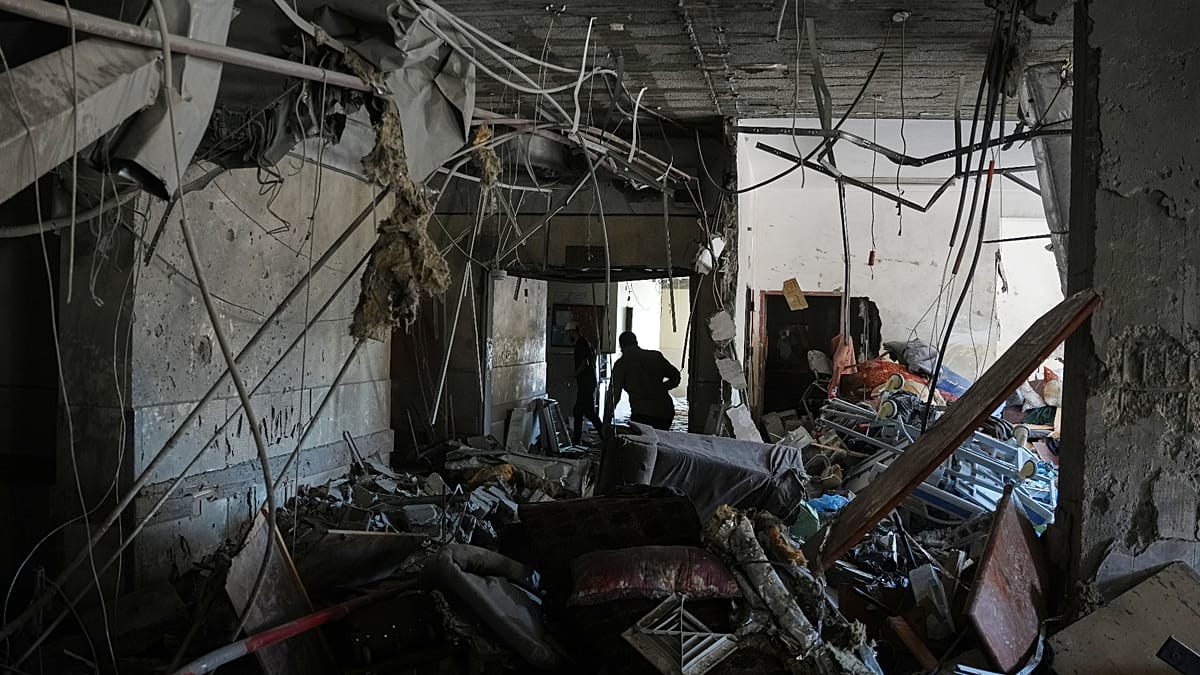
An Israeli airstrike hit the Nasser Medical Complex in Khan Younis, southern Gaza, in the early hours of Thursday, killing six people, including a doctor, and wounding at least 27 others, according to the World Health Organization (WHO). The attack is the latest in a series of strikes on medical facilities that have pushed Gaza's health system to the brink of collapse.
Attack on a functioning hospital
The Nasser Medical Complex, one of the largest hospitals still operating in the enclave, was struck while staff and patients were inside. The WHO confirmed the death toll and injuries, and condemned the attack, reiterating that hospitals are protected under international humanitarian law. The doctor killed was identified as a senior physician, though his name has not been officially released.
Local health officials reported that the strike caused significant damage to the hospital's emergency department and several wards. Ambulance crews and volunteers worked through the night to evacuate the wounded, many of whom were in critical condition. The hospital had been treating a large number of patients injured in previous bombardments, as well as civilians seeking refuge from the ongoing conflict.
This incident underscores the dire situation in Gaza, where medical infrastructure has been systematically degraded. According to the WHO, fewer than half of the territory's hospitals are functioning, and those that remain are overwhelmed by casualties and shortages of supplies, fuel, and staff.
European reactions and calls for restraint
The attack drew swift condemnation from European capitals. In Brussels, the European Commission called for an immediate investigation and urged all parties to respect international law. Several EU member states, including France and Germany, issued statements expressing deep concern over the targeting of medical facilities. The French foreign ministry, in a statement from the Quai d'Orsay, said that "attacks on hospitals are unacceptable and must cease."
The strike also reignited debates within the EU about the bloc's stance on the conflict. Some member states, such as Ireland and Spain, have been vocal in their criticism of Israeli military operations, while others, including Germany and Austria, have emphasized Israel's right to self-defense. The European Parliament is expected to hold an emergency debate on the situation in Gaza next week.
Meanwhile, humanitarian organizations are calling for unimpeded access to deliver aid. The International Committee of the Red Cross (ICRC) warned that the destruction of medical facilities would have long-term consequences for the civilian population, particularly women and children.
Broader context of the conflict
The strike on Nasser Hospital comes amid a broader escalation of violence in the region. In recent weeks, Israeli forces have intensified operations in southern Gaza, targeting what they describe as militant infrastructure. However, the high civilian toll has drawn international criticism, including from the United Nations, which has repeatedly called for a ceasefire.
The situation is further complicated by the political vacuum in Israel, where coalition negotiations are ongoing. The recent inconclusive election results have left the country in a state of political uncertainty, with no clear path to a stable government. This has raised concerns that military operations may continue without clear political oversight.
For Europeans, the conflict has direct implications. The EU has been a major donor to Palestinian humanitarian aid, and the bloc's credibility in the region depends on its ability to influence events. The strike on Nasser Hospital is likely to test the EU's diplomatic leverage and its commitment to a two-state solution.
As winter approaches, the humanitarian crisis in Gaza is expected to worsen. The power outages in Ukraine serve as a reminder of how conflict can cripple essential services, but in Gaza, the situation is even more acute, with no end to the violence in sight.
The WHO has called for an immediate cessation of hostilities to allow for the safe evacuation of the wounded and the delivery of medical supplies. Without such measures, the death toll is likely to rise, and the capacity of Gaza's health system to respond will be further diminished.