US prosecutors have unsealed an eight-count indictment in Manhattan charging three men with directing a wave of attacks on Jewish sites in London earlier this year and orchestrating a suspected plot against RAF Fairford, an airbase in England used by US bombers.
The indictment, announced on Tuesday, names two defendants for the first time: Mohsen Mohajeri, 48, an Iranian national described as an operative of Iran's Islamic Revolutionary Guard Corps (IRGC), and Mohammed Ali al-Hassani, 35, an Iraqi citizen. They are charged alongside Mohammad Baqer Saad Dawood al-Saadi, 32, who holds Iraqi and Iranian citizenship and was arrested in May over the European attacks.
London attacks and the Iraq connection
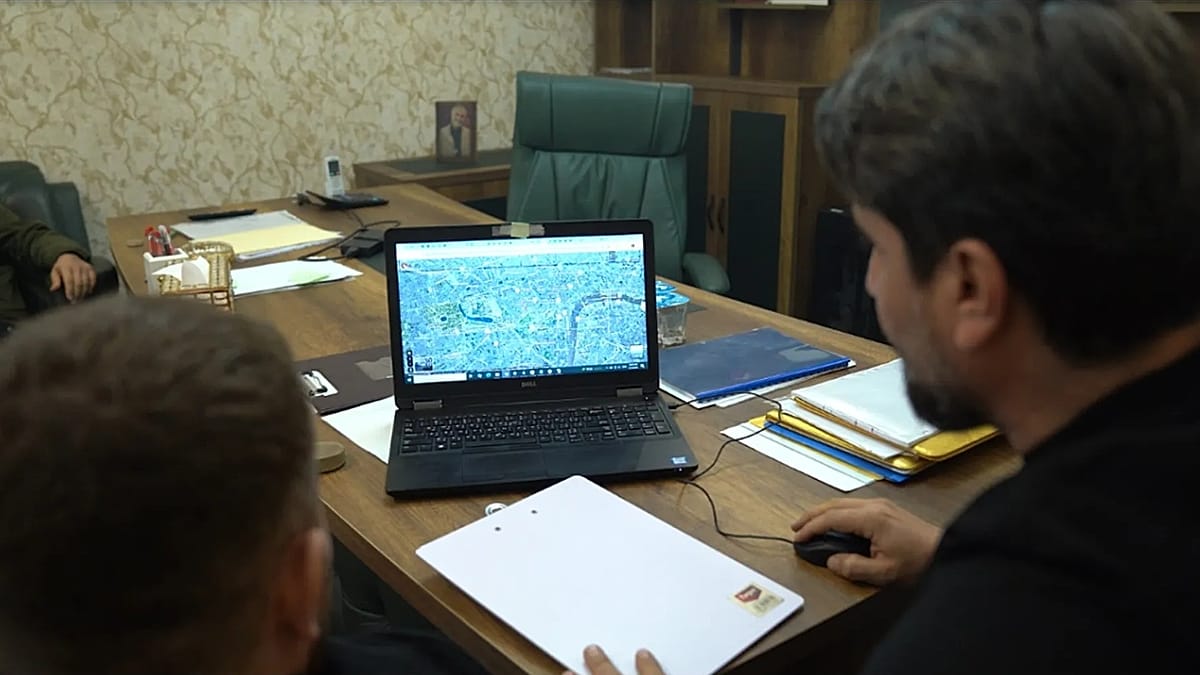
According to the indictment, Mohajeri and al-Hassani planned attacks on or before 6 April while together in a room in Iraq with a map of London on a computer screen. “We need to get focused on London,” Mohajeri allegedly told al-Hassani. A video still shows the two men in that meeting. A series of six attacks in and around London began about a week later.
The attacks were claimed by Harakat Ashab al-Yamin al-Islamiya (HAYI), which prosecutors say was a front for the Iraqi armed group Kataeb Hezbollah. The group claimed around 18 attacks across Europe in the spring, with about seven in the UK—more than in any other European country. These included the near-fatal stabbing of two Jewish men in London on 29 April.
On 17 April, all three men allegedly watched and directed a live attack in Europe over FaceTime. The next day, al-Hassani allegedly directed an attack on a London synagogue by video call, telling the attacker to “light it up like a Christmas tree”. The attacker then lit an improvised explosive device and threw it at a building. Britain banned support for HAYI in July.
The RAF Fairford plot
Prosecutors say no further attacks were attributed to the three men for about four months after al-Saadi's arrest in May. Then, in August, the network turned to RAF Fairford in Gloucestershire, which at the time housed US military aircraft and personnel.
According to the indictment, al-Hassani paid an associate in the UK on 22 August to watch the base's perimeter and send him videos. In September, he paid people to buy vans, fuel barrels, and metal objects that could be used as shrapnel. He also paid them to research buying chemical accelerants, including large quantities of potassium chloride. At his urging, the vans were fitted with custom decals so they looked like they belonged to a fuel delivery company and a swimming pool supplies business.
On 26 September, al-Hassani allegedly directed the drivers of three vans, some carrying fuel, towards the base and stayed in regular contact with them. At least two of the vans were stopped at a security roadblock near the perimeter and not allowed through. UK authorities found the three white vans early the next morning and arrested the men inside after a local farmer reported a group behaving “suspiciously”. Days later, the US withdrew all of its B-1 bombers from Fairford.
Calls from jail
Prosecutors say al-Saadi tried to help coordinate the plot from his cell. In June and July, he allegedly used jail phone calls with his mother and sister in Iraq to pass messages about “work”, his code word for terrorist activity. In those calls, Mohajeri was referred to by aliases. When al-Saadi asked whether “all our old work” had been called off, his sister told him it “isn’t cancelled”. On 24 September, al-Saadi allegedly asked how “Ali” was doing and told his family to give al-Hassani money “so we can do it”. Two days later, the vans were driven towards Fairford.
When first charged in May, al-Saadi was accused of directing attacks on US and Israeli interests and urging others to kill Americans and Jews in retaliation for the US-Israeli war against Iran. US authorities have also linked the network to arson attacks on synagogues, Jewish schools, and Israeli-owned businesses in Amsterdam, Munich, and other cities. Al-Saadi is also accused of trying to bomb a synagogue in Manhattan.
“The threat presented by Iran and Iran-backed terrorist groups to America and our allies is not hypothetical – it is very real,” said Jamie McDonald, the US attorney for the Southern District of New York.
All three men are charged with conspiring to provide material support to Kataeb Hezbollah and the IRGC, conspiring to provide and providing material support for acts of terrorism, conspiring to bomb a place of public use, and financing terrorism. Al-Saadi faces additional charges of attempted acts of terrorism transcending national boundaries and attempting to destroy property by fire or explosive. Each defendant faces a maximum sentence of life in prison.
In the UK, two British men were charged with national security offences over the Fairford incident last month. One is accused of assisting a foreign intelligence service, thought to be Iran's. The other is accused of entering a prohibited place for a purpose “prejudicial” to the UK. British Prime Minister Andy Burnham has said the Fairford activity was likely coordinated from Iran. Tehran has denied any involvement and warned that such claims would “fuel Iranophobia propaganda”.
The case underscores the growing concern across Europe about Iran-backed networks targeting Jewish communities and military installations. As Poland calls for Cold War-style deterrence against hybrid threats, this indictment shows the tangible nature of such dangers. The attacks in London and the Fairford plot are a stark reminder that European security remains a shared responsibility, with implications for transatlantic cooperation and the fight against terrorism.