Tehran has issued a stark warning that any attempt to block its oil exports would have consequences far beyond its own borders, as the Islamic Revolutionary Guard Corps (IRGC) escalated its rhetoric against Washington and announced the development of new weaponry.
In an online session of parliament on Tuesday, Speaker Mohammad Bagher Ghalibaf cautioned the United States against what he called "miscalculations," stating that if Iran cannot sell its oil, "no one in the region will sell oil." He added that if Iran's security is not guaranteed, "no infrastructure will be safe."
Ghalibaf's remarks come amid heightened tensions in the Persian Gulf, where the closure of the Strait of Hormuz and recent Iranian strikes on neighboring territory have already disrupted shipping and strained diplomatic ties. The speaker insisted that the Iranian people "must never be frightened by blockade and threats," warning that if the American decision-making machine fails to grasp this reality, it will remain trapped in a cycle of receiving heavy blows from the Iranian nation.
IRGC's public rebuke of Trump
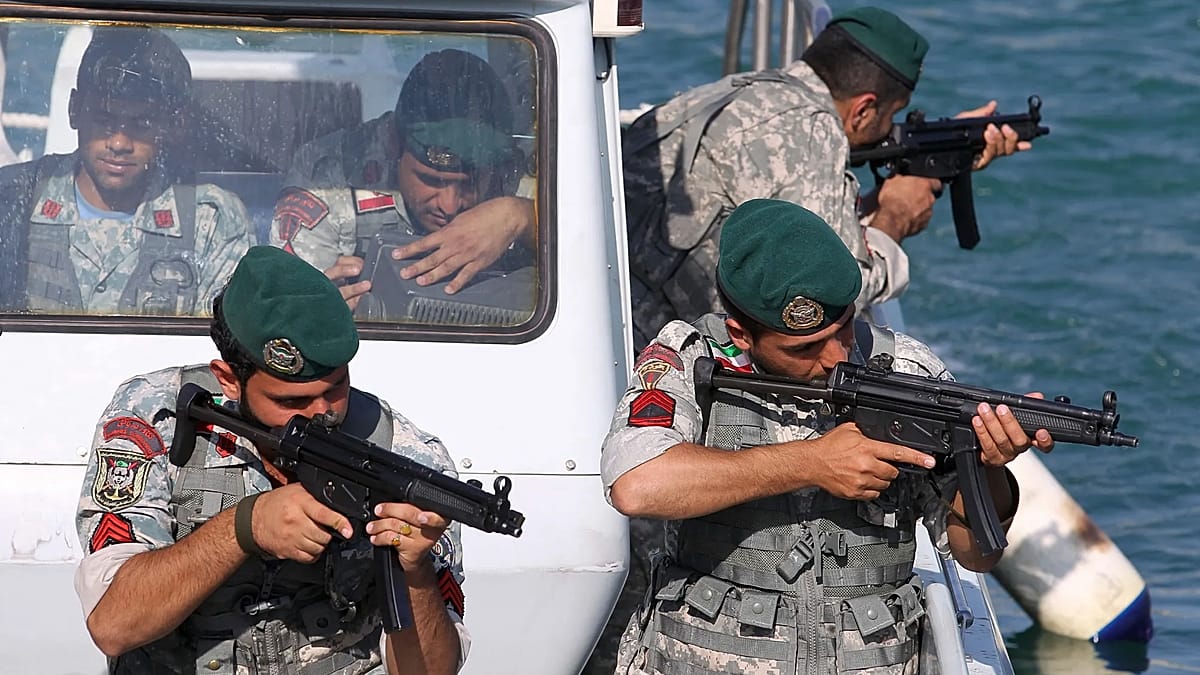
At a press conference with foreign media on Tuesday, IRGC spokesman Hossein Mohebi called US President Donald Trump "a big liar" and reiterated that American forces must leave the Middle East. He described US military bases as "the only source of insecurity" in the region, while pointing to what he called "long-standing bonds" with 15 neighboring countries.
Mohebi also claimed that Tehran is "constantly designing new weapons, upgrading existing ones and mass-producing armaments to defend ourselves." He warned that if confrontations take on a different shape, "we will certainly bring new weapons into the field."
The statements follow a series of US-Israeli strikes on Iran in late February, which marked the opening salvo of a conflict that has since seen Tehran retaliate against targets in the region, disrupt shipping, and close the Strait of Hormuz. These actions have strained Iran's relationships with its neighbors, despite Iranian officials insisting that their targets are solely US military assets.
Anwar Gargash, diplomatic adviser to the president of the United Arab Emirates, said recently in Dubai that while relations with Tehran should continue, trust damaged by attacks in the Gulf would take years to rebuild. The UAE, a key regional hub for trade and finance, has been particularly affected by the instability.
On nuclear matters, Mohebi dismissed claims that Iran is weeks away from building a nuclear weapon, calling them "the same lie that has been propagated for 25 years." The International Atomic Energy Agency (IAEA) has not reached an agreement with Tehran on redeploying inspectors or resuming monitoring, leaving a key element of the nuclear file unresolved.
Ebrahim Azizi, head of parliament's National Security Committee, has separately said Iran is fully prepared for a conflict more intense than what he described as the "40-day war."
The escalating rhetoric and military posturing come as European diplomats continue to urge restraint, mindful of the broader implications for energy markets and regional stability. The European Union has maintained a channel of communication with Tehran, but the closure of the Strait of Hormuz has already had ripple effects on global oil prices, adding to concerns about rising food and energy costs worldwide.
For European capitals, the crisis in the Gulf is a reminder of how fragile the region's security architecture has become. The recent visit of Israeli Prime Minister Benjamin Netanyahu to Abu Dhabi underscored the shifting alliances, even as Iran seeks to project strength. Meanwhile, the IRGC's boasts about new weapons are likely to heighten concerns in Brussels and other European foreign ministries about the potential for a wider conflagration.
As the standoff continues, the question remains whether Washington and Tehran can find a way to de-escalate, or whether the region is headed for a more dangerous phase. For now, Iran's message is clear: any attempt to strangle its economy will be met with a response that affects everyone.