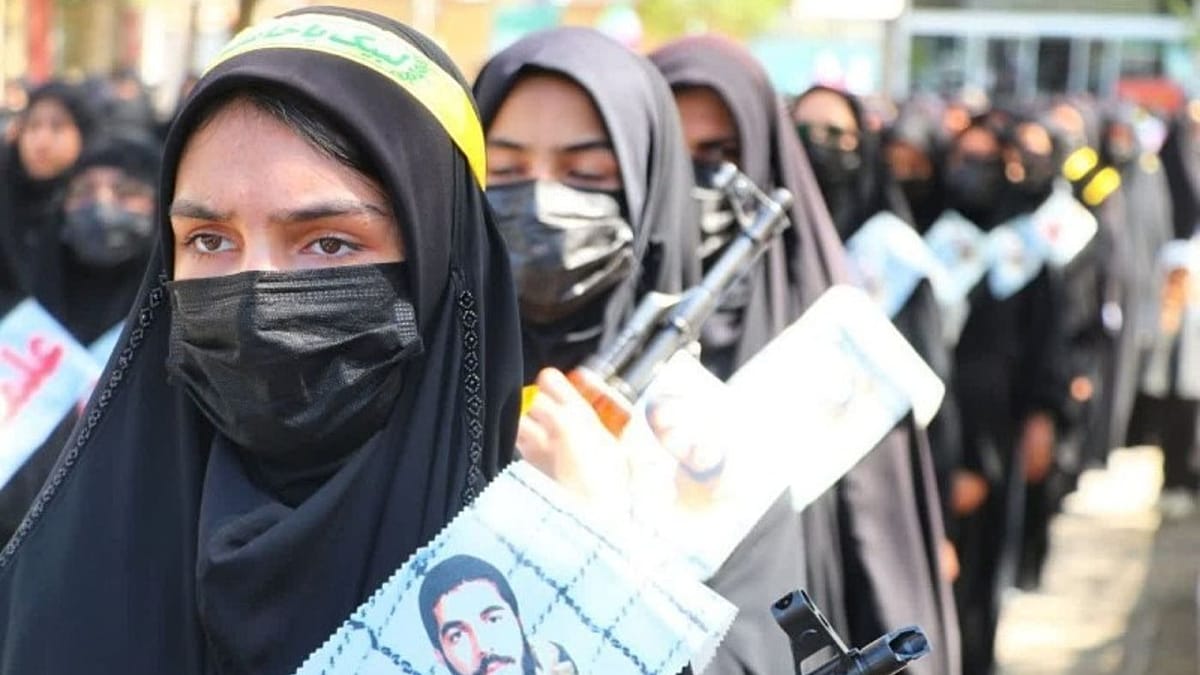
Social media platforms have been circulating footage that appears to show women carrying Kalashnikov rifles and riding in armoured vehicles mounted with machine guns through streets in at least six Iranian cities. The clips, promoted by state media as evidence of women's participation in the war effort, have sparked both nationalist fervour and serious questions about their authenticity.
The videos, reportedly shot in Rasht, Tehran, Mashhad, Qom, Bushehr and Qazvin, depict women moving in organised convoys alongside personnel of the Islamic Revolutionary Guard Corps (IRGC). Chants of pro-regime slogans are audible in the background. Iranian state television has broadcast some of the footage, and IRGC-affiliated outlets have described the parades as part of what they call the "jihad of women" in support of the Islamic Republic.
AI Editing Suspicions and Verification Challenges
However, the footage has not gone unchallenged. Researchers and social media users have pointed to visual inconsistencies that they say could indicate AI-generated content or digital editing. Euronews could not independently verify the videos, and Iranian authorities have not acknowledged any of the material as fabricated.
One detail that has drawn particular attention is that some women visible in the footage are not wearing the full hijab mandated under Iranian law. Given Tehran's decades-long enforcement of strict dress codes, this anomaly has fuelled scepticism about the clips' provenance.
The use of women in state messaging is not new to the Islamic Republic. Since the 1979 revolution, official media have portrayed women as "mothers of martyrs" and as volunteers for the Basij paramilitary force, typically in a supporting role. During the Iran-Iraq war of the 1980s, such imagery was deployed extensively, but armed street parades of this kind represent a departure from that historical pattern.
The footage emerges as Iran faces its worst domestic crisis in decades, compounded by the ongoing war with the US and Israel. Protests that began in December 2025, triggered by the collapse of the rial, spread to at least 180 cities before security forces mounted a crackdown on 8 and 9 January 2026, in which thousands were killed. Iran's Supreme Council of National Security put the death toll at 3,117, while the UN Special Rapporteur on Iran said the figure was at least 5,000. Insiders and human rights organisations fear the number could have reached 32,000 or more.
Against this backdrop, the regime appears to be attempting to project an image of popular support and religious fervour to counter the US and Israeli onslaught and demonstrate stability. The parades, whether real or digitally altered, serve a clear propaganda purpose.
For European observers, the situation raises broader questions about information warfare and the reliability of state media narratives. As the EU debates measures to combat disinformation, including social media age verification tools, the Iranian case underscores the challenges of verifying content in an era of advanced AI manipulation.
The crisis also has implications for European security, as the conflict in the Middle East continues to affect energy prices and migration flows. The EU has proposed energy vouchers and social tariffs to shield vulnerable households from price surges linked to regional instability.
Meanwhile, the human toll of the crackdown in Iran has drawn condemnation from European capitals. The UN report on the conflict in Gaza, which documented the deaths of 38,000 women and girls, serves as a grim reminder of the broader regional violence that continues to shape European policy debates.