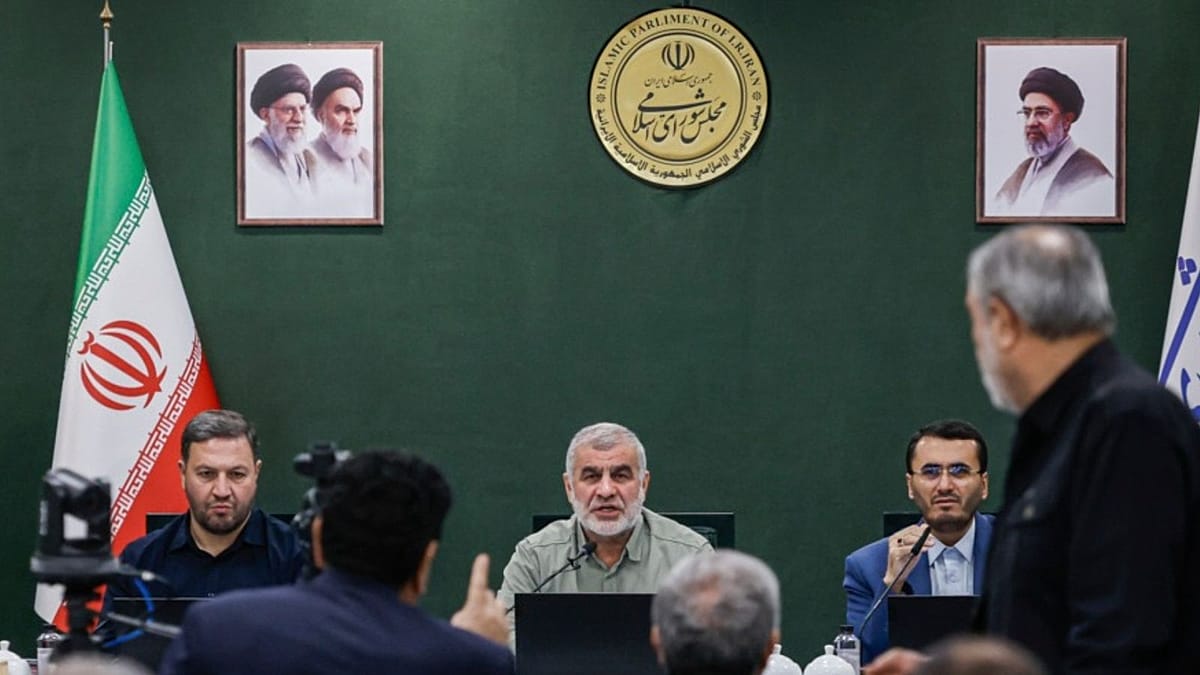
Iran's parliament has taken a significant step toward restricting domestic engagement with foreign media, passing an article that would criminalize interviews with outlets deemed hostile by the Intelligence Ministry. The vote, held on Tuesday, saw 174 lawmakers in favor and only six against, despite formal opposition from President Masoud Pezeshkian's cabinet.
The measure, part of a broader bill aimed at countering foreign intelligence penetration, targets Iranian nationals who give interviews or participate in discussions with media organizations classified as hostile. It also covers outlets owned, managed, or funded by operatives linked to countries considered adversaries of the Islamic Republic.
Penalties and classifications
Violations of Article 22 carry what are known as sixth-degree penalties under the Islamic Penal Code. These include imprisonment ranging from six months to two years, fines, 31 to 74 lashes, deprivation of social rights, and other restrictions. The severity underscores the hardline stance taken by the legislature.
The bill introduces a two-tier classification of foreign governments. A "level 1 government" is one formally designated as hostile under Iranian law or by decision of the Supreme National Security Council. A "level 2 government" is defined as a state that has planned or carried out actions aimed at damaging Tehran's political, defense, security, economic, social, or cultural interests.
The Intelligence Ministry and the Islamic Revolutionary Guard Corps (IRGC) intelligence organization will draw up the list of level two governments, which must then be approved by the Supreme National Security Council. This process centralizes the designation power in security bodies, raising concerns about arbitrary enforcement.
In a separate vote, lawmakers approved a proposal by Tehran MP Alireza Salimi to exempt government officials from the scope of Article 22. This exemption has drawn criticism, as it creates a two-tier system where ordinary citizens face prosecution while officials remain shielded.
Cabinet opposition and warnings
President Pezeshkian's cabinet had formally opposed the bill. At its 22 August meeting, the cabinet described the legislation as having "serious flaws," including restrictions on scientific activity, the acceleration of elite emigration, and negative consequences at both national and international levels.
First Vice-President Mohammad Reza Aref warned of the potential impact on science and technology, while presidential legal deputy Majid Ansari said that "criminalising broad and general categories in this bill could harm citizens' rights." These warnings echo concerns from civil society and academic circles about the chilling effect on free expression and intellectual exchange.
The legislation follows months of hardline rhetoric from Iranian officials against Persian-language broadcasters operating outside the country. On 26 August, armed forces spokesman Abolfazl Shekarchi accused BBC Persian, Iran International, and Radio Farda of links to US and Israeli intelligence organizations. He went further, suggesting that their staff could be placed in the Islamic Republic's "military targets bank," a statement that raised alarm among journalists and human rights groups.
Next steps and context
The bill has not yet become law. The Majlis must complete its examination of remaining articles before sending the text to the Guardian Council, which reviews legislation for compatibility with Sharia and the constitution. If the Guardian Council raises objections and the Majlis insists on its position, the Expediency Council would make a final ruling.
The parliament that passed this article emerged from elections in which turnout was reportedly around 41%, the lowest since the 1979 Islamic Revolution. This low participation rate reflects widespread public disillusionment with the political system, yet the legislature has continued to pursue restrictive measures.
For observers in Europe, this development is part of a broader pattern of tightening controls on dissent and independent media in Iran. It also resonates with ongoing debates about press freedom and the treatment of journalists, as seen in other contexts such as Ukraine's exposure of Russian fake sites targeting officials and media. The European Union has repeatedly called on Iran to respect freedom of expression and has raised concerns about the treatment of journalists and dual nationals.
As the bill moves through the approval process, its fate remains uncertain. However, the strong parliamentary support suggests that hardline elements are determined to push forward, even in the face of cabinet opposition and international criticism.