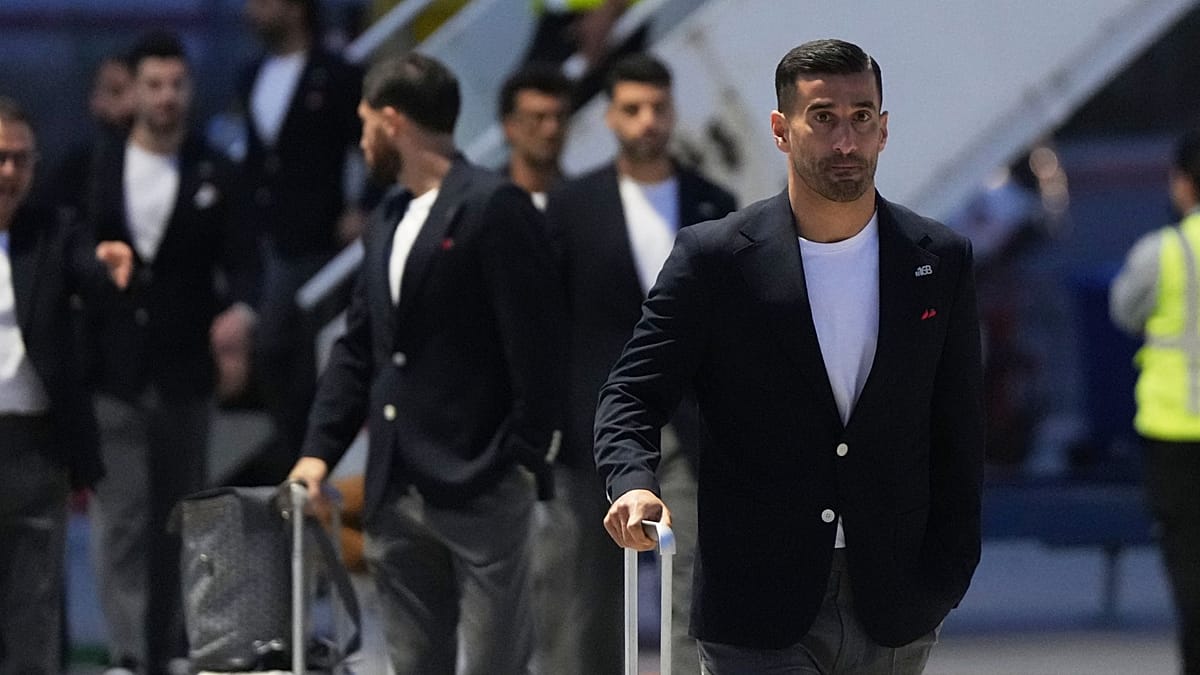
With less than a week before their opening match, Iran's national football team is training in Tijuana, Mexico, under tight security and logistical constraints. The squad faces an unresolved visa dispute affecting 13 delegation members and the unexplained cancellation of their ticket allocation for all three group games against New Zealand, Belgium, and Egypt.
The Iranian Football Federation confirmed on Tuesday that its entire allocation—8% of capacity for each match—had been revoked without explanation, prompting a formal protest. This comes despite assurances from FIFA President Gianni Infantino, who stated at the FIFA Congress in Vancouver in April that Iran would participate in the 2026 World Cup and play in the United States. Infantino also made an unannounced appearance at Iran's warm-up match against Costa Rica in Turkey, telling reporters, "That's why we're here. I've seen the team, I've spoken to the players and the coach, so everything is fine." Iran's sports minister Ahmad Donyamali said Infantino gave him a direct personal promise, and US President Donald Trump separately told Infantino that Iran was "welcome to compete," a message Infantino shared on Instagram.
Visa Hurdles and Logistical Challenges
The US had previously refused visas to 13 members of Iran's technical and administrative staff. It remains unclear whether Iranian players will be permitted to enter the US only on match days or one day earlier, as FIFA protocol requires. The squad must arrive the day before the 15 June opener against New Zealand in Los Angeles to fulfil media obligations, with head coach Amir Ghalenoei's press conference scheduled for 3:45 pm local time on Monday 25 June at the match stadium.
The team is based in Tijuana, just across the Mexican border from San Diego, to minimise travel into US territory. They will return to Tijuana before travelling to Inglewood for the Belgium game on 21 June and then to Seattle for the Egypt fixture. Iran's preparation has been severely disrupted by the war, with months of cancelled fixtures and diplomatic uncertainty. The squad travelled to a training camp in Turkey before entering Mexico via Spain, and their final planned warm-up match, reportedly against Granada, was cancelled due to the opponent's unavailability.
The designation of Iran's Islamic Revolutionary Guard Corps (IRGC) as a foreign terrorist organisation by the US and Canada—both World Cup co-hosts—has complicated visa processing for team officials throughout the preparation period. This situation echoes broader tensions in transatlantic relations, as Trump's NATO grievance over Iran strains transatlantic ties.
Wider Immigration Troubles at the World Cup
The tournament has been marked by immigration difficulties affecting multiple delegations. A FIFA-selected Somali referee, Omar Abdulkadir Artan, who would have made history as the first from his country to officiate at a World Cup, was turned away at Miami airport five days before the tournament begins. Artan, 34, was one of 52 officials chosen to officiate and one of seven from Africa. He was named CAF's referee of the year for 2025 and had refereed the CAF Champions League final in Cairo on 1 June 2025. He became the first Somali to officiate at AFCON 2024, where he took charge of Tunisia's shock defeat to Namibia and Mauritania's historic victory over Algeria. Somalia's senior sports ministry adviser Ciise Aden Abshir told AFP the decision "harms not only him personally but also undermines football's commitment to fairness, merit, and the spirit of fair play." FIFA said it had been told his situation "will not change at this time" and confirmed he would not officiate.
Trump issued an executive order in June 2025 banning citizens of 12 countries, including Iran and Somalia, from entering the US. Other teams have faced hurdles: Iraq's star striker Aymen Hussein was detained for around seven hours at Chicago O'Hare International Airport for security checks before being cleared. US Customs and Border Protection said all travellers, including athletes, were "subject to inspection and vetting" on a case-by-case basis. Videos on social media showed Senegalese players subjected to body searches near the airport runway. Senegal is drawn in Group F with France, Iraq, and Norway. Uzbekistan's squad, including head coach Fabio Cannavaro, were checked by federal officers with police dogs outside their team bus before a warm-up match against the Netherlands in New York, which Uzbekistan lost 2-1. This will be Uzbekistan's historic first World Cup appearance.
Iran is one of Asia's most experienced World Cup sides and is making its fourth consecutive appearance at the tournament. The visa and security issues highlight the complex interplay between international sports and national security policies, particularly as the EU Migration Pact takes effect, reshaping border controls across Europe.