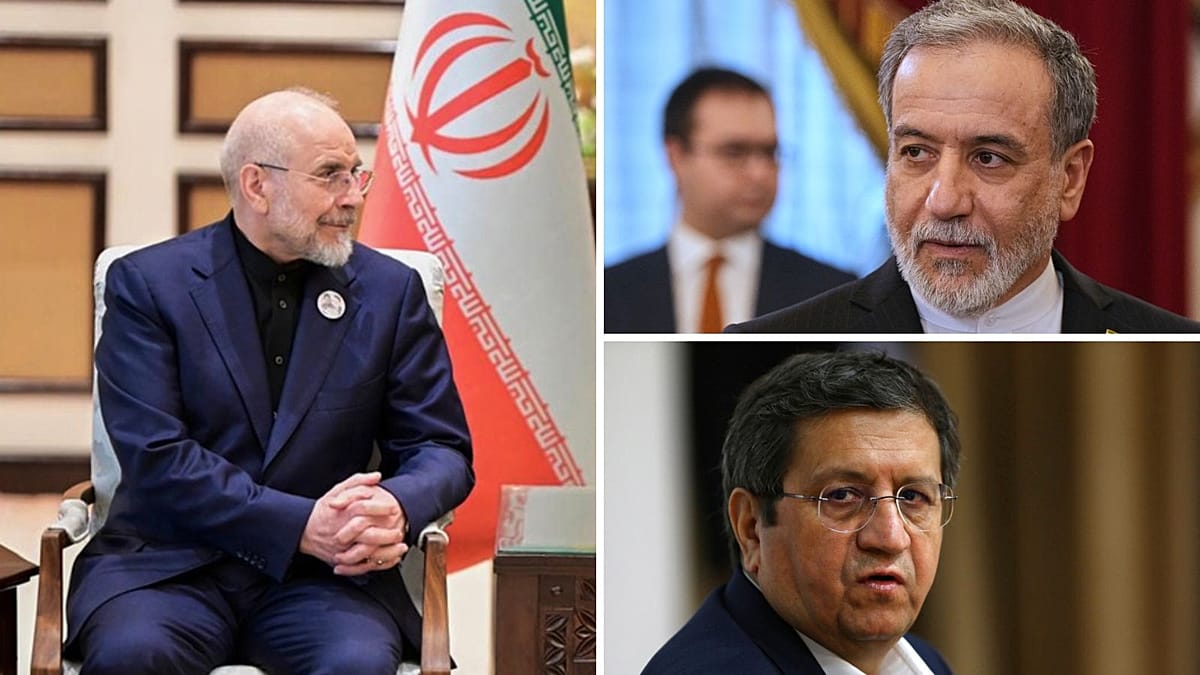
A high-level Iranian delegation arrived in Doha on Monday for negotiations aimed at resolving a standoff over frozen assets and the status of the Strait of Hormuz. The delegation, led by parliament speaker Mohammad Bagher Ghalibaf, includes Foreign Minister Abbas Araghchi and central bank chief Abdolnaser Hemmati, according to anonymous sources familiar with the talks.
The discussions, reported by AFP, focus on "issues related to the Strait of Hormuz and highly enriched uranium," as well as the unfreezing of Iranian assets held abroad. Iran's state-run Fars news agency claimed that Washington has agreed to release part of Tehran's frozen overseas funds, which have been subject to international sanctions. In return, restrictions in the Strait of Hormuz would be lifted, along with the naval blockade on ships traveling to and from Iranian ports.
Frozen Assets and Energy Security
The exact amount of Iran's frozen assets in Qatar remains unclear. International media have previously reported the figure at $6 billion (€5.1 billion), funds transferred from South Korea to Qatar in 2023 in exchange for the release of five US citizens detained by Iran. However, following Hamas's 7 October attack on southern Israel and the subsequent deterioration in US-Iran relations, those assets were never released. Iranian officials, by contrast, have put the figure at $12 billion (€10.2 billion).
The Strait of Hormuz, through which nearly one-fifth of the world's oil and natural gas supplies transit, has been a critical chokepoint. Its disruption has severely affected global energy flows and increased pressure on countries across the region, including Europe. The EU has already slashed its 2026 growth forecast as the crisis drives inflation, highlighting the continent's vulnerability to energy supply shocks.
US President Donald Trump recently told Fox News that he has no intention of handing over "cash" to Tehran. "Do you really think that after everything I've said about Iran never obtaining a nuclear weapon, I'm going to give them cash," Trump said, underscoring the political hurdles to any deal.
Mediation and Regional Dynamics
Pakistan has so far served as the main mediator in negotiations between the US and Iran. The talks, which have continued since a ceasefire began on 8 April, aim to end the conflict and fully reopen the Strait of Hormuz. Qatar, which previously mediated between Iran and the US, has recently taken on an increasingly active role. Earlier this month, Qatar's Prime Minister and Foreign Minister, Sheikh Mohammed bin Abdulrahman Al Thani, met in the US with Secretary of State Marco Rubio and Vice President JD Vance.
Qatar was also one of three Gulf countries—the other two being the UAE and Saudi Arabia—that successfully influenced Trump to hold off on further attacks against Iran last week. The UAE, in particular, has warned Europe that instability in the Strait of Hormuz is a direct energy threat, as noted in a recent advisory.
The broader context includes Iran's recent imposition of transit fees in the strait, which escalated tensions with Gulf states and Europe. A separate report detailed how these fees have complicated maritime traffic and diplomatic relations.
For European capitals, the outcome of these talks carries significant weight. The disruption of energy flows through the Strait of Hormuz has already driven up prices and contributed to inflationary pressures across the EU. Any resolution that stabilizes the strait could ease these pressures, while a failure to reach a deal risks further economic strain.