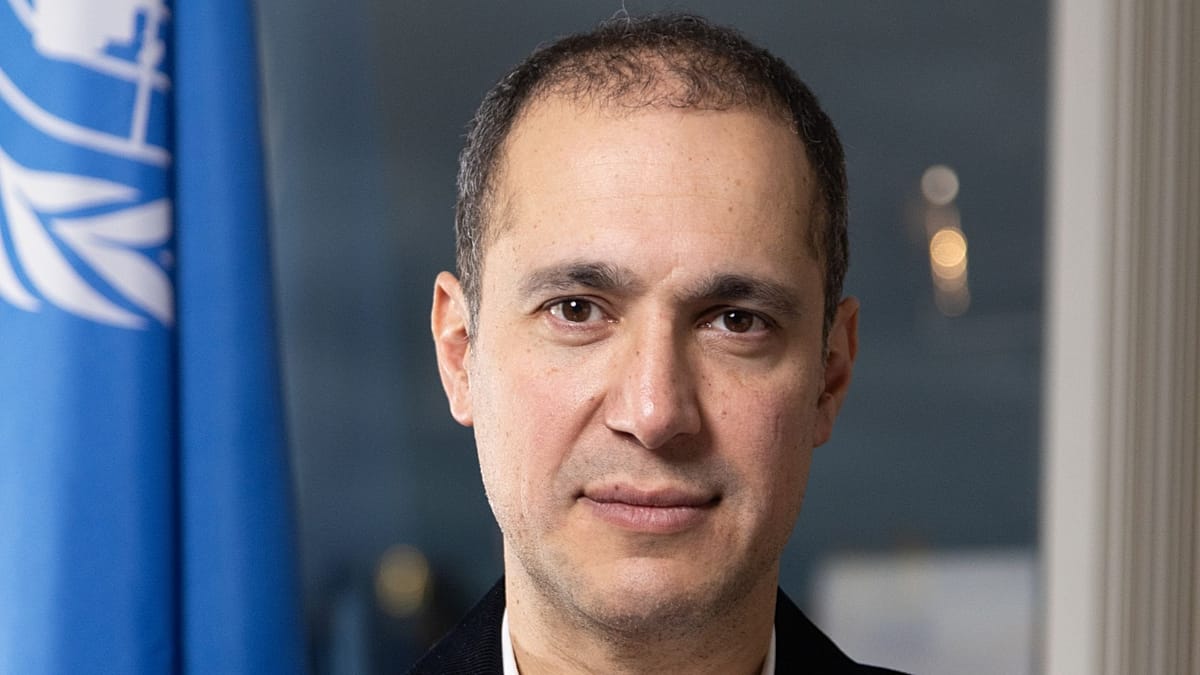
Kaveh Madani, an Iranian-born environmental scientist forced into exile after being labelled a “water terrorist” by state-aligned media, has been awarded the Stockholm Water Prize — often referred to as the ‘Nobel Prize of Water’. At 44, he is the youngest recipient in the prize’s 35-year history, and the first UN official and former politician to receive the honour.
Madani’s journey began in post-revolutionary Tehran, where water scarcity and war-damaged infrastructure shaped his early understanding of resource management. After building a respected academic career in Europe, he returned to Iran as Deputy Head of the Environment Ministry, only to be swept up in the 2018 crackdown by the Islamic Revolutionary Guard Corps (IRGC) on environmental experts. His colleague, conservationist Kavous Seyed-Emami, died in custody under suspicious circumstances. Madani fled the country that same year.
Now Director of the United Nations University Institute for Water, Environment and Health (UNU-INWEH) — the UN’s water think tank — Madani has turned his personal ordeal into a global mission. His most influential contribution to water science is the concept of water bankruptcy, a term he coined to replace the more common “water crisis”. The distinction is crucial: a crisis implies a temporary shock from which recovery is possible; bankruptcy signals systemic failure and a potential point of no return. In a landmark UN report published in January 2026, Madani declared that the planet has entered the era of global water bankruptcy, with many river basins and aquifers unable to recover to their historical conditions.
From exile to global influence
Madani’s advocacy has not been without personal cost. His criticism of Iran’s water mismanagement — a politically sensitive issue tied to water-intensive crops deemed necessary for national security under international sanctions — led to his exile. State media accused him of using environmental projects as a cover for foreign espionage. Iran continues to face an escalating water crisis, with cuts and protests earlier this year, and the ongoing war on Iran deepening the disaster through pollution and threats to desalination infrastructure.
Despite these challenges, Madani has become one of the most visible water scientists globally, with nearly a million social media followers. He uses documentaries, viral campaigns, and accessible storytelling to translate complex hydrological data into content that mobilises younger climate activists. His approach to water governance is grounded in game theory — “the mathematics of cooperation and conflict”, as he described it in a Reuters interview. Traditional models assume farmers, governments, and developers will cooperate for the fairest outcome, but Madani argues that in practice, uncertainty about others’ behaviour leads to overuse and resource collapse. His models account for this reality, making them more useful for policymakers navigating real-world water conflicts.
In his UN role, Madani advocates for making water a central pillar of global climate negotiations, viewing it as the backbone of peace, security, and sustainability. His work resonates beyond Iran, with implications for water-stressed regions across Europe and the Mediterranean. The Stockholm Water Prize, awarded by the Stockholm International Water Institute, recognises his contributions to sustainable water use and protection — a timely reminder that water governance is as much about politics and cooperation as it is about hydrology.