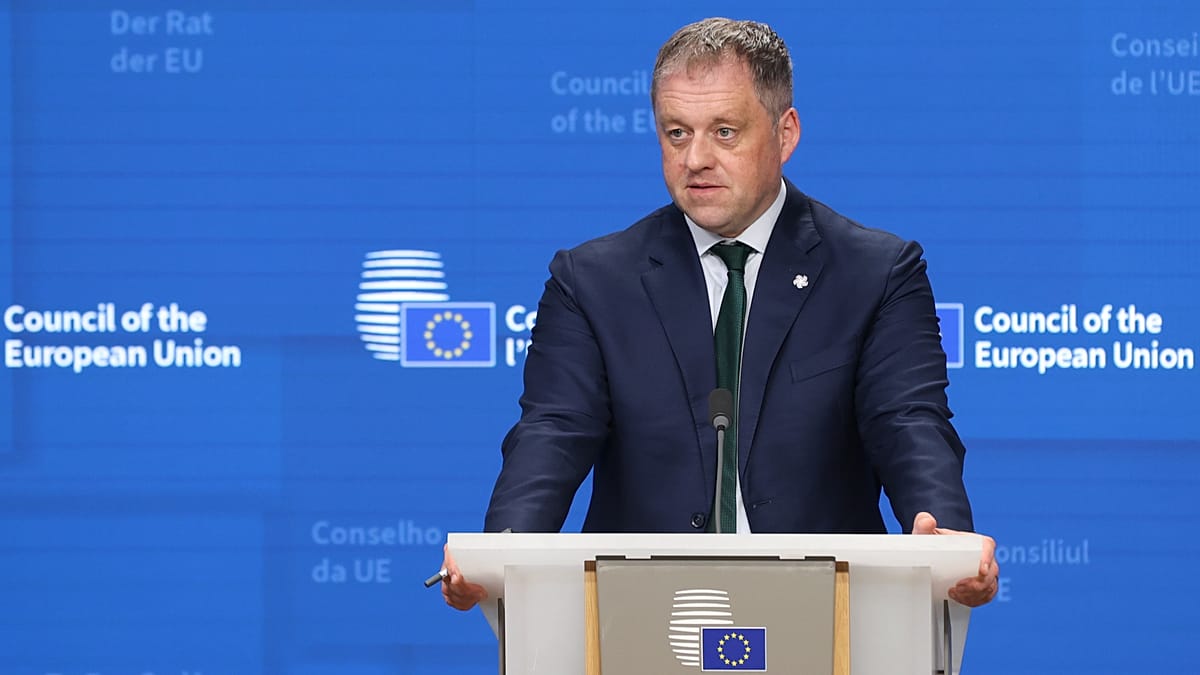
Dublin is throwing its weight behind a fresh round of EU-wide taxes as negotiations over the bloc's next long-term budget reach a critical juncture. Thomas Byrne, Ireland's minister for European affairs, told reporters on Monday that the Irish presidency of the Council will table an "ambitious" proposal on own resources — the EU's system of self-generated revenue.
The talks cover the multiannual financial framework for 2028–2034, a package that EU institutions hope to finalise by the end of the year. For the first time in the bloc's history, the budget could include new taxes levied directly at EU level. The draft text is expected to be circulated before the European Council summit in Brussels in mid-October, providing a basis for leaders' discussions.
"The Irish Presidency is confident to deliver a good own resources package," Byrne said, adding that all options put forward by the European Commission and the European Parliament remain on the table. "We don't rule out any own resource," he told journalists.
The menu of potential new revenue streams includes the Carbon Border Adjustment Mechanism (CBAM), a levy on parcel deliveries, a tax on online gambling, higher tobacco excise duties, the proposed Corporate Resource for Europe (CORE), a charge on non-collected e-waste, the EU Emissions Trading System (ETS), a digital levy, and a tax on crypto assets.
Two camps, widening gap
The Commission proposed a €2 trillion budget in July 2025, but the 27 member states remain deeply split. The so-called "Friends of Cohesion" group — 17 countries including Spain, Italy, Poland, Hungary and Portugal — wants to shield funding for agriculture, fisheries and regional development, which would face cuts under the Commission's plan. The "frugal" camp, led by Germany, Finland, Austria and Denmark, is pushing for a smaller overall budget and a reallocation of spending toward competitiveness and defence. They have rebranded themselves as "modernisers" and are wary of new own resources, fearing they would become net contributors.
In June, Cyprus, which held the rotating presidency before Ireland, floated a compromise that would trim €32.8 billion from the budget, mainly from programmes favoured by the modernisers. German Chancellor Friedrich Merz has repeatedly insisted that further cuts are needed and has voiced scepticism about the proposed taxes.
Byrne argued that new own resources are part of the solution, not an obstacle. "Own resources are part of the solution," he said, stressing that a deal on the entire budget must be reached by the end of the year. "If we don't have an agreement by the end of the year, that would be disappointing for the beneficiaries in 2028," he warned, adding that a missed deadline would "undermine Europe's credibility."
The Irish push comes as budget talks have stalled over familiar fault lines. Meanwhile, other contentious issues, such as Greece's call for EU funding for offshore migrant return hubs, are adding to the pressure on negotiators.
Byrne's comments signal that Ireland, traditionally a net beneficiary of EU funds, is willing to embrace a more integrated fiscal approach. The outcome of these negotiations will shape not only the EU's spending priorities but also its capacity to respond to crises, from climate change to security threats. With the clock ticking, the coming weeks will test whether the bloc can bridge its internal divisions.