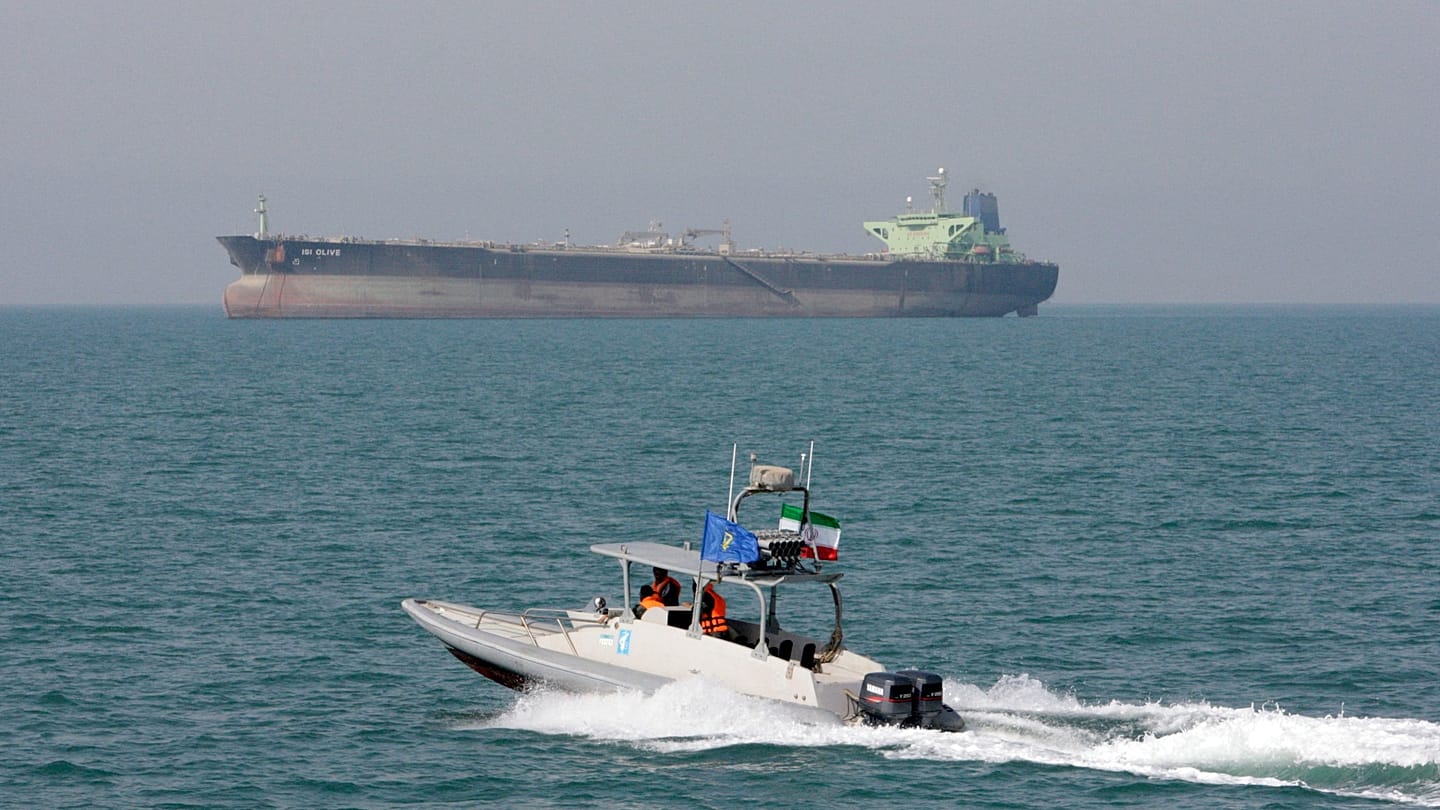
The Islamic Revolutionary Guard Corps (IRGC) has escalated tensions in the Strait of Hormuz by warning that any vessel navigating outside Tehran's designated routes is acting illegally. The statement directly rejects Oman's newly announced temporary corridor, which was intended to ease shipping through one of the world's most critical chokepoints for oil and liquefied natural gas.
Speaking at a Gulf Cooperation Council (GCC) meeting, US Secretary of State Marco Rubio drew a firm line, declaring that Washington will not accept any tolls or fees imposed on maritime traffic, regardless of how they are framed. The remarks underscore a growing rift between Iran and the United States over control of the waterway, through which roughly a fifth of global petroleum passes.
Oman's Diplomatic Gambit
Oman, which has long maintained neutral relations with both Iran and Western powers, proposed the temporary corridor as a pragmatic solution to ensure safe passage for commercial vessels. The sultanate's initiative was seen as an attempt to de-escalate a situation that has already seen several tankers harassed or detained by Iranian forces in recent months. However, the IRGC's swift rejection signals that Tehran views any alternative routing as a challenge to its authority in the region.
The Strait of Hormuz has become a flashpoint in the broader US-Iran confrontation, with European capitals watching nervously. The European Union imports a significant share of its energy from the Gulf, and any disruption could send shockwaves through an already fragile economy. Greenpeace has slammed the EU's 'deep incoherence' on energy policy in the wake of the crisis, urging member states to accelerate the transition away from fossil fuels.
Rubio's Red Line
Rubio's comments at the GCC meeting were unambiguous: the United States will not countenance any form of toll or levy on shipping in international waters. The statement appears aimed at preempting any Iranian attempt to monetize its de facto control over the strait, a move that would have severe economic consequences for global trade. The US position aligns with that of several European maritime nations, including Greece and Cyprus, whose commercial fleets are heavily exposed to Gulf shipping routes.
The confrontation comes as the US and Iran remain locked in nuclear negotiations, with both sides trading accusations of bad faith. Iran has called the nuclear framework a 'US defeat', while President Trump has threatened to end talks entirely over the Hormuz tolls issue. European diplomats in Brussels and national capitals have urged restraint, warning that a full-blown crisis in the strait could trigger a spike in energy prices and undermine the continent's fragile economic recovery.
European Interests at Stake
For Europe, the stakes are high. The Strait of Hormuz is a vital artery for oil and gas supplies to refineries in Rotterdam, Marseille, and Trieste. Any sustained disruption would force European governments to tap strategic reserves and could reignite inflation. The European Commission has been in contact with Gulf partners, but its leverage is limited. The bloc's reliance on external energy sources remains a strategic vulnerability, one that the crisis in the strait has thrown into sharp relief.
Meanwhile, the IRGC's warning has already caused jitters in the shipping industry. Several insurers have raised premiums for vessels transiting the strait, and some operators are considering rerouting via the longer Cape of Good Hope route. The cost of such diversions would ultimately be borne by consumers, including European households already grappling with high energy bills.
As the standoff continues, the EU finds itself in a familiar position: caught between a US ally demanding a hard line and an Iran that sees European mediation as a potential lifeline. Whether Brussels can carve out a meaningful role remains to be seen, but the consequences of failure are all too clear.