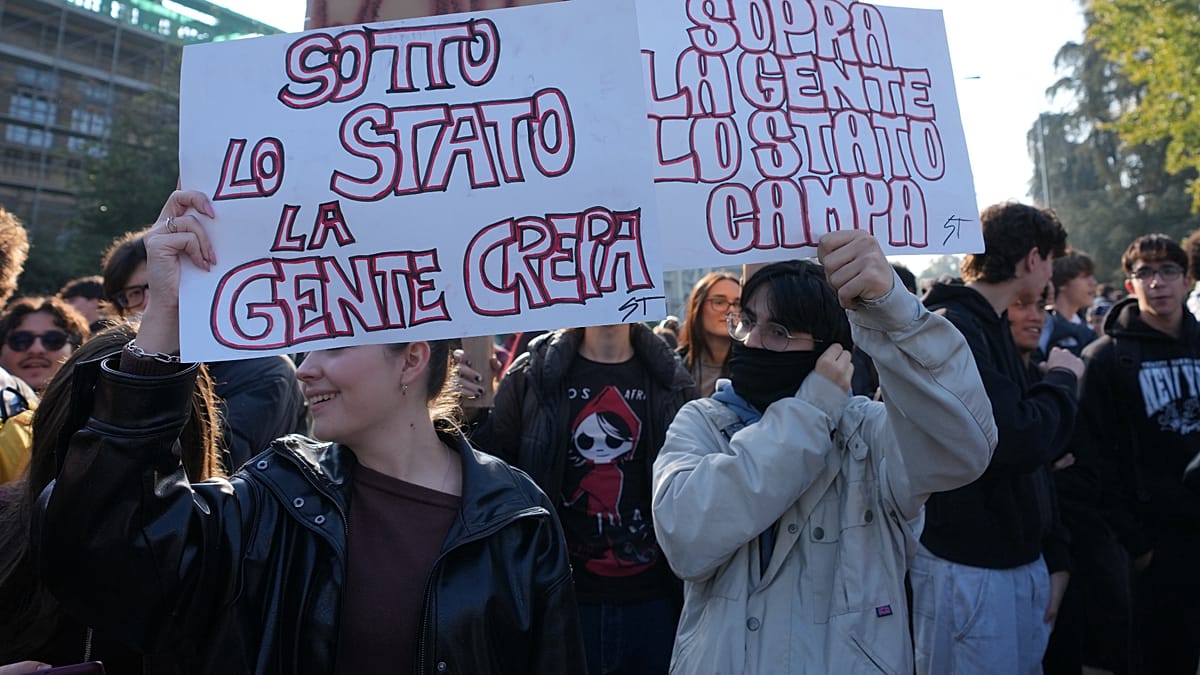
Italy is bracing for a day of widespread disruption as a general strike called by the grassroots union USB brings thousands onto the streets in dozens of cities. The protests, held under the slogan “Shut everything down,” target the soaring cost of living and Italy’s growing defence spending, which unions argue is diverting resources from social needs.
The mobilisation draws together workers, students, pensioners, housing activists, and port workers. In a notable international dimension, port workers in around 20 countries are also striking against the transport of weapons, linking Italian grievances to broader European concerns about militarisation.
Security concerns after Milan violence
Italian authorities are on high alert following clashes in Milan during protests on 17 and 18 October. Interior Minister Matteo Piantedosi has warned of the risk that violent groups could infiltrate the marches, describing the weekend ahead as “problematic.” Speaking on Thursday, he acknowledged the challenges: “There are alarms, because there is this very insidious way of activating the squares, but nothing different from what we have dealt with so far.”
Police are planning enhanced checks and may use preventive detentions permitted under the latest security decree. Transport services are running only partially, with reports of delays and cancellations across the country.
Rome: march through the historic centre
In Rome, the main march is set to begin mid-morning near Termini station, heading towards the Imperial Forums. At least 20,000 people are expected to participate. The route passes through the historic centre, close to government buildings, the Defence Village at Circus Maximus, and the Colosseum area—a site targeted during previous demonstrations. Authorities have deployed extra security along the path.
Nearby, hundreds of students gathered in Piazzale Ostiense under the slogan “Le monde est à nous” (The world is ours), echoing the French protest movement.
Milan and other cities
Milan is hosting two separate marches—one organised by students, the other by trade unions and pro-Palestinian activists. They are expected to converge along Corso Buenos Aires, heading away from the city centre. There are concerns that demonstrators might attempt to reach the eastern ring road and block traffic, as happened a year ago.
In Turin, a USB-led mobilisation sees school and university students, along with autonomous collectives, marching towards the city centre and city hall. Bologna is experiencing a similar situation, while in Naples the protests are led mainly by student movements that have occupied university buildings and secondary schools in recent days.
The strike comes amid Italy’s inflation rising to 5.4% in October, driven by surging energy costs. This economic pressure has fuelled public anger, with many Italians struggling to make ends meet. The unions argue that increased military spending—part of a broader European push for rearmament—is exacerbating the problem by diverting funds from welfare and public services.
Italy’s situation reflects a wider European trend, as inflation diverges across the Eurozone’s big four economies. While Germany and France see more moderate price rises, Italy’s higher rate is hitting households particularly hard.
The government, led by Prime Minister Giorgia Meloni, has defended its defence spending commitments, arguing that they are necessary for national security and to meet NATO obligations. However, critics contend that the funds could be better spent on social programmes and infrastructure.
As the day unfolds, authorities are monitoring the situation closely. The potential for unrest remains, with memories of past violence still fresh. The interior ministry has urged calm, while union leaders insist the protests are peaceful and aimed at drawing attention to legitimate grievances.
This strike is part of a series of general strikes over living costs and defence spending that have swept Italy in recent months. The frequency of such mobilisations underscores the deep discontent among Italian workers and students, who feel left behind by economic policies that prioritise military expenditure over social welfare.
For now, the streets of Italy are the stage for a nationwide expression of frustration, with the government facing mounting pressure to address the root causes of the crisis.