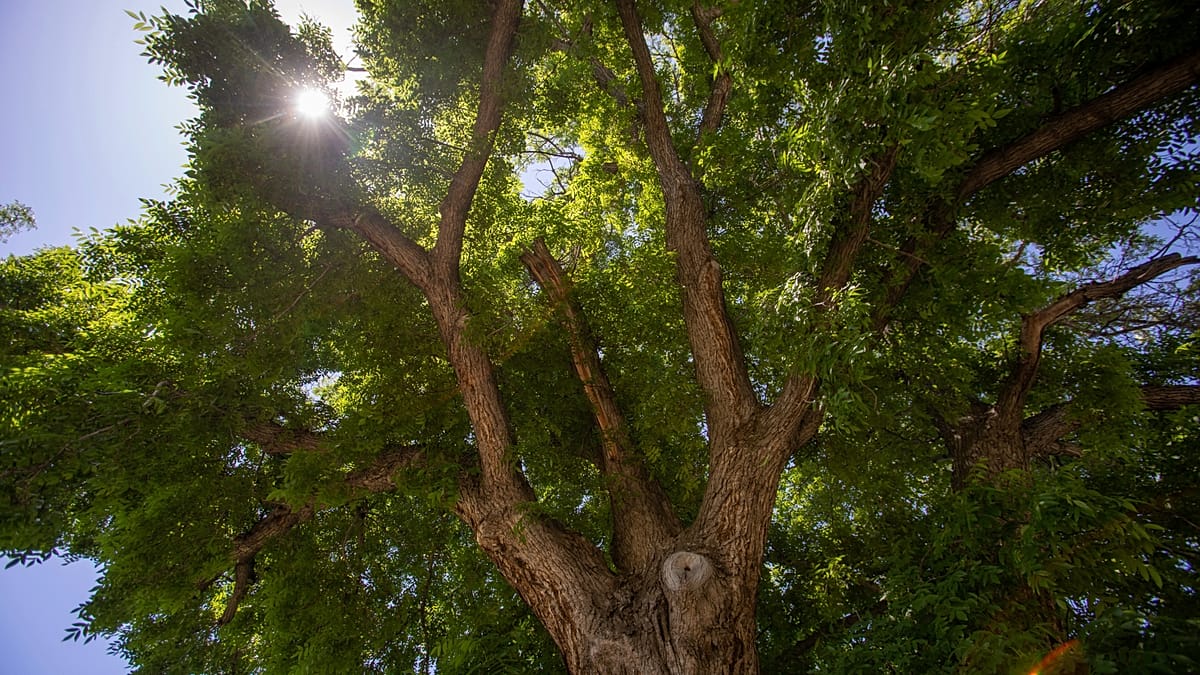
For some travellers, the destination is a panorama; for others, it is a single tree. Italy's monumental trees—some centuries old, others millennia—are living witnesses to the country's layered history. The Agriculture Ministry has just expanded its official register, adding 82 new specimens to the national list of monumental trees, bringing the total to over 4,000.
These are not merely old plants. They are natural monuments protected by law, chosen for their exceptional size, rarity, ecological value, or their deep ties to local communities and traditions. As Agriculture Minister Francesco Lollobrigida put it, “These green giants are not just trees, they are part of our land, our culture and our history.”
From the Hundred Horse Chestnut to the Luras olive
Among the most celebrated is the Hundred Horse Chestnut in Sicily's Etna Park. Estimated at around 2,200 years old, it is one of Europe's oldest trees. Legend has it that a queen and her retinue of one hundred horsemen once sheltered beneath its vast canopy during a storm. Even older is the Luras wild olive in Sardinia, believed to be about 3,000 years old, making it the oldest tree in Italy and among the oldest on the continent. Its massive trunk and still-vibrant crown continue to draw visitors.
In Calabria, the Curinga Oriental plane offers a different kind of wonder: its hollow trunk is so large that up to ten people can stand inside it, offering a literal step into a natural monument.
Legends and literature
Some trees are steeped in myth. The Witches' Oak in Tuscany's Lucca province, with branches stretching more than forty metres almost parallel to the ground, is said to have hosted witches' sabbaths on full-moon nights. It is also linked to Carlo Collodi, who supposedly found inspiration for Pinocchio beneath its canopy. In Umbria, the Roverella di Nottoria is the subject of a tale in which it outwitted the Devil by keeping its leaves through winter, preventing the forest from going bare.
Not all stories are fantastical. The Vajont Sequoia in Longarone, Veneto, survived the 1963 Vajont dam disaster, which killed nearly 2,000 people. The scar left by the wave is still visible on its trunk, making it a powerful symbol of collective memory. In Lazio, the Manildo Oak in Viterbo owes its existence to a farmer who in 1968 refused to allow its felling, saving the majestic Turkey oak.
In Abruzzo, the “reclining” Aleppo pine near Pescara is a marvel of adaptation: after a landslide, it simply lay down and kept growing. Scientists see it as an extraordinary example of resilience, while local folklore says it bent to listen to sea nymphs.
These trees are not just botanical curiosities; they are cultural landmarks. They have inspired writers, sheltered emperors, and endured earthquakes and human folly. Visiting them is a journey through time, offering a glimpse of Italy's natural and historical heritage.
The updated list also includes trees from other regions, such as the ancient yew in Puglia's Umbra Forest, a species long associated with death and immortality. Its poisonous leaves fed superstitions, but its ability to regenerate has made it a symbol of rebirth.
For those planning a trip, these monumental trees are increasingly accessible. Italy's Saint Francis trail network, for instance, passes through areas rich in such natural wonders. And with climate change making heatwaves more frequent, as seen in Italy's recent red alerts, these ancient trees also serve as reminders of nature's endurance.
Whether you seek the Hundred Horse Chestnut's legendary shelter or the Luras olive's ancient silence, Italy's monumental trees offer a unique way to connect with the country's past and present. They are, as the ministry notes, living monuments where nature, history and legend meet.