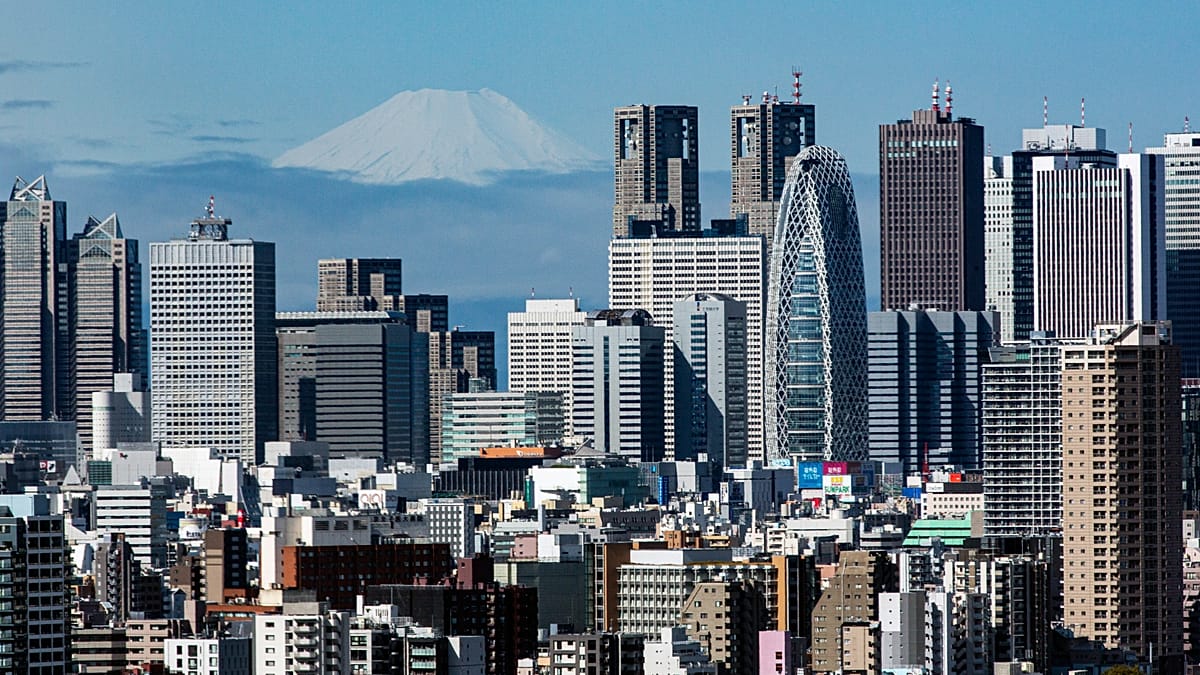
A 5.9-magnitude earthquake struck near Tokyo early Sunday, shaking the capital and surrounding prefectures and injuring at least 37 people, according to Japanese authorities. The quake, which hit at a depth of roughly 68 kilometers, was centered in the southern part of Ibaraki Prefecture, the Japan Meteorological Agency (JMA) reported, adding that there was no risk of a tsunami.
The Fire and Disaster Management Agency said one person was seriously injured and a building was damaged in Saitama Prefecture. Regional train services in Tokyo were also disrupted, though the full extent of the disruption was not immediately clear.
Prime Minister Sanae Takaichi said the tremor was felt across the capital and in Ibaraki, Saitama, and Chiba prefectures. In a televised statement, she urged residents in the hardest-hit areas to stay alert: “I would ask residents in the areas where the shaking was particularly strong to remain vigilant for the possibility of another earthquake of a similar magnitude.”
Takaichi said authorities were “taking appropriate measures” and had instructed officials to assess the damage and provide the public with timely and accurate information.
Seismic resilience and regional context
Japan is one of the most seismically active countries in the world, and its building codes and emergency response systems are among the most advanced. The quake’s relatively moderate magnitude and depth likely limited the damage, but the event is a reminder of the persistent risk across the Pacific Ring of Fire.
For European readers, the quake also highlights the importance of preparedness in regions with lower seismic activity but real exposure, such as the Mediterranean and the Balkans. Institutions like the Granada institute have issued practical guidance on earthquake safety, underscoring that even moderate tremors can cause significant disruption.
The Japanese government’s response—quick assessment, public communication, and a call for vigilance—mirrors protocols that European civil protection agencies also follow. The EU’s Copernicus Emergency Management Service, for instance, has been used to map damage from earthquakes in Italy and Greece in recent years.
While no tsunami warning was issued, the JMA continues to monitor aftershock activity. Residents in the affected areas have been advised to check for structural damage and to be prepared for possible further shaking.
The quake comes amid a period of heightened geopolitical tension in the region, including Russian missile tests on the disputed Kuril islands, which Japan has protested. That dispute, rooted in the post-World War II territorial settlement, remains a sensitive issue in Tokyo’s foreign policy.
For now, the focus is on recovery and safety. Local authorities are conducting damage assessments, and hospitals have reported treating the injured. The one seriously injured person is receiving medical care, though details on their condition have not been released.
Japan’s meteorological agency has a robust early-warning system that alerts residents seconds before strong shaking arrives. That system, along with strict building codes, has helped the country withstand earthquakes that would cause far more damage elsewhere.
As the region recovers, the event serves as a reminder that natural disasters do not respect borders. European countries, particularly those in seismic zones like Italy, Greece, and Turkey, can learn from Japan’s experience in preparedness and response.