Japan has formally protested against Russia's decision to conduct missile tests near the disputed Kuril islands, a move that further strains relations between Tokyo and Moscow. The protest came after Russia's Pacific Fleet announced it had carried out a Bastion surface-to-ship missile test from Etorofu, the largest of the four islands that Japan claims as its Northern Territories.
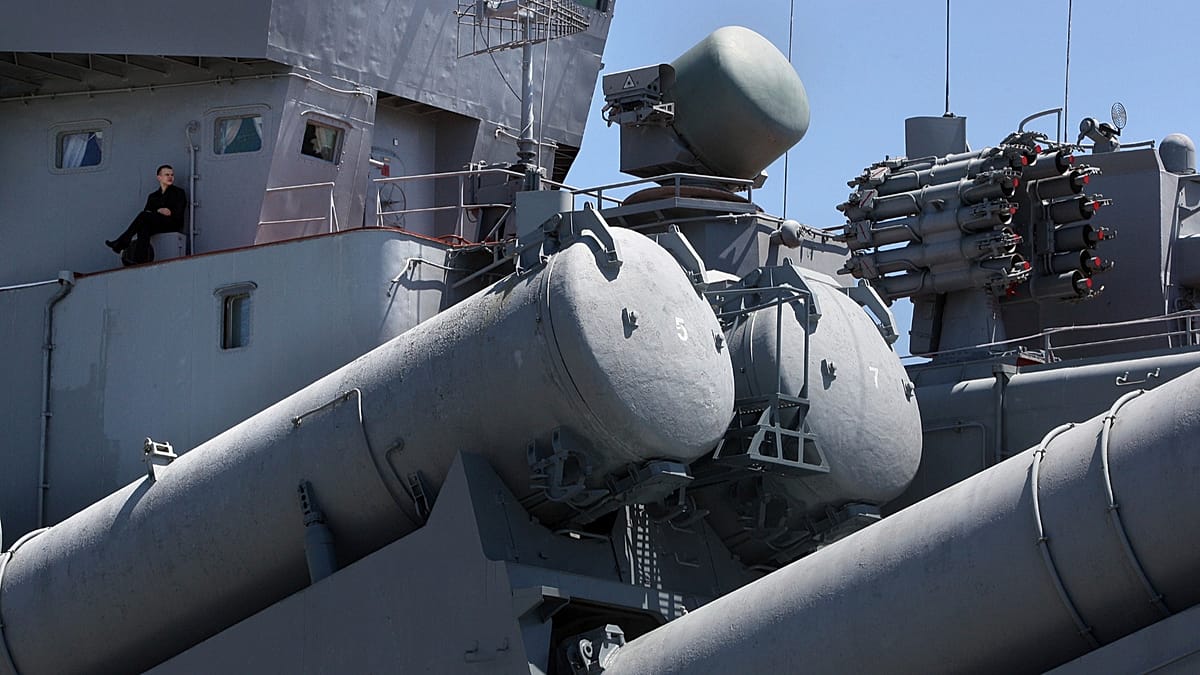
According to Japan's Kyodo news agency, the exercise simulated an attack on enemy vessels and successfully struck targets at a range of at least 300 kilometres. The guided missile cruiser Varyag and the nuclear-powered submarine Omsk also participated in the drill, which took place just days after President Vladimir Putin made his first official visit to the islands on 13 August.
Japanese Foreign Minister Toshimitsu Motegi, speaking during a trip to Oman, said the missile drills "run counter to Japan's position regarding the Northern Territories, and is unacceptable." He added that Tokyo "cannot tolerate moves by Russia to strengthen military power on the four northern islands because they go against our country's stance on the territories."
The Japanese government maintains that Etorofu, Kunashiri, Shikotan and the Habomai islets are an inherent part of Japan, illegally occupied by the Soviet Union at the end of World War II and still held by Russia. Prime Minister Sanae Takaichi, reacting to Putin's visit, said the islands "are an inherent part of Japan's territory, both historically and under international law," and that the visit "offends the sentiments of the Japanese people and is absolutely unacceptable."
Escalating tensions over the Kurils
Relations between Japan and Russia have deteriorated sharply since Russia's full-scale invasion of Ukraine in early 2022. Japan joined other G7 nations in imposing sanctions on Moscow and providing aid to Kyiv, though it has so far limited its support to non-lethal defence equipment. Analysts suggest Putin's visit to the Kurils may have been intended as a warning against Japan deepening its support for Ukraine, potentially including the supply of Patriot missile systems, and against closer cooperation with NATO.
Moscow has been steadily reinforcing its military presence on the islands. In December 2021, it deployed Bastion coastal defence missile systems on an uninhabited volcanic island in the middle of the chain, which previously hosted a Japanese army base and later a Soviet base that was shut down after the collapse of the Soviet Union. In 2016, Russia placed Bal and Bastion systems on two of the four southernmost islands, and in subsequent years it added advanced air defence systems, built an air base on Etorofu, and stationed fighter jets there.
The islands, though sparsely inhabited, hold strategic significance for Russia. They sit at the entrance to the Sea of Okhotsk, giving Russia's Pacific Fleet access to the open Pacific without passing through Japanese-controlled waters. This makes them a key element of Moscow's naval posture in the region.
The latest missile test comes amid broader concerns about Russian military activity near European borders. Recent incidents, such as a suspected Russian airspace violation near Finland and a Russian drone crashing in Romania, have highlighted the spillover effects of the war in Ukraine. Meanwhile, Russian drones are crippling humanitarian work in Ukraine, according to UN aid officials, and Ukrainian strikes on refineries are deepening Russia's fuel crisis.
Japan's protest is unlikely to change Russia's behaviour, but it underscores the growing friction between the two nations. Tokyo has said it will respond in a timely manner, considering what serves Japan's national interests. For now, the Kuril islands remain a flashpoint in a broader geopolitical contest that extends far beyond the Pacific.