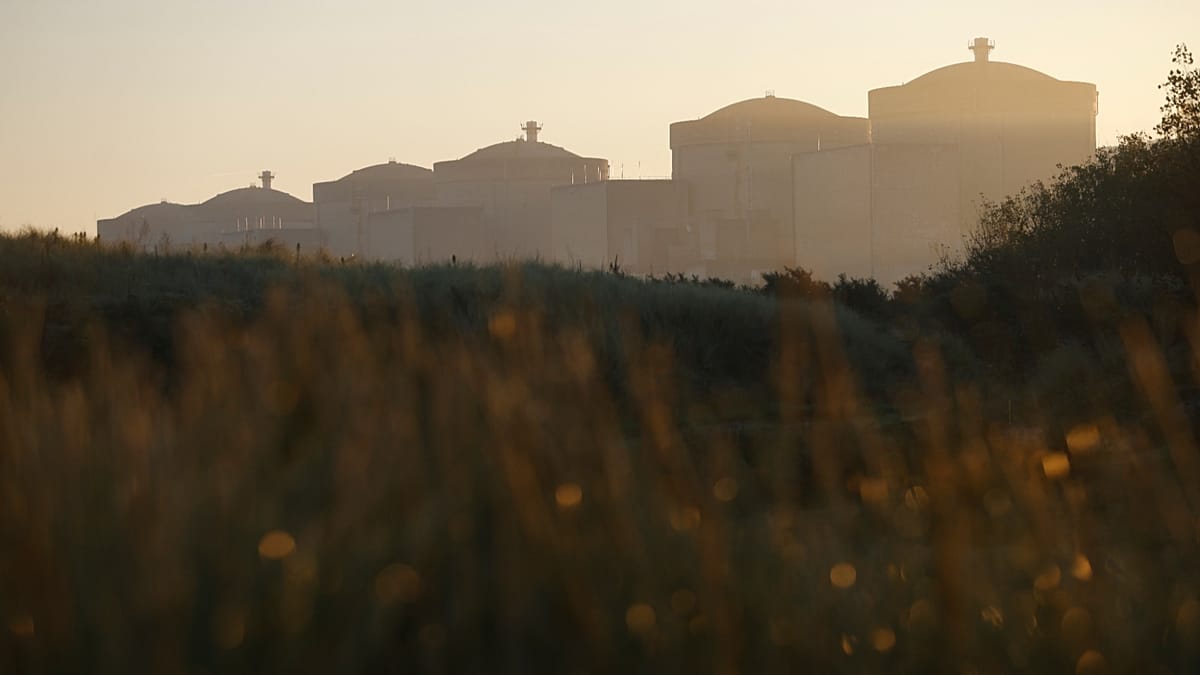
A dense swarm of jellyfish has forced the shutdown of three reactors at France's Gravelines nuclear power station, the country's largest, after the creatures clogged the seawater intake pumps used for cooling. State-owned utility EDF confirmed the disruption on Tuesday, saying the affected units were taken offline on Monday, while a fourth reactor had its output halved. Only one of the plant's six reactors continues to operate at full capacity; the sixth was already offline for scheduled maintenance.
In a statement, EDF sought to reassure the public: "This situation has no impact on the safety of the facilities, the safety of personnel, or the environment." The company did not specify how long the reactors would remain shut down, but similar incidents in the past have led to closures lasting several days.
Recurring problem at Gravelines
The Gravelines plant, located near the northern port city of Dunkirk, is the largest nuclear facility in Western Europe, with six 900-megawatt reactors. It is particularly vulnerable to jellyfish blooms because its cooling system draws water directly from the North Sea. A year ago, the plant was temporarily taken offline for the same reason, and the problem has also affected other nuclear sites globally—Sweden's Oskarshamn plant shut down for three days in 2013, and Japan's Mihama plant saw a significant output drop in 1999.
Marine biologists point to a combination of factors behind the increasing frequency of jellyfish swarms in European waters. Overfishing removes natural predators and competitors, while plastic pollution provides new surfaces for jellyfish larvae to attach to. Warming seas linked to climate change also extend the breeding season and expand the geographical range of many jellyfish species. The result, experts say, is a growing risk for any coastal infrastructure that relies on seawater for cooling—including nuclear power plants, desalination facilities, and coastal industrial sites.
This latest incident comes at a difficult time for France's nuclear fleet. The country has experienced multiple heatwaves and droughts this summer, forcing EDF to reduce output at several reactors because of high river temperatures and low water levels. In June and July, the company shut down reactors at other plants to comply with environmental regulations that limit the temperature of discharged cooling water. On Sunday, before the jellyfish disruption, France's nuclear output was already running 15.6% below the average for this time of year, according to calculations by AFP based on EDF data going back to 2015.
The repeated shutdowns have raised concerns about the reliability of France's nuclear power supply, which typically provides around 70% of the country's electricity. They also highlight the broader challenges that climate change poses to energy infrastructure across Europe. In neighbouring countries, similar issues have emerged: the Paks nuclear plant in Hungary recently had to restart a turbine after the Danube's water level rose, and drought conditions have affected cooling at other facilities.
While EDF insists that safety has not been compromised, the economic cost of the shutdowns is significant. Each day of reduced output forces France to import electricity from neighbouring grids or rely on fossil-fuel backup, driving up prices and carbon emissions. The situation also underscores the need for better monitoring and mitigation strategies, such as bubble curtains or acoustic deterrents, to keep jellyfish away from intake pipes.
For now, the Gravelines plant remains partially operational, and EDF says it is working to clear the blocked filters and restore normal operation as soon as possible. But with jellyfish blooms expected to become more frequent and intense in a warming world, this is unlikely to be the last time a swarm disrupts Europe's energy supply.