In the early hours of Tuesday, Israeli municipal authorities carried out the demolition of a five-storey residential building in the East Jerusalem neighbourhood of al-Tur. The operation, which cited the absence of proper building permits, left dozens of Palestinian families scrambling to salvage personal belongings from the debris.
Witnesses described a heavy police and engineering presence cordoning off the area before the structure was brought down. Residents, many of whom had lived in the building for years, were seen sifting through concrete chunks and twisted metal, retrieving documents, clothing, and household items. One elderly woman, who gave her name as Umm Khalil, told local media: “We have nowhere to go. This was our home, our life. They gave us no time.”
The demolition is part of a broader pattern of Israeli enforcement in East Jerusalem, where Palestinian construction often faces stringent permit requirements that are difficult to obtain. According to the Israeli human rights group B'Tselem, the vast majority of Palestinian permit applications in the city are rejected, forcing many to build without authorisation and leaving them vulnerable to demolition.
European reactions and diplomatic context
The incident comes amid heightened tensions over Israeli policies in the occupied territories. The European Union has repeatedly called on Israel to halt demolitions, which it says violate international humanitarian law and undermine the viability of a two-state solution. In a statement, an EU spokesperson said: “The EU is deeply concerned by the continued demolition of Palestinian homes in East Jerusalem. Such actions are illegal under international law and must cease.”
This latest demolition also coincides with a diplomatic row between Israel and the United Kingdom, after London suspended parts of its arms export licences over concerns about their use in Gaza. In a related development, Israel recently shut the British consulate in East Jerusalem, a move widely seen as a response to British sanctions. The closure has further strained relations between Jerusalem and European capitals.
For Palestinians in East Jerusalem, the threat of demolition is a constant source of insecurity. According to the UN Office for the Coordination of Humanitarian Affairs, more than 200 Palestinian-owned structures were demolished in the city in the past year alone, displacing hundreds of people. Many of those affected are refugees or long-time residents who have no alternative housing.
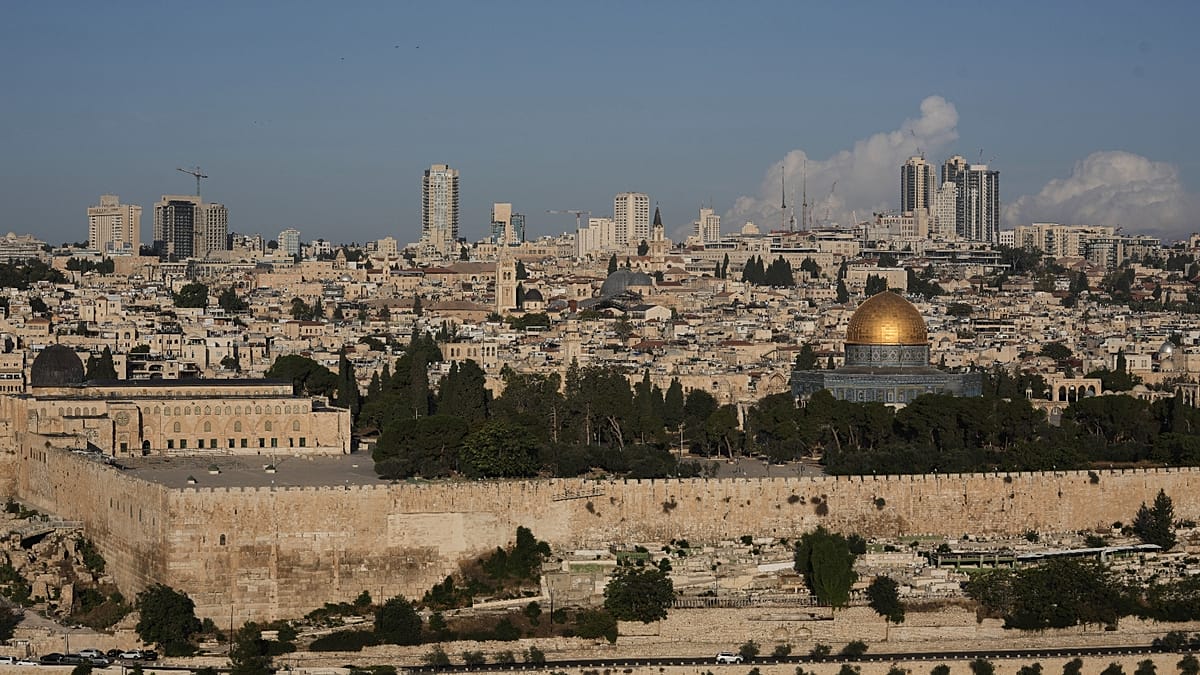
The al-Tur neighbourhood, located on the Mount of Olives, is home to a mix of Palestinian Christians and Muslims. Its proximity to the Old City and holy sites makes it a sensitive area, and Israeli authorities have stepped up enforcement in recent months. Local activists say the demolitions are part of a deliberate strategy to push Palestinians out of the city and consolidate Israeli control.
“This is not about permits; it’s about ethnic cleansing,” said Fadi Quran, a Palestinian human rights lawyer. “They want to make life so unbearable that we leave.” Israeli officials reject such accusations, maintaining that the demolitions are purely administrative and apply equally to all residents. However, critics point out that Israeli settlers in the city rarely face similar enforcement.
The European Union has funded several projects to support Palestinian communities in East Jerusalem, including legal aid and housing assistance. Yet such efforts have done little to stem the tide of demolitions. In Brussels, some MEPs have called for stronger measures, including sanctions on Israeli officials involved in settlement expansion. A resolution passed by the European Parliament last year urged member states to “take concrete steps” against demolitions, but no consensus has emerged on how far to go.
For the displaced families of al-Tur, the immediate priority is finding shelter. The UN Relief and Works Agency (UNRWA) has offered emergency assistance, but resources are stretched thin. Meanwhile, the Israeli municipality has said it will continue to enforce building regulations, vowing to demolish any structure erected without a permit.
As the dust settles over al-Tur, the broader question of East Jerusalem’s future remains unresolved. The city is meant to be the capital of both Israel and a future Palestinian state, but the reality on the ground is one of deepening division. For Europeans watching from afar, the demolition is a stark reminder of the challenges facing any peace process.
In related news, the ongoing conflict in Gaza has drawn attention to the plight of civilians elsewhere in the region. In Ukraine, Russian forces continue to block aid to the town of Oleshky, leaving residents without food or water, as reported in our coverage of the humanitarian crisis. And in Athens, a recent explosion in the Plaka district caused a building collapse, raising questions about urban safety in European cities, as we detailed in our report on the incident.