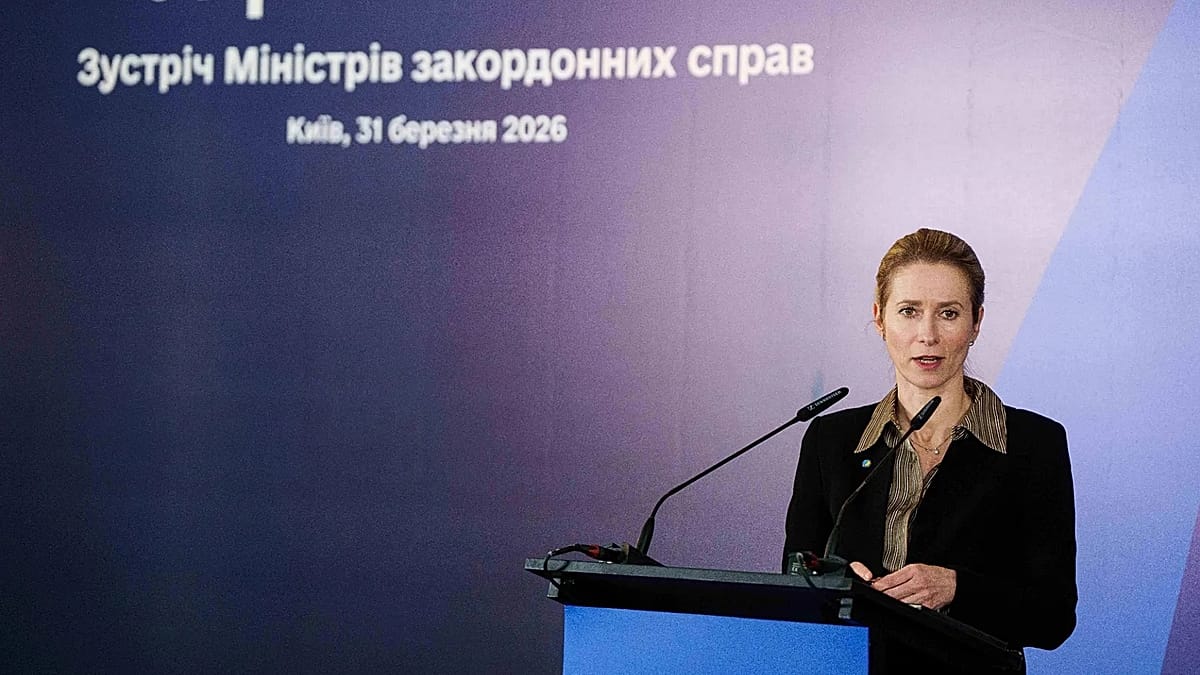
Speaking in Tallinn on Sunday, the European Union’s top diplomat, Kaja Kallas, took aim at the overwhelmingly male composition of peace negotiation teams, arguing that this imbalance contributes to the fragility of many ceasefires. “This is a bigger problem we see around the world with different peace talks when we see that they don’t actually address the issues of long-standing peace,” she told reporters.
Kallas, a former prime minister of Estonia, pointed to research indicating that when women are part of the negotiating process, peace agreements tend to endure. “There are also studies that show that when women are part of the negotiations, these peace (efforts) last longer,” she said, adding that the recent US-China talks offered a stark visual: “a lot of masculinity in the room.”
Gender Imbalance in Diplomacy
Her remarks come against a backdrop of persistent underrepresentation. According to data from the Council on Foreign Relations, women accounted for just 16 percent of negotiators in active UN-led or co-led peace processes in 2022. The UN Security Council and numerous academic studies have long argued that inclusive negotiation teams produce more comprehensive and durable outcomes, yet mediators and warring parties frequently exclude women.
Kallas’s intervention is not merely theoretical. It coincides with intense behind-the-scenes discussions in Brussels about whether the EU should secure a seat at the table for potential peace talks between Russia and Ukraine — and, if so, who should represent the bloc. The question gained urgency after Russian President Vladimir Putin floated the idea of appointing former German Chancellor Gerhard Schröder as the EU’s lead negotiator, a notion swiftly dismissed by European leaders. Kallas herself rejected Schröder as EU mediator in Ukraine peace talks.
Diplomatic sources in Ukraine have indicated that Russia would “never” accept a woman as lead negotiator. A Brussels-based diplomat echoed that view, stating that no female figure is being considered for the role. However, another source in the Belgian capital stressed that “equality is an important factor.”
Despite these divisions, most EU officials agree that appointing any special envoy before the next major European Council summit in June is unrealistic. European Commission spokesperson for foreign affairs, Anitta Hipper, noted that Kallas is a “feminist” who “has a lot of practice back home,” referencing her tenure as Estonia’s first female prime minister from 2021 to 2024.
Hipper declined to speculate on whether Russia would accept a woman at the table, but confirmed that European heads of state will meet in Limassol, Cyprus, in the coming weeks to discuss the format of any future talks involving Ukraine, Russia, and Europe. “What will be discussed is what our position is in terms of the demands and the ask and what unity we have in demanding our lists of asks from Russia,” she said.
The broader context includes ongoing concerns about Russian diplomatic activities across Europe. Russian diplomatic antennas in Vienna have raised espionage concerns across Europe, and Austria recently expelled three Russian diplomats over an antenna-based espionage operation. Meanwhile, Ukraine’s top negotiator has headed to Florida for US-brokered peace talks amid stalled Russia diplomacy.
Kallas’s push for greater female participation in diplomacy is part of a wider European conversation about gender equality in leadership. From pop fandoms to masculinity: Europe's cultural highlights this week also touched on these themes. Whether her arguments will translate into concrete changes at the negotiating table remains to be seen, but the EU’s foreign policy chief has made it clear that she sees the current male-dominated approach as a structural weakness.