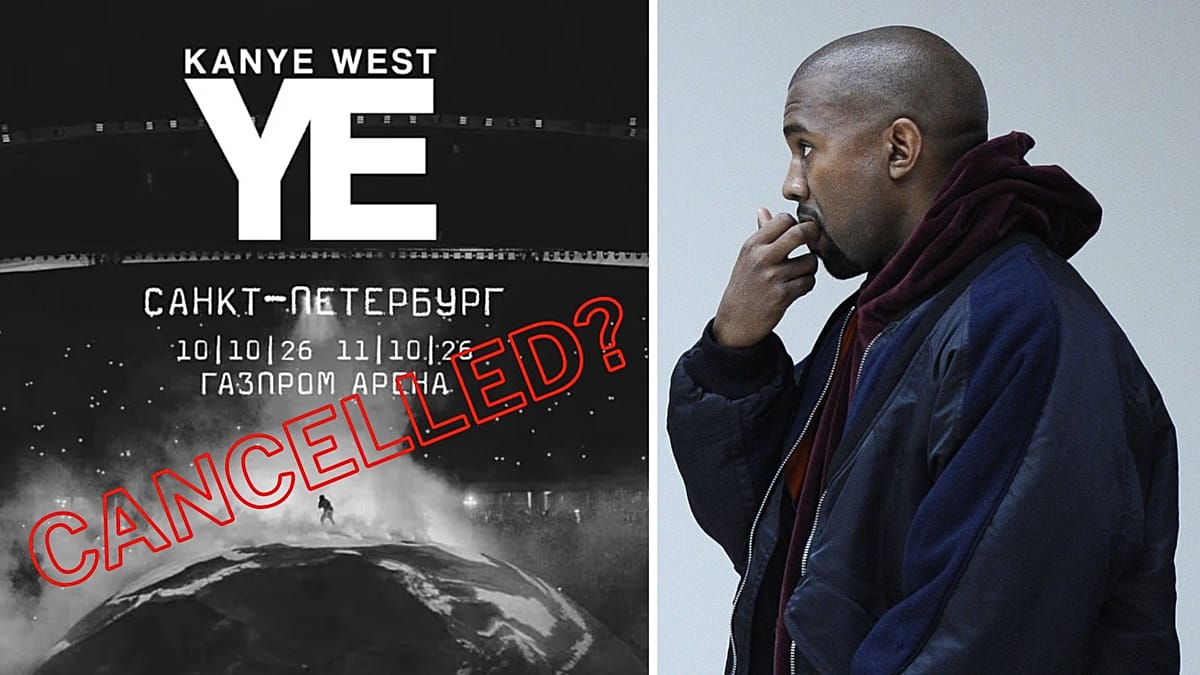
Just a week after two concerts in St Petersburg were announced, Kanye West's planned return to the Russian stage looks increasingly uncertain. The venue, Gazprom Arena, has now said it will not host the rapper, casting doubt on what would have been the biggest Western act to perform in Russia since the full-scale invasion of Ukraine in 2022.
The shows, scheduled for 10 and 11 October, had nearly sold out, with Russian fans snapping up tickets within days of the announcement. But in a statement on social media, the stadium said it had never signed a rental agreement with the promoter, the Moscow-based Say Agency, and therefore the concerts could not take place there.
“Gazprom Arena was not and is not the organizer of this event,” the venue said. “That was handled by the Moscow concert agency Say Agency. Gazprom Arena has not signed any agreement to rent the stadium for the event. No such agreement exists. Accordingly, the concert cannot take place at our venue.”
The statement came as a surprise, since the venue had earlier promoted the concerts on its own channels, calling West “the most influential musical artist of our time”. The promoter, Say Agency, disputes the venue's account, insisting that Gazprom Arena had approved the announcement and that the concerts will still take place.
Pressure from Moscow?
As of now, the concert dates have been removed from the stadium's website, and speculation is mounting that the decision was not purely commercial. The St Petersburg outlet Fontanka reported that the concerts had not received all the necessary approvals and were called off following a “call from above” in Moscow. There is no official confirmation of government intervention, but the timing and the venue's abrupt reversal have raised eyebrows.
The episode also reflects broader tensions in Russia over Western cultural influence. Some politicians have openly opposed West's booking, including conservative lawmaker Vitaly Milonov, who released a video suggesting the rapper should perform traditional Russian songs instead of his planned setlist. “Maybe after that he'll stop his disgusting antics and become a normal person,” Milonov said.
West's history of inflammatory statements has made him a polarizing figure well beyond Russia. His antisemitic outbursts, which began in 2022, led to his removal from social media platforms, the loss of major brand partnerships, and the cancellation of shows across Europe. He later posted images of KKK robes, declared himself “a Nazi”, and released a song titled “Heil Hitler” in May 2025.
In February 2025, West began selling swastika t-shirts, and his actions have led to visa restrictions in Australia and a potential arrest in Brazil. He has since apologised, taking out a full-page ad in the Wall Street Journal in which he described a “four-month-long manic episode of psychotic, paranoid and impulsive behaviour” and said he “lost touch with reality.”
For now, the fate of the October dates remains unclear. The promoter says the shows are still on, but the venue's refusal to host them leaves the concerts in limbo. If they are ultimately cancelled, it would mark another setback for West's attempts to return to the international stage, and a reminder of how cultural events in Russia are increasingly subject to political oversight.
The situation also highlights the wider context of Russia's cultural isolation since the invasion of Ukraine. While some Western artists have continued to perform in Russia, the number has dwindled sharply. The EU's recent approval of €6.1 billion for Ukraine's air defences underscores the ongoing confrontation, and Ukraine's expanding drone campaign against Russian infrastructure shows that the conflict continues to affect daily life. Against this backdrop, a major Western pop concert in St Petersburg would have been a notable exception.
Whether the concerts go ahead or not, the episode has already become a talking point in Russian media and among fans. Some see it as a sign of the Kremlin's tightening grip on cultural life, while others view it as a simple contractual dispute. The coming days will likely bring more clarity, but for now, the confusion reigns.