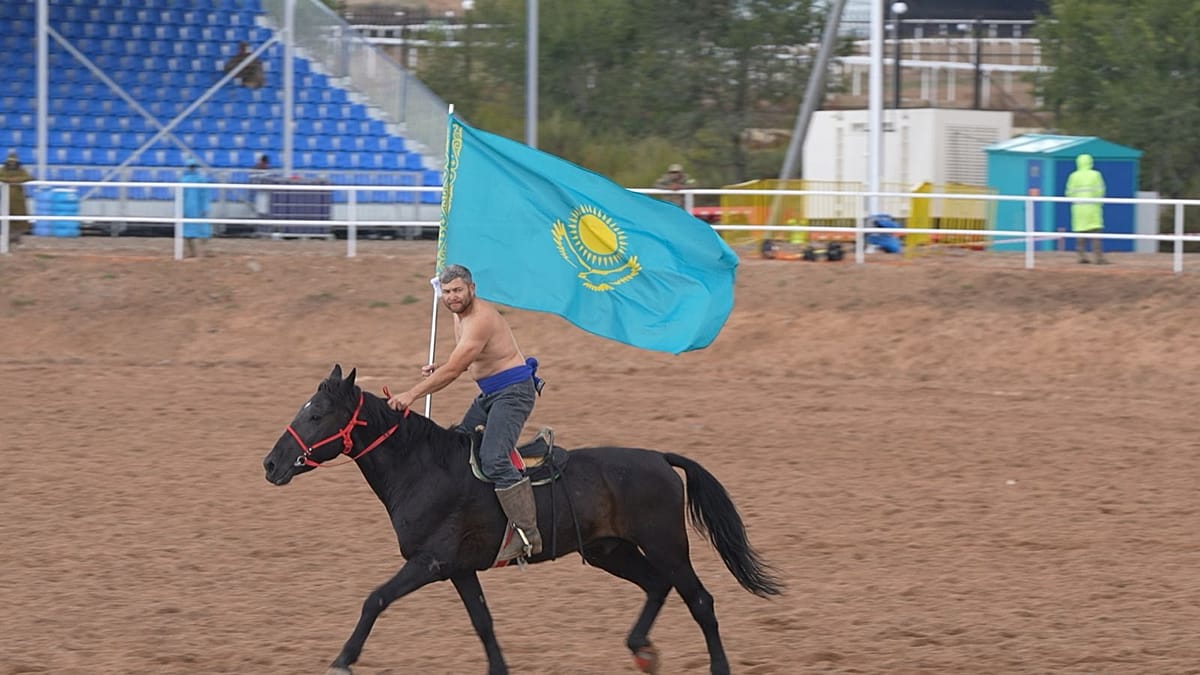
With two days of competition remaining at the 6th World Nomad Games in Kyrgyzstan, Kazakhstan has surged to the top of the medal table, collecting 55 medals in total. The Central Asian powerhouse, which has dominated many of the traditional sports on display, is now well positioned to claim the overall title when the Games conclude.
Kazakhstan's haul comprises 25 gold, 13 silver, and 17 bronze medals. The hosts, Kyrgyzstan, are running a close second with 23 gold, 24 silver, and 11 bronze. The rivalry between the two neighbours has been a defining feature of the Games, which celebrate the nomadic heritage of Central Asia and beyond.
Horseback wrestling and archery shine
Much of Kazakhstan's success has come in audaryspak, a form of horseback wrestling where riders attempt to unseat their opponents. The sport demands not only raw strength but also exceptional horsemanship and a deep bond between rider and mount. Kazakh athletes have claimed gold in every weight category from 60 to 100 kilograms, with their main challengers in the finals coming from the Kyrgyz team.
Another gold was secured in zhambu atu, a traditional Kyrgyz sport in which riders shoot arrows at targets while galloping at full speed. The precision and skill on display have drawn large crowds to the Kyrchyn Gorge venue, the scenic mountain setting for the Games.
Kazakhstan also triumphed in tug-of-war, a contest that transcends nomadic cultures and attracts teams from Asia, Europe, the Americas, and Australia. The Kazakh squad took gold in both the four-person and six-person categories.
A viral moment for a 51-year-old archer
One of the most memorable moments of the Games came from Ayash Kabdolaeva, a 51-year-old teacher from eastern Kazakhstan who took up archery later in life. After winning gold in the 70-metre distance category, her emotional celebration went viral on social media in Kazakhstan, endearing her to fans across the country.
Dias Akhmetov, Kazakhstan's archery coach, praised her dedication: “We have just finished the archery competition. There were around 200 participants from 55 countries. Among them, our woman Ayash Kabdolaeva. She won gold medal at the 70 meter distance category. She owes that to her hard work. She prepared for a very long time and practiced a lot and, as a result, Kazakhstan’s bow-woman ended up as the winner.”
In alysh, a Kyrgyz-origin wrestling style where competitors grip each other's belts throughout the bout, Kazakhstan earned three bronze medals. The discipline, which also features women's competitions, requires throwing an opponent onto their back within a three-minute round.
Additional bronze medals came from mas-wrestling, where athletes seated opposite each other pull on a wooden pole; from sambo, where Sapar Bolat added a gold; and from qusbegilik, the ancient art of hunting with birds of prey, where Kazakhstan took silver.
Equestrian finals set to draw huge crowds
The most anticipated events of the Games are the equestrian contests known as kokpar in Kazakh and kok boru in Kyrgyz. In both, riders battle for possession of a goat carcass (or a weighted dummy in modern times) weighing about 30 kilograms. The objective is to carry it into the opponent's goal area—either a circle on the ground in kokpar or a cauldron in kok boru. These matches fill the hippodrome with passionate spectators.
As the finals approach on 6 September, it is already clear that the decisive matches will be a classic duel between the two dominant forces: hosts Kyrgyzstan and Kazakhstan. Fans are travelling from across Kyrgyzstan and even from Almaty in neighbouring Kazakhstan to witness the showdown. So great is the public interest that these two finals will be the only events at the Games for which tickets are sold.
The World Nomad Games, which revive ancient traditions and foster cultural exchange, have grown into a significant international event. For Kazakhstan, a strong performance here reinforces its role as a guardian of nomadic heritage, a theme that resonates across the wider Eurasian steppe.